
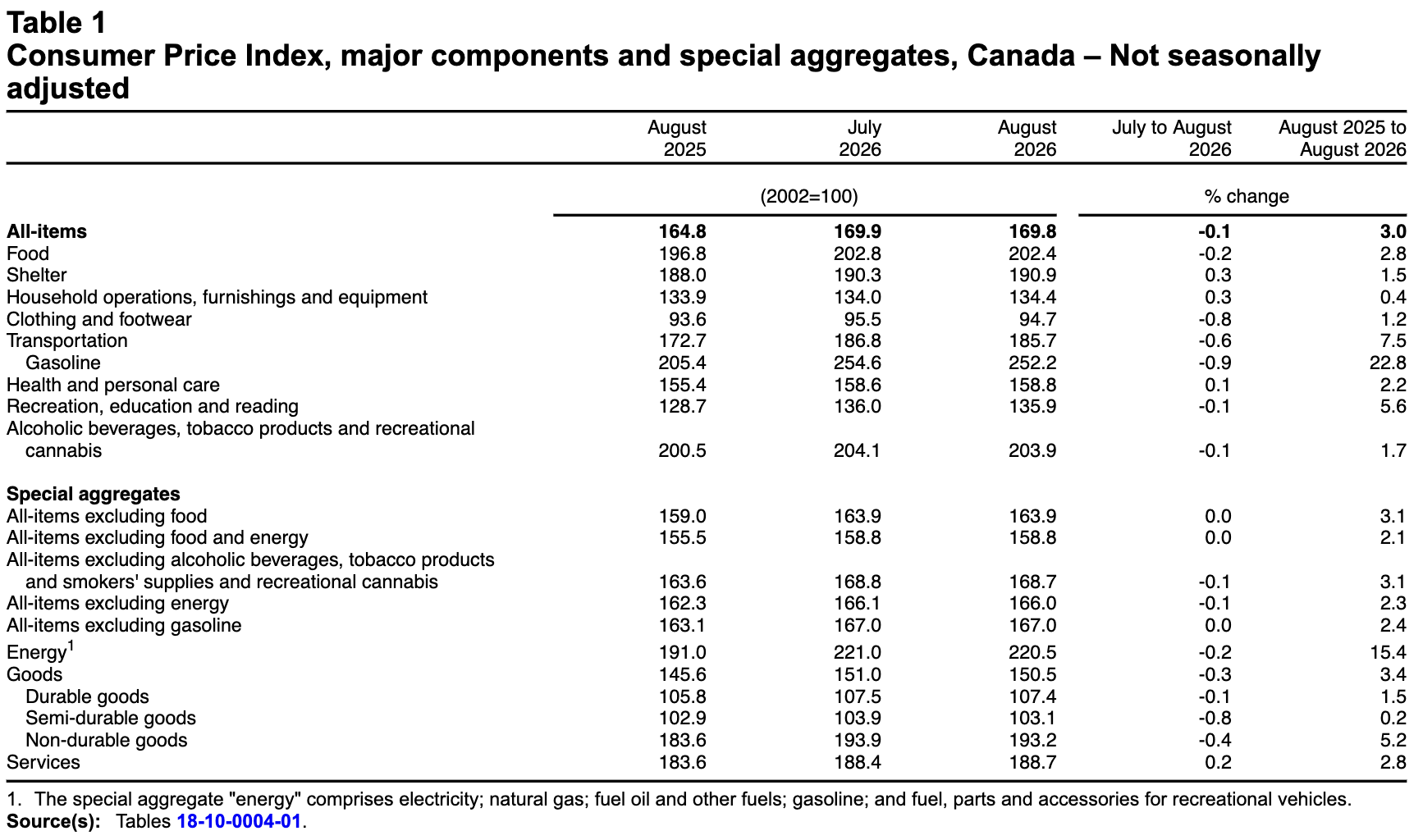
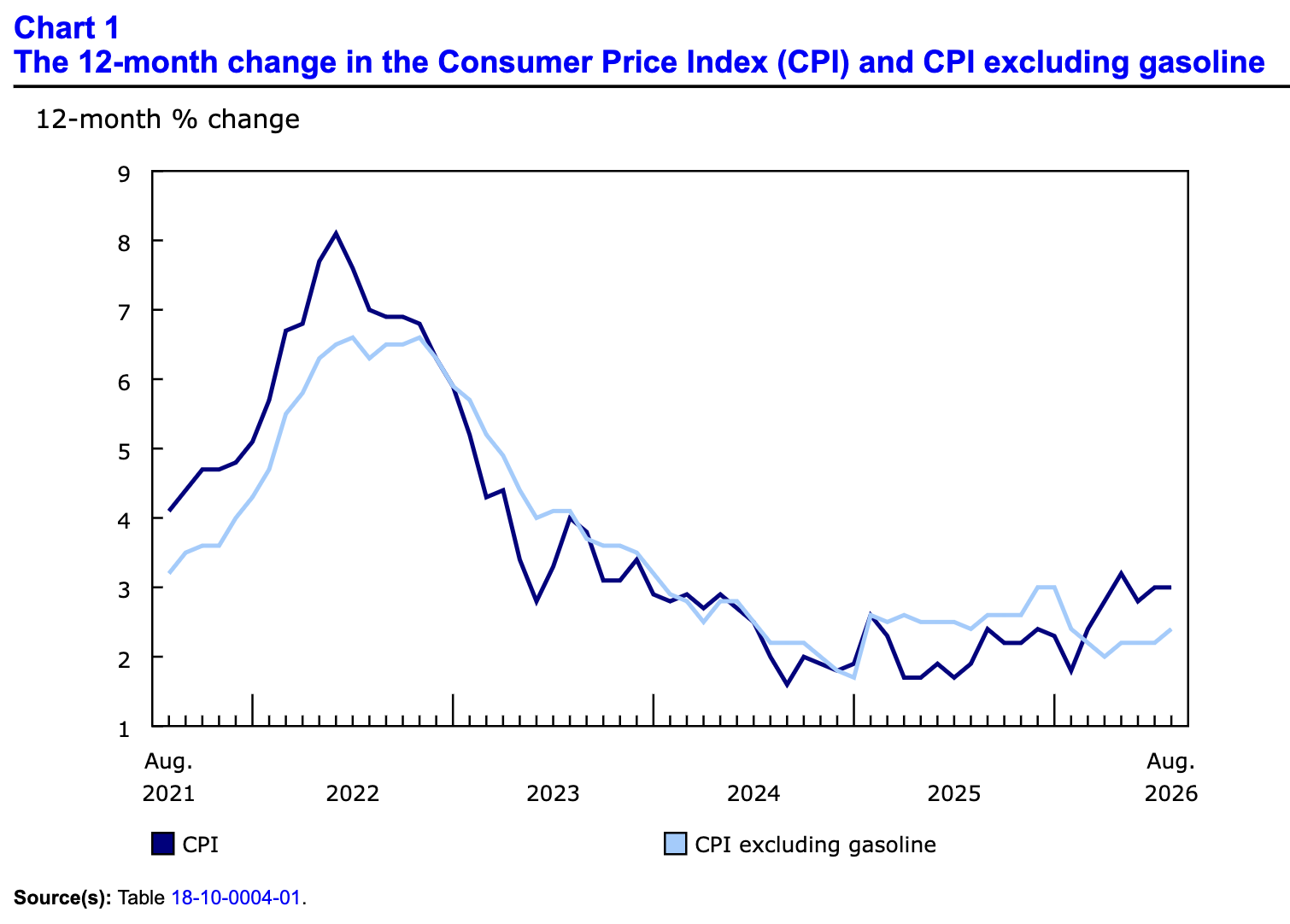
Canada’s consumer price index (CPI) increased by 3.0% year over year (Y-o-Y) in August, matching the print from July. Statistics Canada (StatsCan) published the data at 8:30 a.m. ET on September 14, 2026, via The Daily report. On a monthly basis, the CPI fell by 0.1%, as “prices for gasoline rose at a slower pace in August compared with July, putting downward pressure on the all-items CPI.”
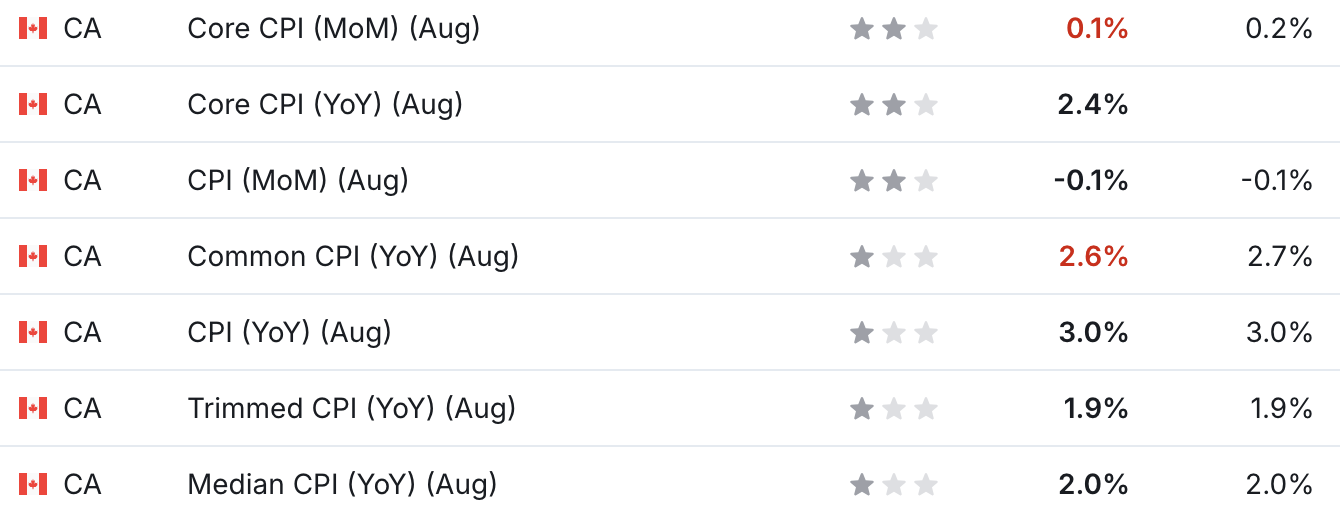
Moreover, the results mostly missed economists’ expectations. The table below is courtesy of Investing.com. The left column represents August’s figures, while the right column represents forecasters’ consensus estimates. As you can see, a couple of the core measures were weaker than anticipated.
Yet, with the Bank of Canada (BoC) still grappling with the energy shock and fresh US tariffs, Governor Tiff Macklem highlighted the challenges on September 2. He said:
“The Bank has been looking through the direct impact of higher oil prices on inflation, but we’re monitoring closely for any signs that they are spreading to the prices of other goods and services.
“We haven’t seen much evidence of that yet. But with the conflict ongoing and shipments through the Strait of Hormuz still curtailed, upside risks to our inflation forecast have increased. The longer oil prices and refinery margins stay high, the greater the risk that higher energy prices spill over and turn into persistent inflation.”
As a result, with the US-Iran war still without a resolution, the BoC will have to assess the breadth of the pricing pressures to determine its next move.
Core CPI
Core measures of the CPI were relatively muted in August, with the CPI-common index falling to +2.6% (from +2.7%), the CPI-median holding at +2.0% (from +2.0%), and the CPI-trim holding at +1.9% (from +1.9%). These measures exclude the impacts of food and energy, and the BoC places heavy emphasis on core measures because they provide a smoothed distribution of overall inflation.
Please note that food and energy prices are highly volatile and price spikes can occur for reasons outside of the BoC’s control. In contrast, core inflation is mainly driven by consumer demand and gives the BoC a better sense of how the Canadian economy is functioning.
Sector Results
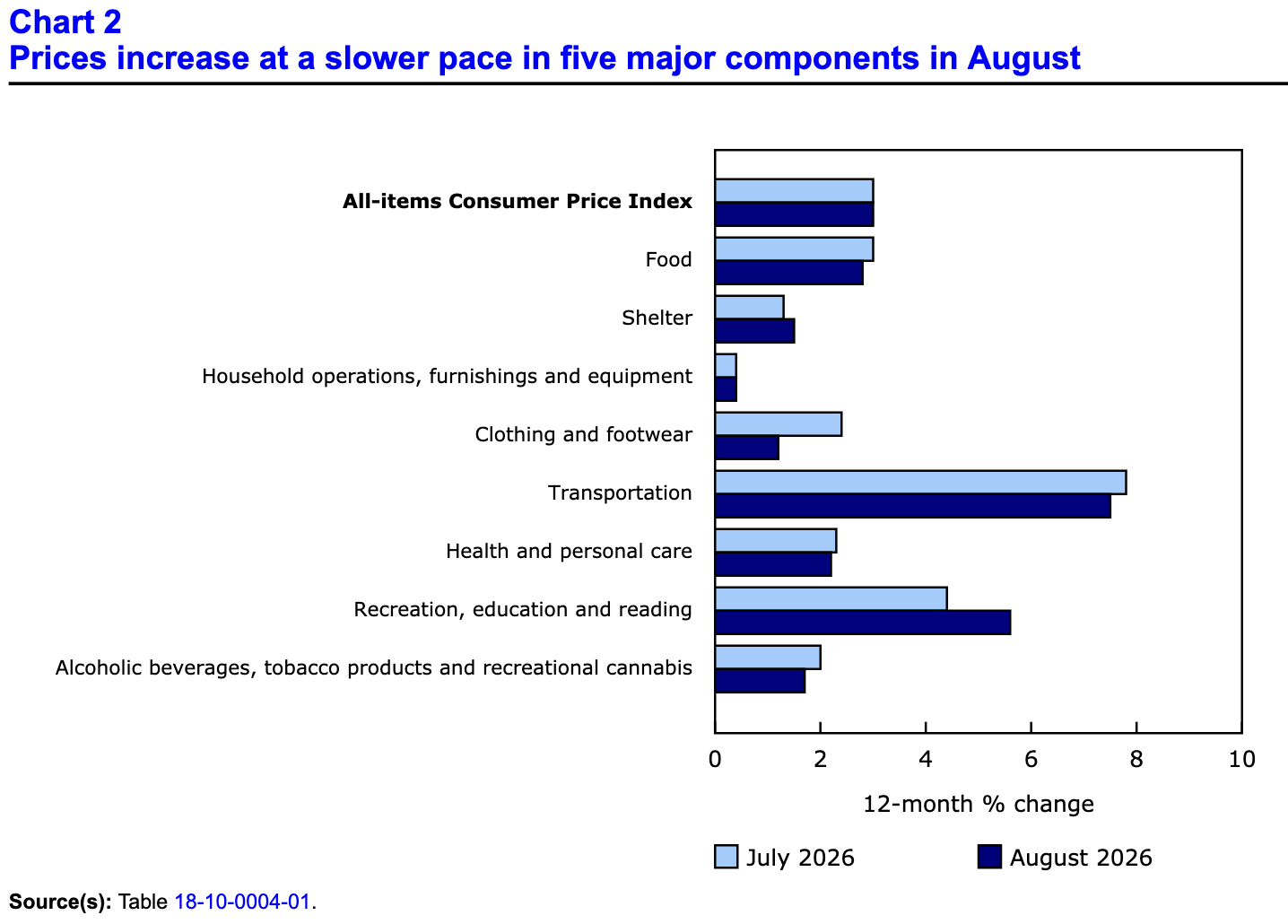
Sector performance was mostly weak in August, with five of the eight sectors slowing relative to July. Transportation slipped alongside clothing and footwear, while prices for recreation, education and reading were noticeably upbeat this month.
For context, the eight sectors include food, shelter, household operations, furnishings and equipment, clothing and footwear, transportation, health and personal care items, recreation and education expenses, and alcohol and tobacco products.
Food Inflation
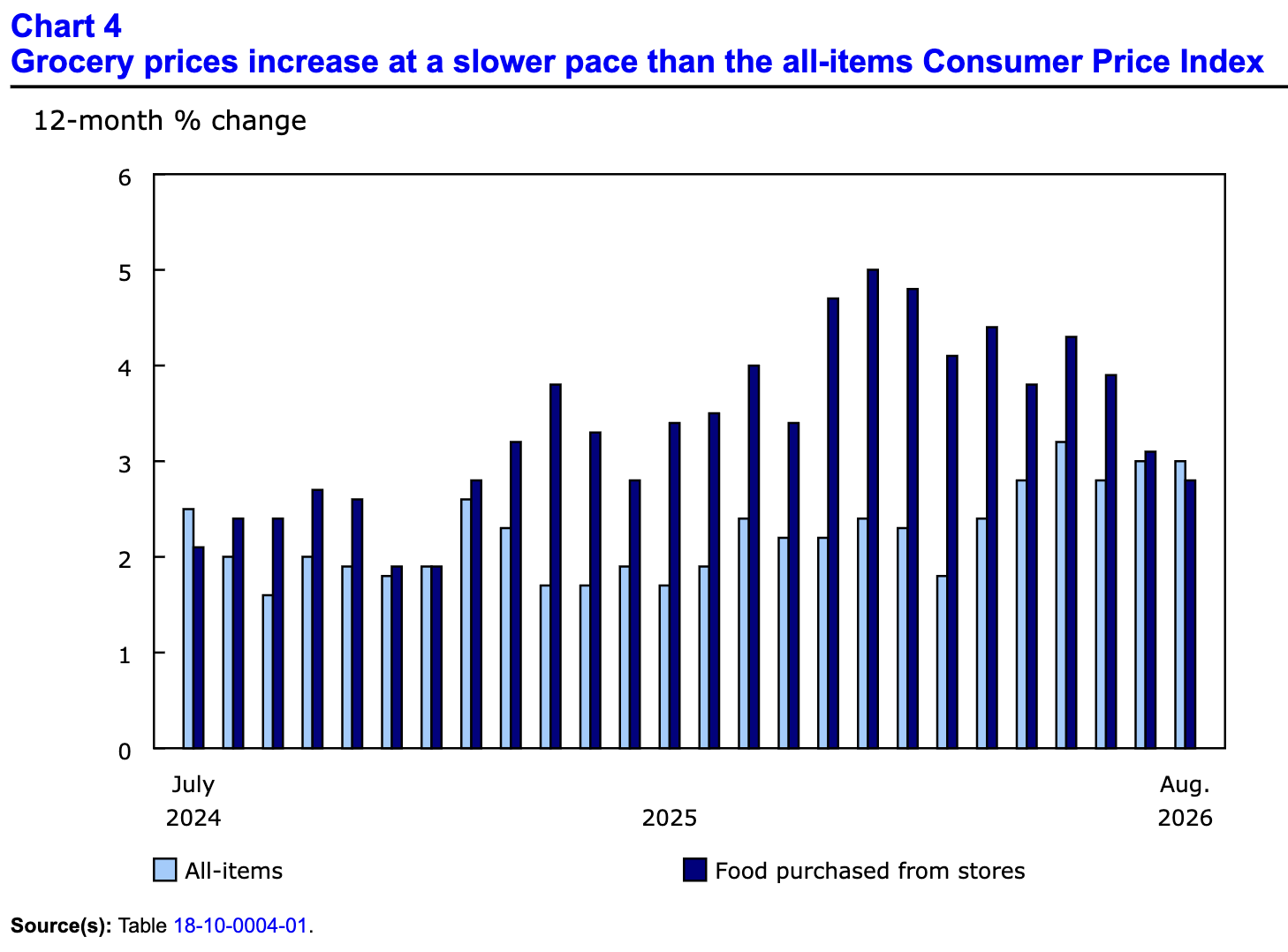
With food inflation rising by 2.8% Y-o-Y in August, it was the first time since July 2024 that grocery prices underperformed the headline CPI.
The slowdown was driven by weaker dairy price growth (+0.7% in August vs. +3.1% in July), while decelerations in fresh or frozen pork (+1.6%), condiments, spices and vinegars (+0.7%), and fresh fruit (+4.7%) also helped limit the increase.
The Pendulum
While it was only a few months ago that Canada was in a technical recession, recent upbeat data has led market participants to assume a meaningful recovery is underway. As a result, Canadian interest rates have risen dramatically, and bond traders are pressuring the BoC to raise interest rates.
But, Statistics Canada reported on September 4 that the economy shed 42,000 jobs in August. The report stated:
“Employment declined in business, building and other support services (-20,000; -2.8%), public administration (-8,800; -0.7%), natural resources (-7,700; -2.3%), and utilities (-5,600; -3.5%) in August.”
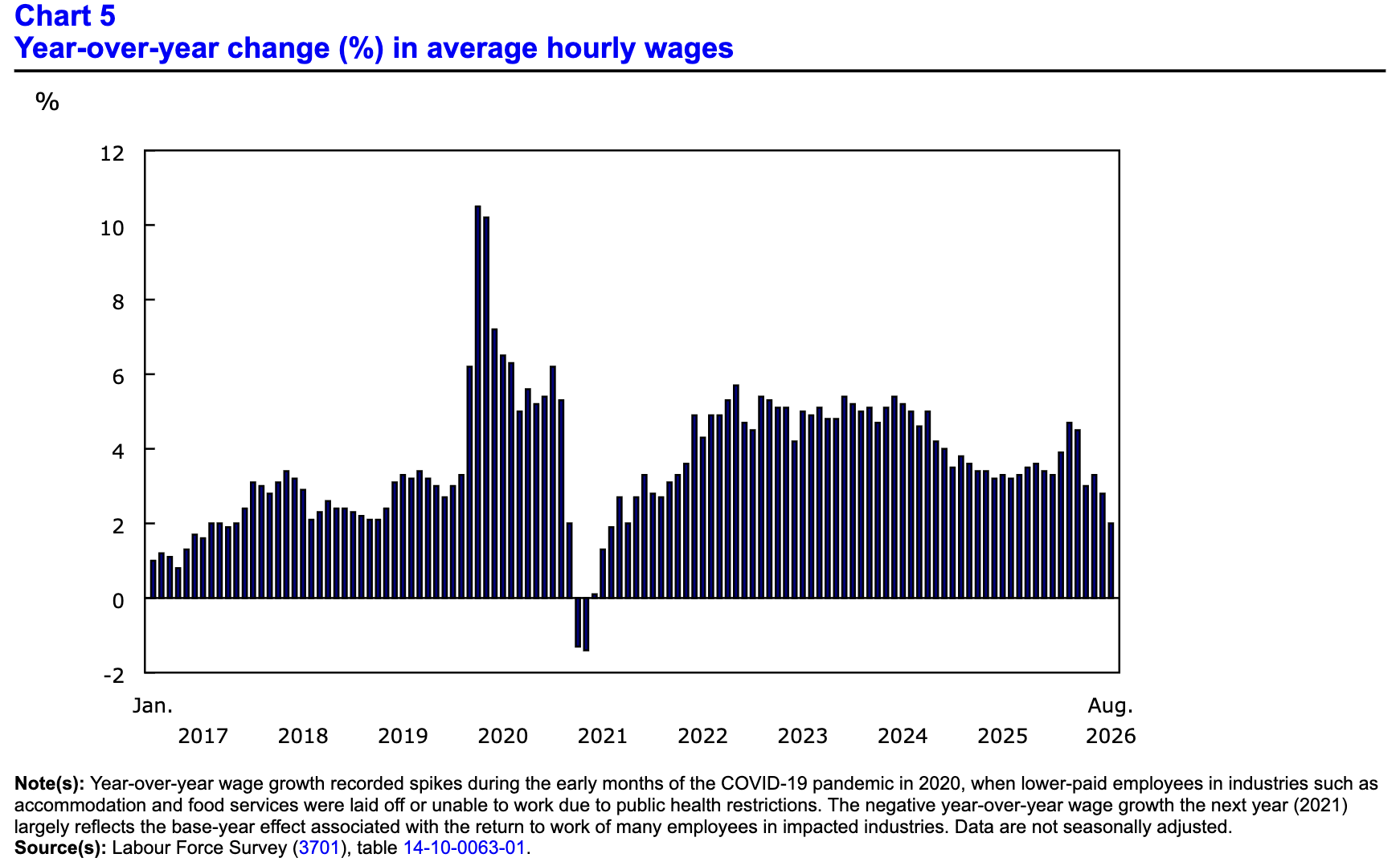
In addition, “Wage growth in August 2026 was the slowest since November 2017 (when it was also 2.0%), excluding the year 2021, during the COVID-19 pandemic.”
Consequently, the data conflicts with investors’ assessment of the economic outlook.
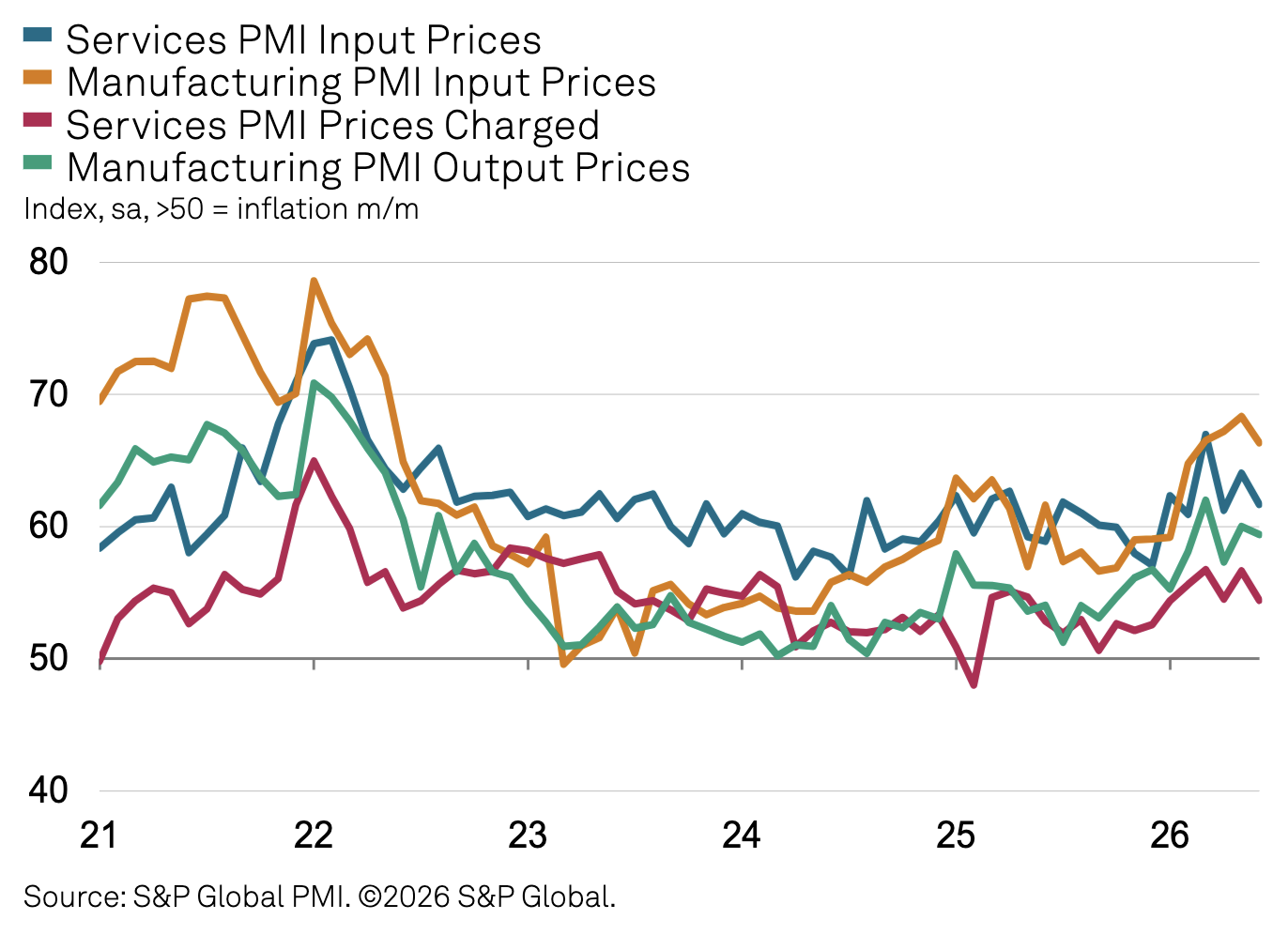
Speaking of which, S&P Global released its Canada Services PMI on September 3. Services account for roughly 70% of GDP growth, and the report stated:
“Tariffs and ongoing geopolitical instability weighed on Canada’s service sector in August. Both activity and new business fell, and at accelerated rates. Sharply rising input costs were also reported, and firms indicated little change in employment. Confidence in the outlook weakened to its lowest level since mid-2025.”
Likewise:
“Although service providers were keen to pass on their higher input costs to clients via a rise in their own output charges, competitive pressures and the weak demand environment served to limit pricing power. As such, output charge inflation overall softened to its lowest level since March.”
So, while interest rates have moved in lockstep with oil prices, the growth and inflation backdrop seem to contradict Macklem’s fears of broadening pricing concerns.
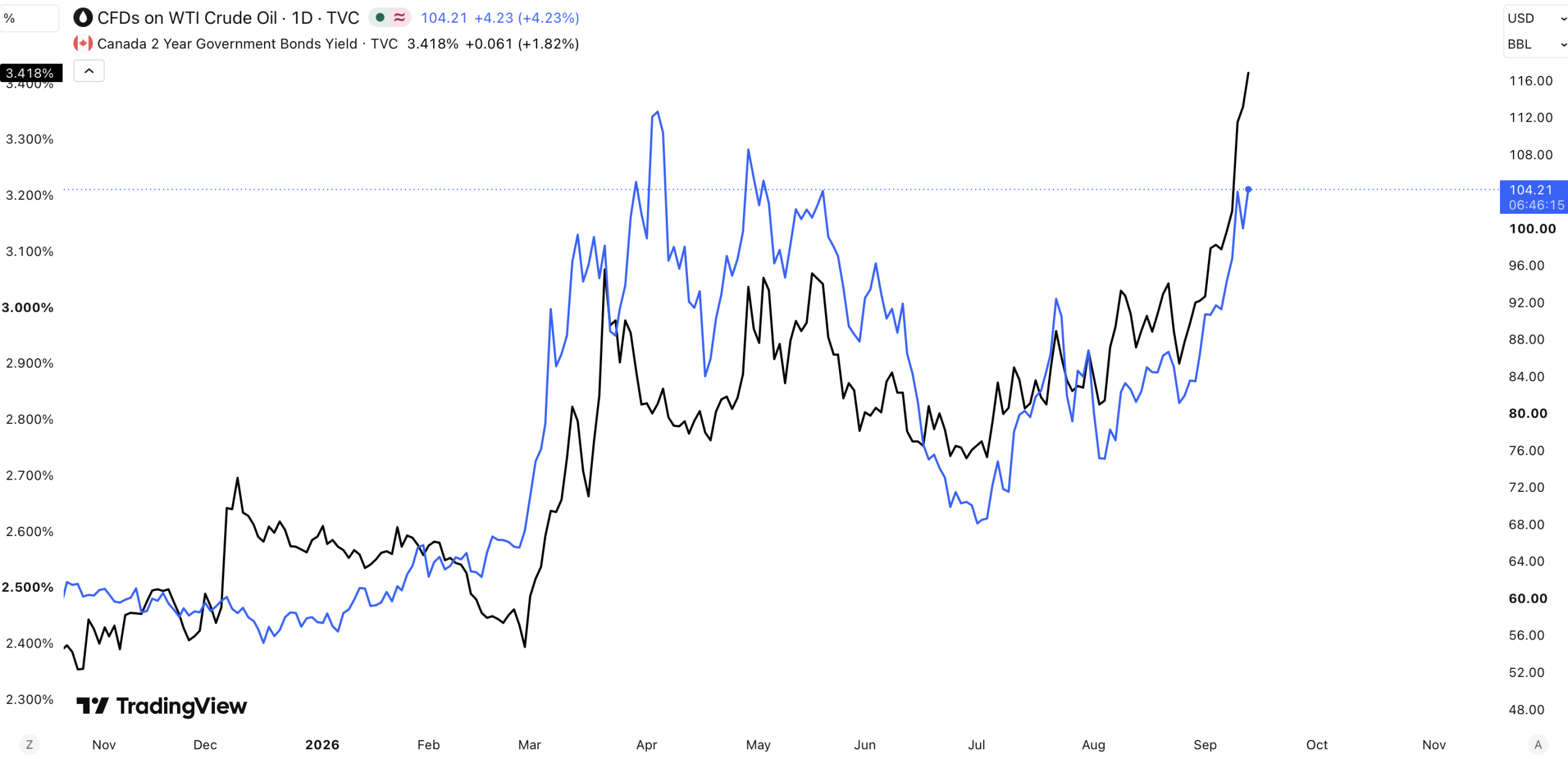
Finally, the story can be summed up by oil’s behaviour. The chart below highlights how the US oil price (blue) and the Canada 2-Year yield (black) have soared in recent weeks. The 2Y is a known proxy for the BoC’s overnight rate, and given its rapid ascent, investors expect several rate hikes in the months ahead.
Turning to gold, its struggles are similar to the bond market. With interest rates rising, assets like gold, silver, stocks, and other cyclical instruments don’t enjoy high yields and oil prices, which hurt economic growth.
Yet, while gold suffers from the same uncertainties, the outlook should brighten once the conflict subsides.
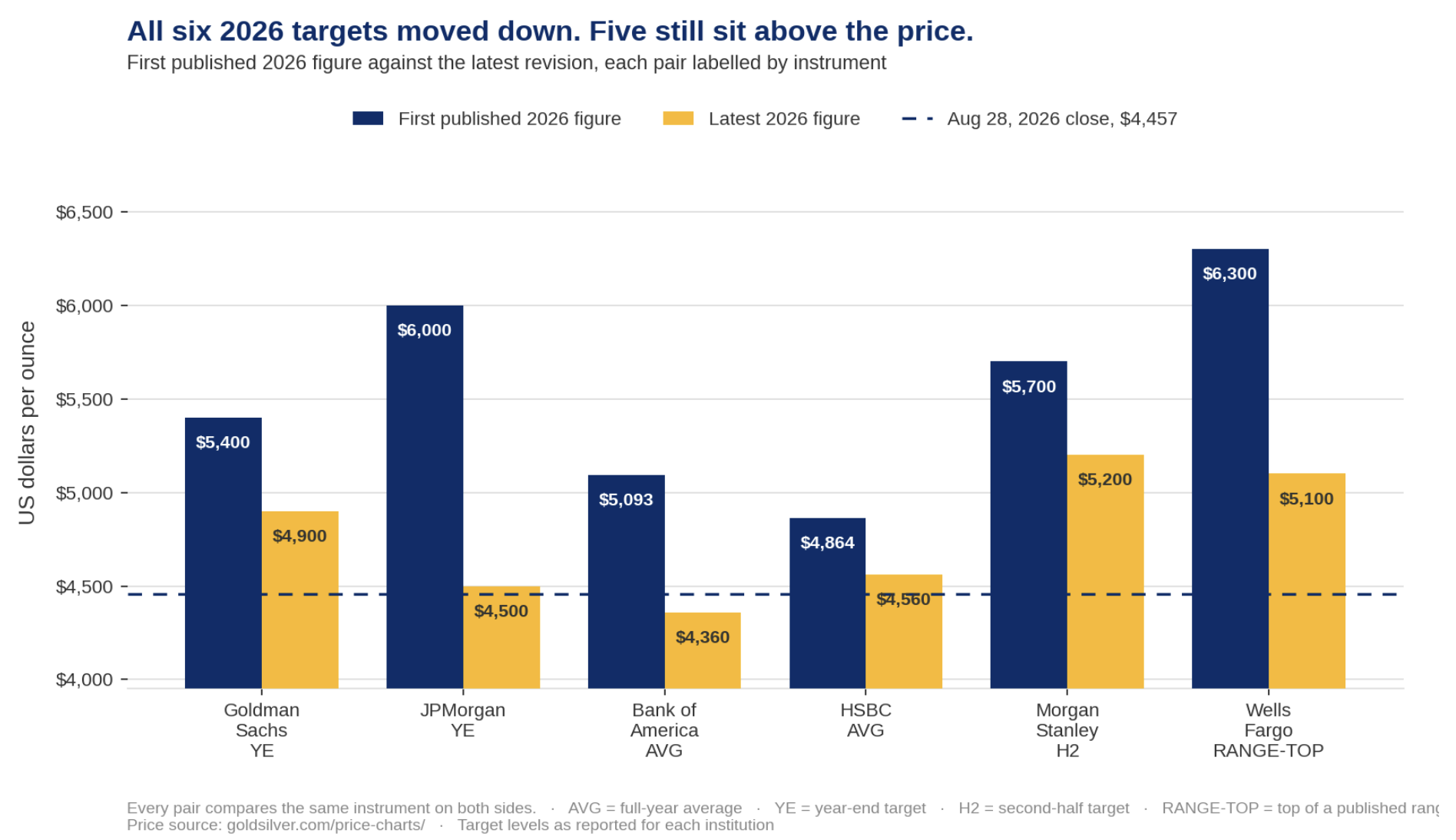
To explain, the blue and yellow bars above highlight the old and new year-end 2026 gold price targets from major US investment banks. And while they’ve all reduced their expectations due to the uncertainty, most still expect further upside in the months ahead. Thus, gold should continue its bull run once the geopolitical clouds dissipate.
Dedicating a small portion of one’s TFSA or RRSP portfolio to precious metals may help mitigate some of thegeopolitical risks and negative effects of inflation. If you want to get started with investing in metals such as gold and silver, read our free guide to gold buying in Canada in 2026 today.
In addition, with rising interest rates making auto loans less affordable, partnering with the right lender can save you hundreds or thousands of dollars. For bad credit borrowers in BC, Alberta, and Ontario, our extensive guides help empower you with the knowledge and resources to find the right solution. They cover all the angles — the best lenders, hidden costs, optimal tax strategies, and much more.
You may also want to consider EdenPark. It’s best for auto loan applicants with imperfect (but not damaged) credit and steady employment, with income above $2,000 a month.
Last, while you may be familiar with Blue Cross’ medical coverage, it also offers life insurance. The application process is done completely online, and its term life insurance is best if you value the brand and want to pair it with critical illness coverage. For more information, please see our full guide on Blue Cross Life Insurance in Canada.
For additional resources, please consult our list of reliable lenders to see a wide range of products and services available in your area.

Alex Demolitor is a financial writer hailing from Halifax. Alex has a Bachelors Degree from King's College and passed the CFA Exam Level III. He specializes in fundamental analysis of the stock, bond, commodity, and FX markets. He also covers US & Canadian economic indicators. He has been published on many financial publications, including Investing.com, FXEmpire and others.