
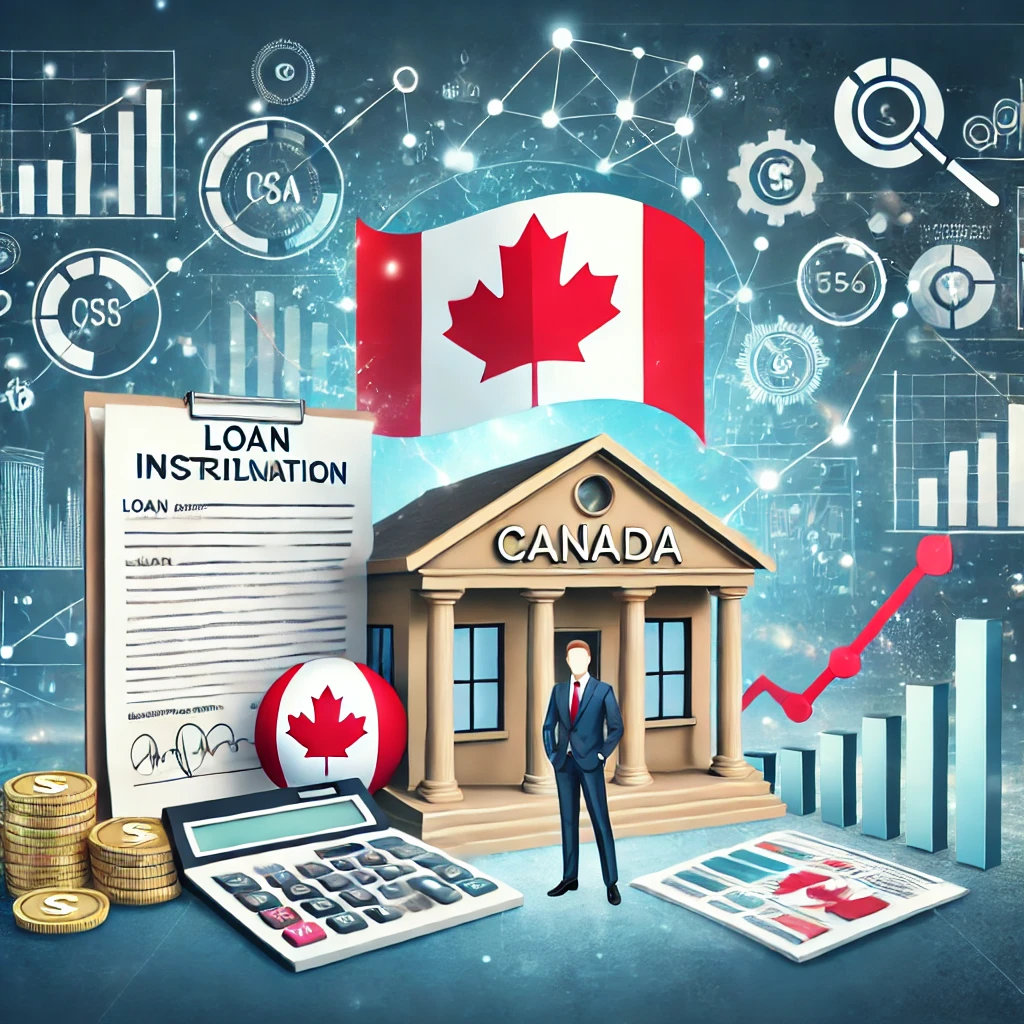
If you’re an entrepreneur or startup owner trying to land a small business loan in Canada at the best possible rate and terms, it helps to know exactly what lenders look at before they say yes. Approval isn’t a mystery — it comes down to a handful of measurable factors, and the stronger you are on each, the cheaper your money gets. Below I’ll walk through the eight qualification factors that matter most in 2026, what “good” looks like for each, and where to start once your file is in shape.
Reduce your credit card payments by up to 30–50%
CCC is a non-profit credit counselling agency. Talk to a trained counsellor for free to see if you qualify for a debt management program and explore other options for relief, so you can avoid bankruptcy. They’ll work with your creditors to lower your interest rates and stop late fees, then roll everything into one monthly payment — so you can be out of debt in as little as 36 months. They are not a loan company and do not lend money.
BBB Rating: A+Trustpilot 4.7/5 (6,900+ reviews)500,000+ Canadians helped$1B+ in debt eliminated
Talk to a Counsellor for Free →
Results vary by debt type, creditors, and budget. This page isn’t legal advice.
1. Business Age (Time in Operation)
Lenders want to see a track record. Traditional banks typically expect at least two years in business. Alternative lenders are more flexible — many will work with 6 to 12 months of operating history — but that flexibility comes at the price of higher interest rates. Even the Business Development Bank of Canada, one of the most accommodating institutions, generally wants at least 12 consecutive months of revenue for its startup financing and 24 months for its standard small business loan. The longer you’ve operated, the more options and the better rates you’ll unlock.
2. Revenue
Steady, provable revenue is often the single biggest factor, especially for alternative lenders. Some banks want to see roughly $10,000 in monthly revenue (about $100,000 annually) before they’ll engage. Others — including Merchant Growth, Journey Capital, and Driven — can work with lower figures, sometimes around $5,000 a month, depending on your industry. Because these thresholds vary so much, it pays to contact a few lenders directly and compare what each will do for your specific numbers.
3. Credit Score
Your personal and business credit both come into play, but how much weight they carry depends on the lender. Banks usually want a good score, around 650 or higher. Alternative lenders like Swoop are more lenient, and some — such as Journey Capital — go as low as 550, focusing more on your business’s performance than your personal file.
If your score is holding you back, the smartest move is often to pause and fix it before applying, because every point translates into a better rate. My 10 tips to improve your Canadian credit score covers the fastest levers, and if your credit is genuinely weak, my guide to bad-credit business loans in Canada shows which lenders still say yes. If existing debt is dragging your score down, tackling that first can lift both your score and your approval odds.
Find relief in 3 easy steps
1Talk to a counsellor for free
Review your debts, budget, and credit to see if you qualify — and explore other options so you can avoid bankruptcy.
2Start when you’re ready
Once you enrol, they call your creditors to lower your interest rates and stop late fees.
3Get out of debt faster
Make one monthly payment and they distribute it to your creditors — debt-free in as little as 36 months.
Tip: have your balances, minimum payments, and monthly expenses handy.
4. Debt-Service Coverage Ratio (DSCR)
This is the ratio banks and credit unions lean on most to judge whether your business can actually carry a new loan. It’s your net operating income (what’s left after operating expenses) divided by your total debt payments (principal plus interest). If your business earns $200,000 and owes $100,000 in annual debt payments, your DSCR is 2.0 — meaning you generate twice what you need to service your debt, which lenders love.
Here’s the thing I’d stress from a finance perspective: DSCR is the number that quietly makes or breaks a bank application, and most owners never calculate it before walking in. Do it first, because it tells you how a lender will see you.
What’s a healthy DSCR? Lenders generally want 1.25 or higher — 25% more income than your debt obligations require. A ratio of 1.0 means you exactly cover your debts (risky), and anything below 1.0 signals you’re not generating enough to keep up, which usually means a decline or a punitive rate.
The debt-to-equity ratio is the companion metric, showing how leveraged you are relative to the owner’s stake. A high ratio (say 3:1 or more) can flag your business as over-borrowed and risky. Taken together, these two ratios tell a lender how safely they can lend to you — so the practical takeaway is simple: keep your income comfortably above your debt payments, and don’t over-leverage before you apply.
5. Collateral (Sometimes)
Traditional banks may want security — business equipment, property, or other assets — to back the loan. Many alternative lenders, by contrast, offer unsecured loans that require no collateral. There’s a trade-off: secured loans usually come with better rates because the lender’s risk is lower, while unsecured loans cost more but keep your assets out of the equation. Shop around and decide which trade-off suits you.
6. Business Plan
A solid business plan matters most with banks, credit unions, and BDC, especially for larger loans or startups. Lenders want to understand how you’ll use the money and, more importantly, how you’ll repay it. A clear plan with realistic financial projections and a specific use-of-funds case signals competence and materially improves your odds. Even where a formal plan isn’t required, being able to articulate the “why” behind the loan works in your favour.
7. Documentation
Traditional lenders ask for the most paperwork; alternative lenders like Swoop tend to want the least — sometimes just three to six months of financial statements to gauge your cash flow. Whichever route you take, having your documents ready speeds everything up. Assemble these before you apply:
- Financial statements (profit-and-loss statements, balance sheets)
- Bank statements (typically the last 3–6 months)
- Tax returns (personal and business)
- Proof of business ownership (business licence, articles of incorporation)
8. Personal Guarantee
Some lenders — including the BDC — require a personal guarantee, meaning you’re personally on the hook if your business can’t repay. In fact, BDC’s small business loan is unsecured but backed by exactly this kind of guarantee. A personal guarantee often earns you a better rate, but it also puts your personal assets at risk, so weigh that trade-off carefully before signing a secured or guaranteed loan.
Government-Backed Options Worth Knowing
Two government-connected routes deserve a specific mention, because they’re built for exactly the borrowers banks hesitate on:
- The Canada Small Business Financing Program (CSBFP). This federal program has the government guarantee up to 85% of a lender’s losses, which makes banks far more willing to approve you. Since the 2022 modernization it covers up to $1.15 million total (up to $1 million in term loans plus a $150,000 line of credit). Any for-profit Canadian business under $10 million in revenue is eligible, and you apply through a participating bank rather than the government directly.
- BDC. As a federal Crown corporation dedicated to entrepreneurs, BDC is more flexible on credit than the Big Five and offers small business loans up to $350,000 online. It weighs your overall business potential and cash flow, not just your credit score, which makes it a strong option for a viable business with an imperfect file.
Provincial programs are also worth checking, since BC, Alberta, and Ontario each run their own grants and financing options.
Conclusion: Where Should You Start?
Start with your local bank or credit union — they’ll usually (though not always) offer the best rates and terms if you qualify. From there, shop around and call several lenders to compare, because the same business profile can draw very different offers. If a bank hesitates, ask specifically about the CSBFP or look at BDC before jumping to pricier alternative lenders.
The through-line across all eight factors is preparation. Get your financials organized, calculate your DSCR, tidy up your credit, and match your lender to your business stage — a bank for strong, established files; BDC or CSBFP for near-bankable ones; and alternative lenders like Merchant Growth or Driven when speed and access matter more than price. The Business Development Bank of Canada’s own guide to getting a business loan is a solid, neutral checklist to work through before you apply. Do the homework, and you’ll not only qualify — you’ll qualify on better terms.
Bottom line: check your options now.
If you want one place to start, CCC is a strong option. You can get a clear recommendation based on your situation, and whether the best fit is a DMP or a principal-reduction route like a consumer proposal, they can help you move forward without bouncing between random companies.
FAQ
What credit score do I need for a small business loan in Canada?
Banks generally want around 650 or higher. Alternative lenders are more lenient — some, like Journey Capital, go down to about 550 — because they weight business revenue more heavily than personal credit. The CSBFP publishes no fixed minimum.
How long does my business need to be operating to qualify?
Banks typically want two years. Alternative lenders may accept 6 to 12 months. BDC generally wants at least 12 months of revenue for startup financing and 24 months for its standard small business loan.
What is a debt-service coverage ratio and why does it matter?
DSCR is your net operating income divided by your total debt payments. Lenders use it to judge whether you can carry a new loan, and most want to see 1.25 or higher — meaning you earn 25% more than your debt obligations require.
Do I need collateral for a small business loan?
Not always. Banks often want collateral, but many alternative lenders offer unsecured loans. Secured loans usually carry lower rates; unsecured loans cost more but don’t put specific assets at risk. Some lenders, like BDC, use a personal guarantee instead of collateral.
What documents do I need to apply?
Typically financial statements, 3–6 months of bank statements, personal and business tax returns, and proof of business ownership. Banks ask for more; alternative lenders ask for less.

Mohammed Saqib has a Masters Degree from Wilfrid Laurier University in Waterloo. He has a robust background in accounting and finance. Mohammed started his career three years ago working as an investment analyst at a sell-side firm. He has extensively covered publicly-listed companies using fundamental analysis as the cornerstone of his approach. Mohammed has been published on SeekingAlpha, InvesorPlace, Yahoo! Finance and others.