
Every business owner understands the importance of cash flow. When more money is going out than coming in — delayed receivables, an unexpected repair, a supplier who wants payment up front — you need a short-term tool to bridge the gap.
Enter Keep.
The Toronto fintech has grown from a corporate-card startup into what it calls Canada’s first all-in-one financial platform for small businesses: a Mastercard with high limits, financing up to $1 million, multi-currency accounts, and automated expense management under one roof. Is it the right solution for your business, or are there better options elsewhere? Here’s my updated review.
About the Company

| URL | www.trykeep.com |
| Phone | 1-866-460-5337 |
| support@trykeep.com | |
| Company HQ | Toronto, ON |
| Founded | 2022 (founder/CEO Oliver Takach, a two-time Y Combinator alum) |
| Trustpilot | ~3.9/5 (roughly 170 reviews) |
| Funding | C$108 million announced May 2025 |
That funding line is the biggest change since I last looked at Keep, and it’s worth a moment of analyst attention. In May 2025 the company announced C$108 million: C$33 million in equity led by Tribe Capital, a C$71 million credit facility from Treville, and a C$4 million venture debt line from Silicon Valley Bank, with participation from Rebel Fund, Liquid2, Cambrian, Assurant Ventures, and angels from Robinhood, Stripe, Plaid, and Ramp. Two things I read into that structure: the equity validates the model, and the credit facility is the fuel — a card issuer’s real constraint is funding capacity, and C$71 million of it means Keep can actually extend the limits it advertises. The company’s stated target is 100,000 Canadian small businesses by 2027.
What Is Keep?
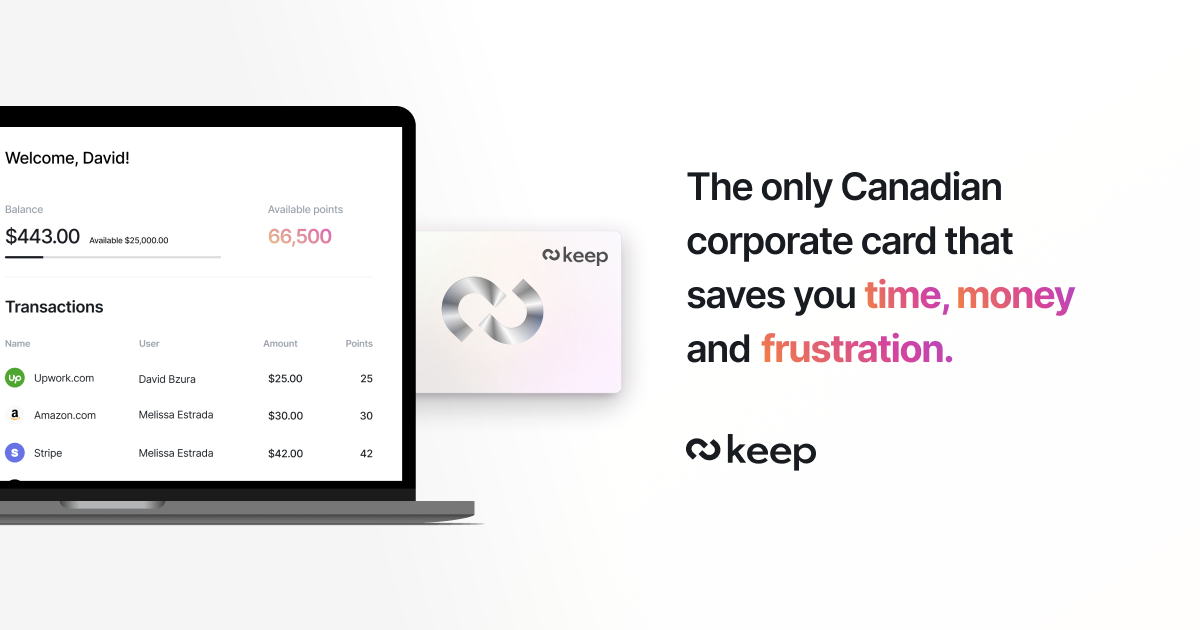
Keep started as a corporate Mastercard with “higher credit limits, meaningful rewards, and no hidden fees,” and that card is still the anchor. But the 2026 platform is broader:
- The Keep Card — a business Mastercard with credit limits the company pitches at up to 10x what traditional issuers offer comparable businesses, limits that grow with your payment performance, and up to 56 fee-free days on purchases.
- Keep Capital — business financing of up to $1 million with transparent terms.
- Multi-currency accounts — hold and transact in over a dozen currencies with no added FX markup, and pay suppliers internationally at mid-market rates.
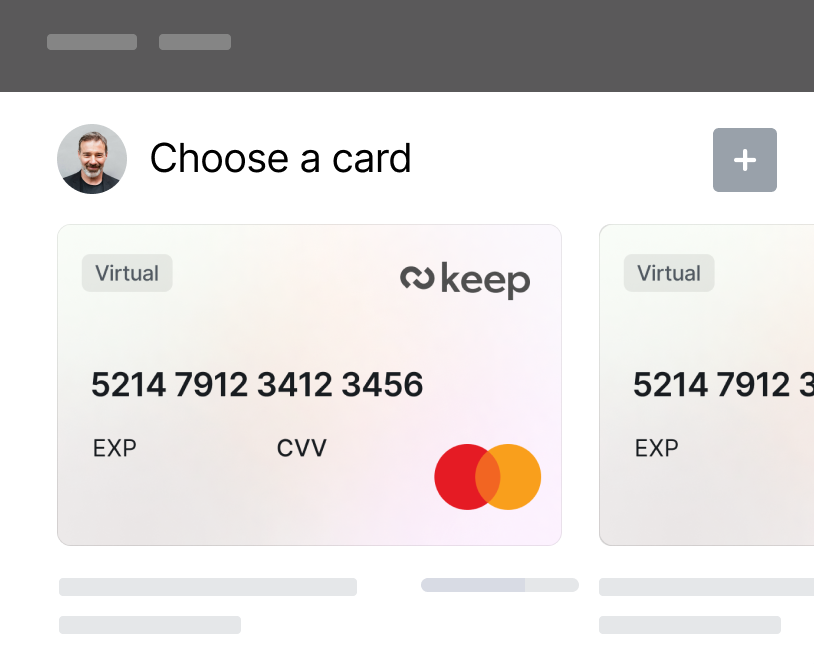
- Expense management — unlimited virtual cards, per-employee spend controls, receipt capture, and sync with accounting software like QuickBooks for faster month-end closes.
Applying takes about eight minutes online, decisions typically come back within a few days, and inquiring doesn’t affect your credit score — though accepting an offer can trigger a hard inquiry, so ask before you sign.
Why Choose a Keep Business Card?
The pitch rests on three legs. First, limits: Keep underwrites on business performance rather than just the owner’s personal file, which is how it justifies the 10x-higher-limit claim. Second, fees: no hidden fees, no added FX costs, and a fee-free window of up to 56 days — Keep earns from transaction interchange rather than by layering charges on cardholders. Third, rewards: points on every purchase that the company markets as beating typical business cards several times over, redeemable against your balance or through a travel portal covering more than 300 airlines.
One caution from someone who has read too many cardholder agreements: “fee-free days” is a grace period, not free money. Carry a balance past the window and the cost of that convenience shows up quickly — several reviewers say exactly that. Treat Keep like a charge card you clear in full, and the economics stay attractive.
Why Does the Right Business Card Matter So Much?
Small businesses run on thin margins, and payment costs are a real line item. It’s a big enough issue that the Government of Canada announced reduced credit card interchange fees for small businesses, a measure it estimated would save eligible firms about $1 billion over five years. The flip side of that policy story is the point Keep is built on: fees compound quietly, and a card that strips out FX markups, annual charges, and wire fees returns that margin to you. On a business putting $30,000 a month through a card with cross-border suppliers, the FX line alone can be worth more than the rewards.
👍 Keep Pros
- Materially higher limits than most issuers offer small businesses, with limits that grow as you pay well.
- Up to $1 million in financing available through Keep Capital, beyond the card itself.
- Genuinely useful fee structure — no added FX costs, up to 56 fee-free days, and no fee to apply.
- Strong tooling: unlimited virtual cards, per-employee controls, receipt automation, and accounting sync.
- Rewards that stack up well against typical business cards, with balance and travel redemptions.
- Well capitalized after the C$108 million round, which matters when your operating credit line depends on the issuer’s own funding.
👎 Keep Cons
- Approved limits can disappoint. The most common complaint pattern is applicants approved for far less than the marketing led them to expect. The 10x claim is a ceiling, not a promise.
- Costs bite if you carry a balance. Past the fee-free window, this stops being cheap money.
- Platform pricing complaints. Some longer-tenured reviewers report being moved onto paid platform tiers with what they felt was thin notice; Keep disputes the characterization, but read your account communications carefully.
- Rewards can be forfeited if your account goes past due — it’s in the program terms, and reviewers have been burned by it.
- Onboarding friction shows up in reviews: scheduled calls missed, account managers responsive early and harder to reach later.
What Do Cardholders Say?
Keep’s Trustpilot profile sits around 3.9 out of 5 across roughly 170 reviews. The happy majority describe fast approvals, excellent virtual-card workflows, real savings on USD transactions, and responsive support. The unhappy minority cluster around the gaps between expectation and offer — smaller limits than hoped, onboarding delays, and the newer platform-fee grievances. My honest read: this is the classic profile of a young fintech scaling fast. The product works; the edges are still being sanded. Get your limit, your fee schedule, and your platform pricing in writing during onboarding, and most of the complaint categories become avoidable.
Does Keep Offer Consumer Credit Cards?
No — Keep serves small and mid-sized businesses only. If you’re after a personal card, two I’ve reviewed are worth a look: the Neo credit card, which leans on boosted partner cash back, and the KOHO prepaid Mastercard, a strong pick for everyday spending and, via its paid add-on, credit building.
How Keep Compares for Business Financing
If a revolving card isn’t the shape of financing your business needs — or if the limit Keep offers you falls short — a term loan or line of credit through a marketplace like Swoop lets you compare alternative lenders from one application (expect higher rates than bank money; I covered the platform in my Swoop Funding review). For newer companies still building revenue history, my roundup of 10 startup business loans available in Canada covers the landscape, and I’ve done standalone reviews of working-capital lenders like Merchant Growth and Journey Capital if you want to benchmark offers.

What Do We Think About Keep?
Keep is worth an inquiry — more so now than when it was a scrappier startup. The fee structure is genuinely competitive, the expense tooling saves real administrative hours, and the C$108 million war chest means the limits and capital products have funding behind them. The consistent thread in the negative reviews is unmet expectations, not bad faith: applicants who assumed the ceiling was the offer. So do what I’d do — apply (it’s free and doesn’t ding your score), see the actual number and terms Keep puts in front of you, get the platform pricing in writing, and judge the offer on paper rather than the marketing. If the limit and terms fit your cash-flow cycle, this is one of the stronger business cards in Canada.
If you want to sign up or learn more, visit: www.trykeep.com
FAQ
Is Keep a real credit card or a charge product?
It’s a business Mastercard with a fee-free window of up to 56 days. Clear the balance inside the window and you pay no financing cost; carry past it and charges apply.
Will applying hurt my credit score?
Inquiring doesn’t affect your score. Accepting an offer may involve a hard inquiry — confirm before you sign.
How big a limit can I get?
Keep markets limits up to 10x what traditional issuers offer comparable businesses, and limits grow with payment performance. Your actual offer depends on your business financials, and reviewers note offers can land below expectations.
Does Keep offer more than the card?
Yes — financing up to $1 million through Keep Capital, multi-currency accounts with no added FX markup, and expense management with unlimited virtual cards.
Is Keep financially stable?
The company announced C$108 million in May 2025, including a C$71 million credit facility that directly funds cardholder credit, and is targeting 100,000 Canadian small-business customers by 2027.

Mohammed Saqib has a Masters Degree from Wilfrid Laurier University in Waterloo. He has a robust background in accounting and finance. Mohammed started his career three years ago working as an investment analyst at a sell-side firm. He has extensively covered publicly-listed companies using fundamental analysis as the cornerstone of his approach. Mohammed has been published on SeekingAlpha, InvesorPlace, Yahoo! Finance and others.