
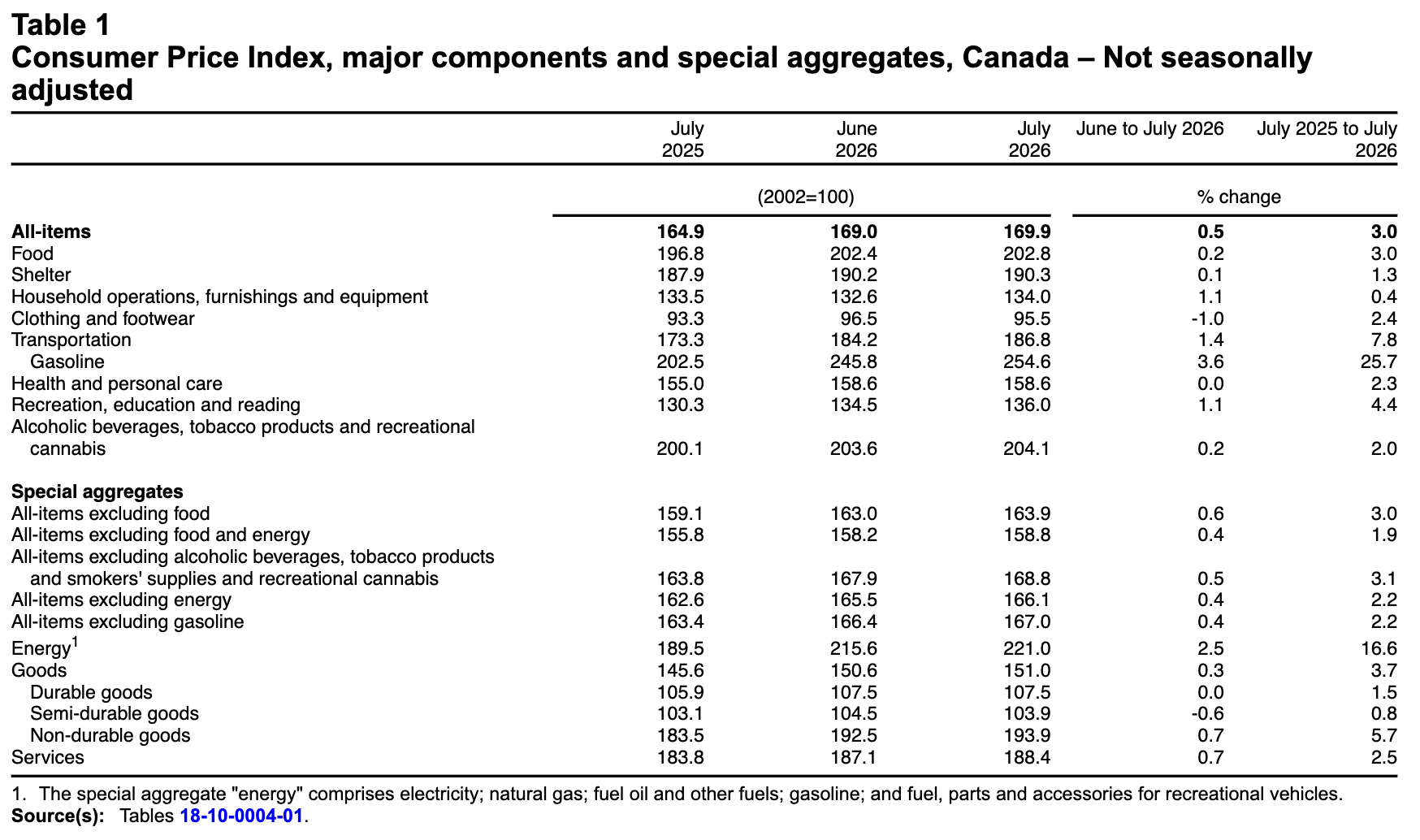
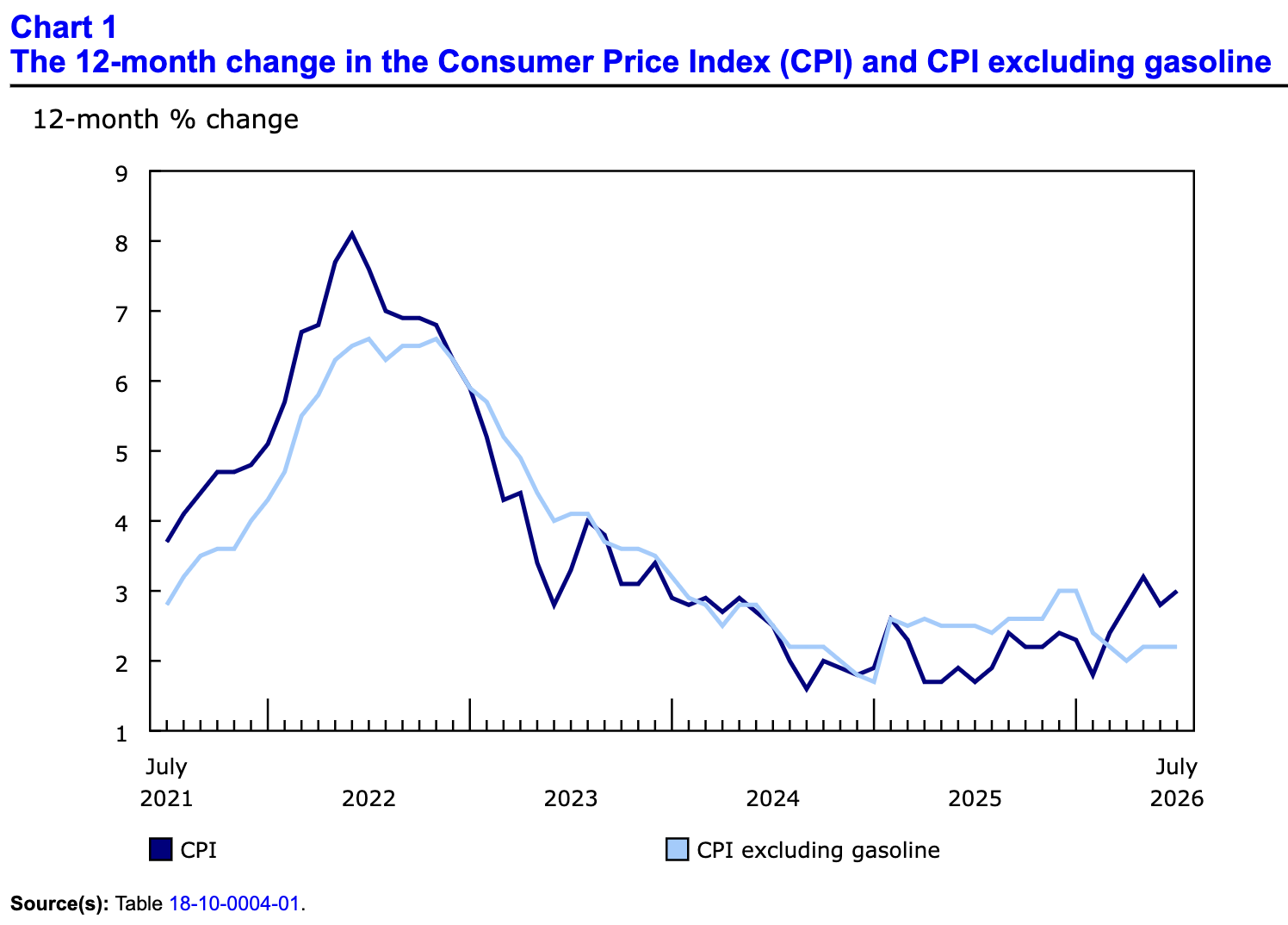
Canada’s consumer price index (CPI) increased by 3.0% year over year (Y-o-Y) in July, up from 2.8% Y-o-Y in June. Statistics Canada (StatsCan) published the data at 8:30 a.m. ET on August 17, 2026, via The Daily report. On a monthly basis, the CPI increased by 0.5%, as higher prices for gasoline (+25.7% Y-o-Y in July vs. +20.5% in June) and travel tours drove the acceleration.
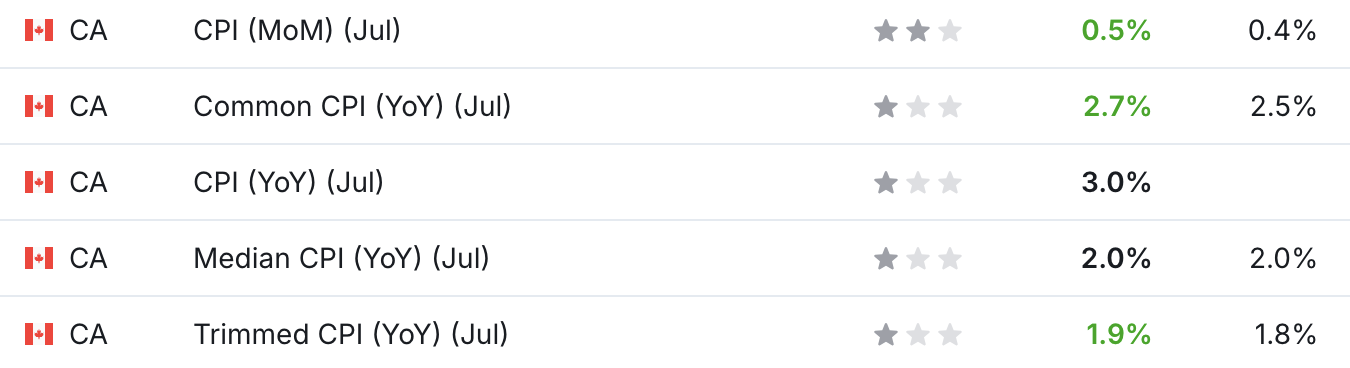
Moreover, the results mostly surpassed economists’ expectations. The table below is courtesy of Investing.com. The left column represents July’s figures, while the right column represents forecasters’ consensus estimates. As you can see, there was noticeable outperformance this month.
Yet, the Bank of Canada (BoC) will likely maintain its wait-and-see approach. With oil prices gyrating alongside renewed U.S.-Iran tensions, the uncertainty around escalation or de-escalation makes forecasting monetary policy quite tricky. As such, the committee will likely continue to monitor core inflation for any spillover effects from the energy crisis.
Core CPI
Core measures of the CPI were relatively well behaved July, with the CPI-common index rising to +2.7% (from +2.6%), the CPI-median rising to +2.0% (from +1.9%), and the CPI-trim holding at +1.9% (from +1.9%). These measures exclude the impacts of food and energy, and the BoC places heavy emphasis on core measures because they provide a smoothed distribution of overall inflation.
Please note that food and energy prices are highly volatile and price spikes can occur for reasons outside of the BoC’s control. In contrast, core inflation is mainly driven by consumer demand and gives the BoC a better sense of how the Canadian economy is functioning.
Sector Results
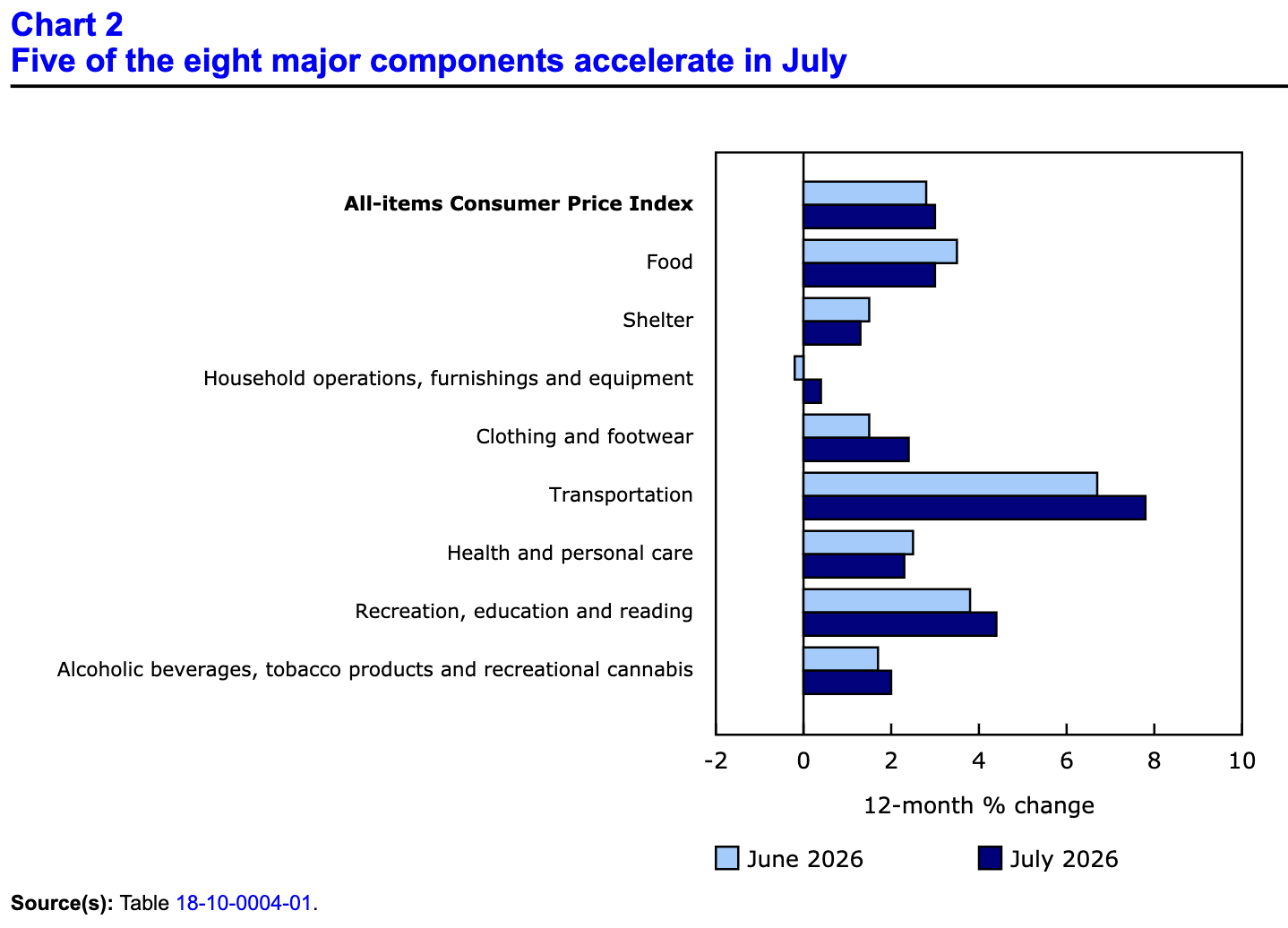
Sector performance was mostly strong in July, with five of the eight sectors outperforming this month. Transportation led the way, with recreation, education and reading not far behind.
For context, the eight sectors include food, shelter, household operations, furnishings and equipment, clothing and footwear, transportation, health and personal care items, recreation and education expenses, and alcohol and tobacco products.
Food Inflation
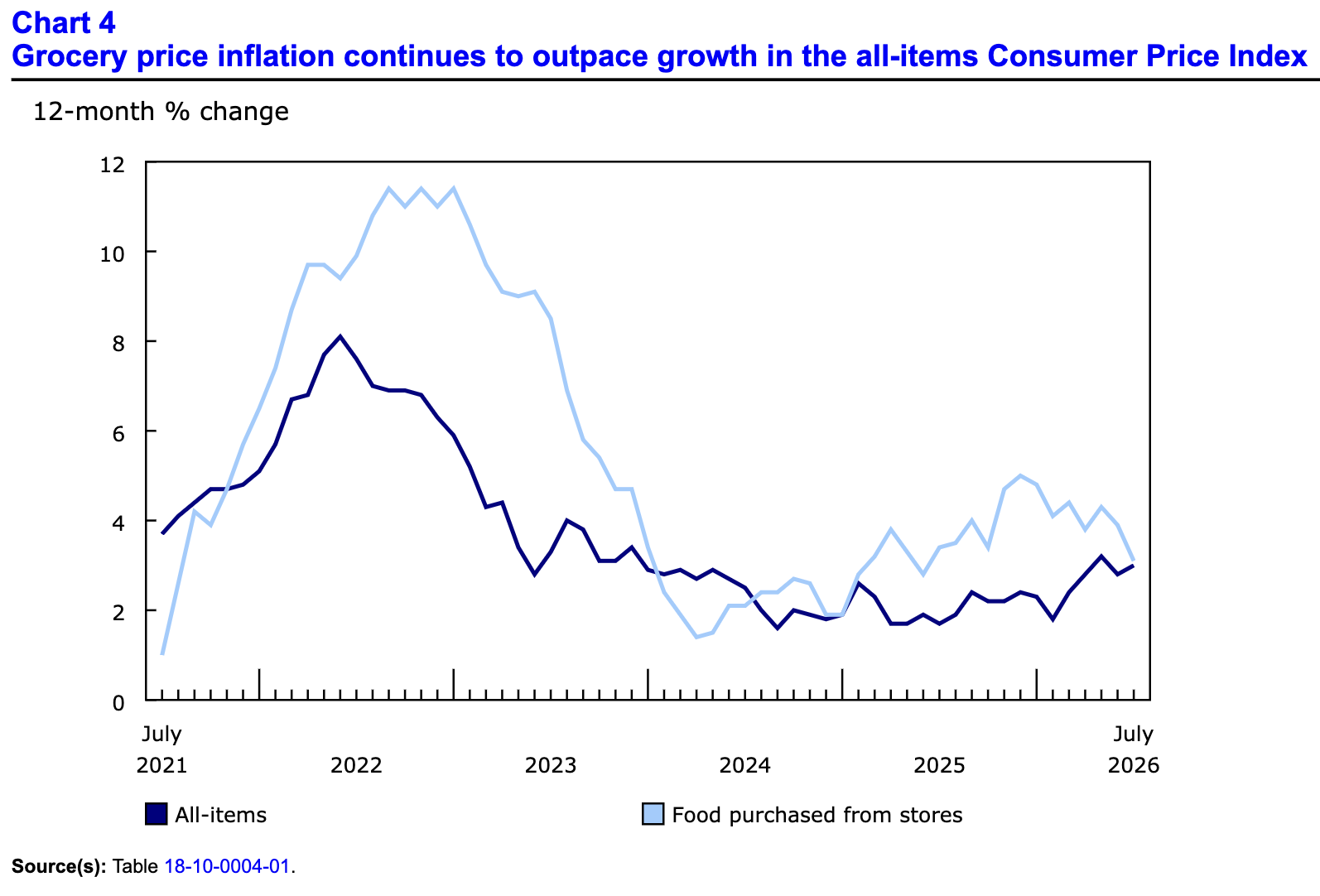
While July was the 18th straight month that grocery price inflation surpassed the headline CPI, food purchased from stores grew at a slower pace in July (+3.1% Y-o-Y vs. +3.9% in June).
The dip was driven by slower price growth for fresh vegetables (+3.9%), fresh or frozen chicken (+0.3%), and cereal products (-1.7%). Conversely, fresh fruit prices rose by 6.1% in July versus 1.7% in June.
Green Shoots
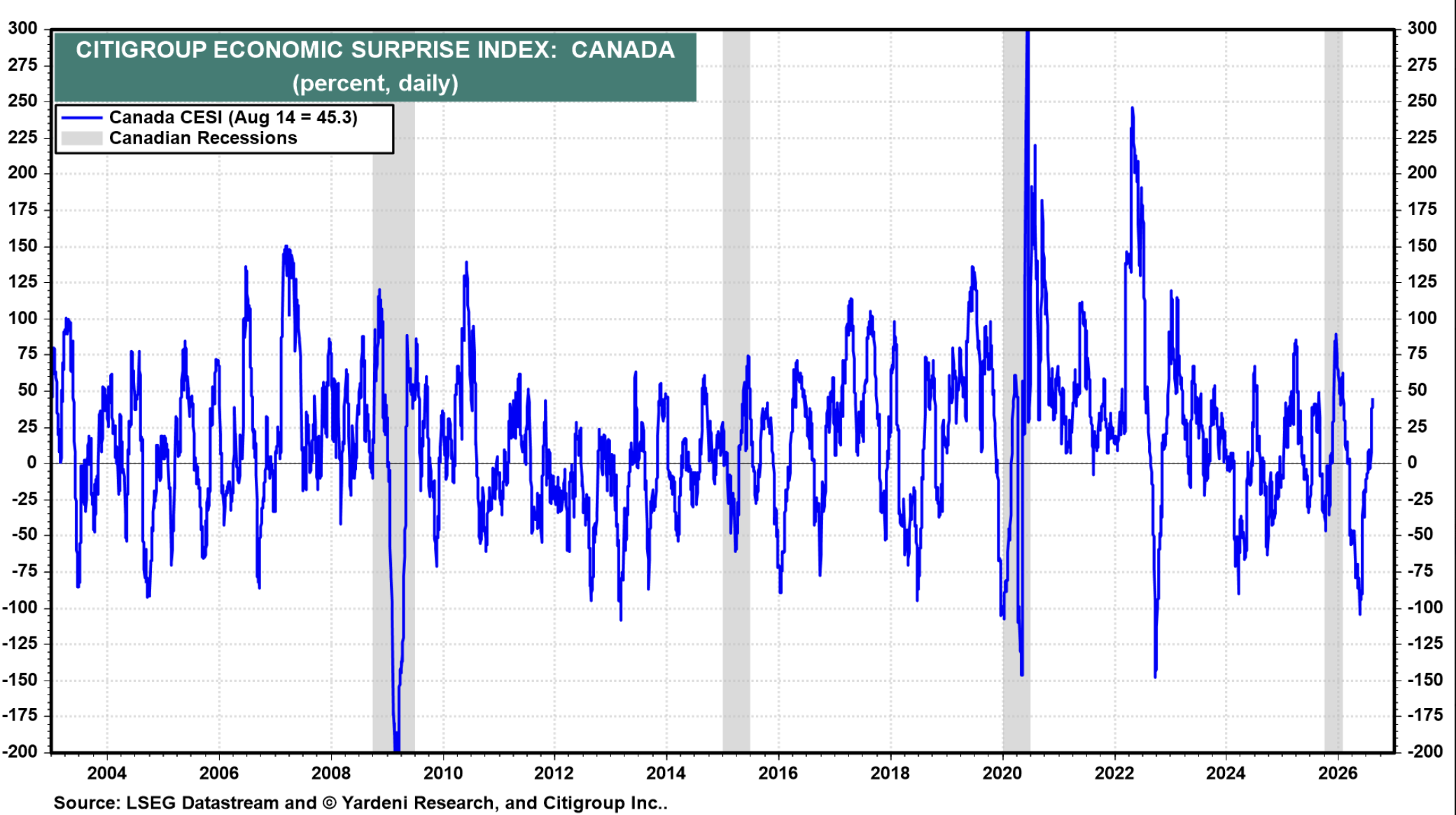
Like the wild ride in oil prices, Canada’s economic data has endured some massive whipsaws. For example, Canada’s Economic Surprise Index (ESI) has gone from below -100 to above 45. As such, the recent recession scare seems to have calmed down, and the economic outperformance makes it easier for the BoC to carefully plan its next move.
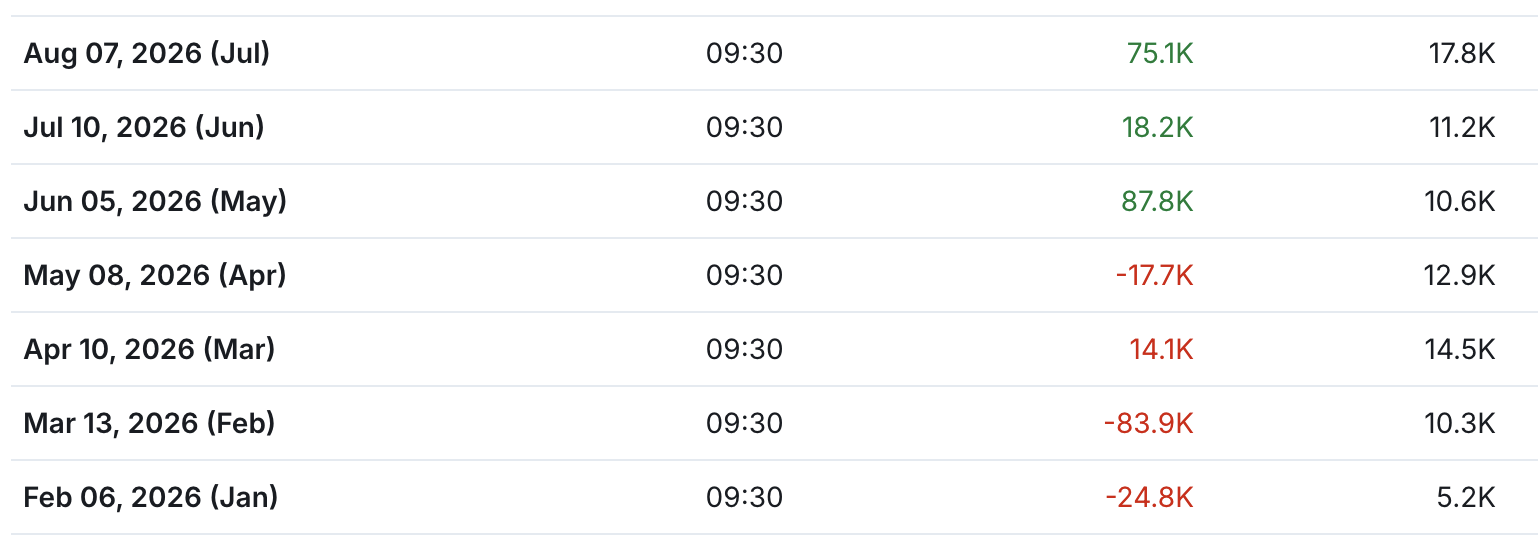
Likewise, labour market growth has perked up this spring/summer. After four months of underperformance and some negative prints (the red metrics below), the last three months have been quite constructive (the green metrics below). Consequently, the second half of the BoC’s dual mandate seems to have stabilized, which further eases the burden around making quick or reactive decisions.
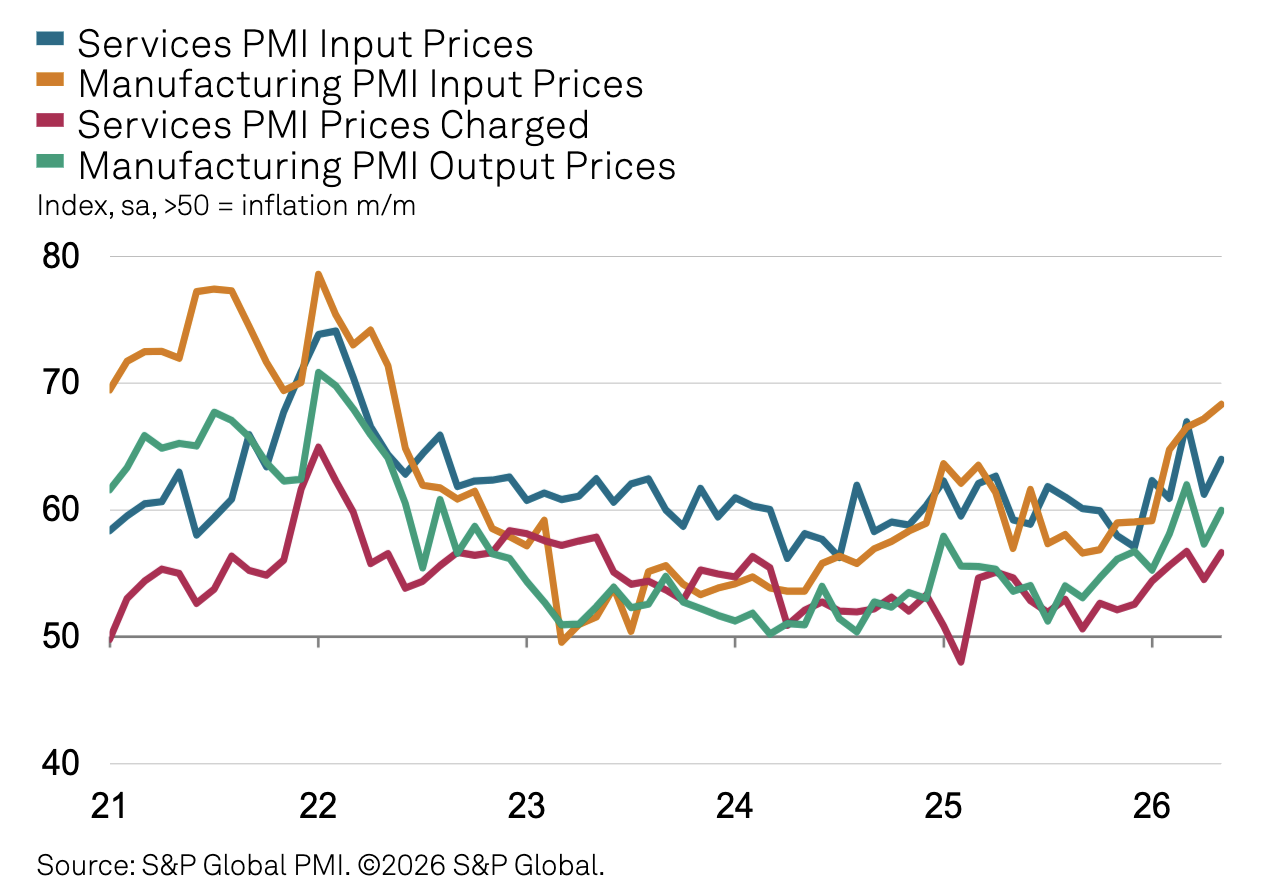
The only recent blemish is that services account for roughly 70% of Canada’s GDP growth, and S&P Global revealed on August 6:
“The performance of Canada’s service sector remained subdued in July. Activity fell further, undermined by a drop in new business amid reports that the uncertain macroeconomic environment was weighing on market demand. Sentiment about the future subsequently fell to a 13-month low as firms signalled worries about the continuation of a challenging business climate in the year ahead.”
As a result, the delicate balance between curbing inflation without hindering growth could plague the BoC in the months ahead.
Turning to the financial markets, gold has bounced back nicely from its recent correction, and UBS still sees solid gains into H1 2027. The team wrote:
“[W]e expect inflation to gradually moderate, allowing the Fed to hold interest rates steady this year before resuming easing in 2027. This should create a more favorable backdrop for gold, as a shift toward lower policy-rate expectations would likely reduce real yields, weigh on the US dollar, and help boost investment demand for gold….
“Near-term risks remain, especially if US data stay firm, oil prices keep inflation concerns alive, or markets continue to price in a more hawkish Federal Reserve rate path. But while the immediate backdrop may remain volatile, the medium- to long-term case for gold still looks supported by several durable drivers. We expect gold prices to rise toward USD 5,000/oz in the first half of 2027.”
So, while it could be a bumpy ride until the U.S.-Iran conflict subsides and the bond market settles down, gold’s long-term uptrend should continue in the months ahead.
Dedicating a small portion of one’s TFSA or RRSP portfolio to precious metals may help mitigate some of thegeopolitical risks and negative effects of inflation. If you want to get started with investing in metals such as gold and silver, read our free guide to gold buying in Canada in 2026 today.
In addition, if your business is struggling to obtain financing from traditional banks, our guide on the Best Alternative Business Lenders in Canada covers everything you need to know: how accessible the credit and revenue requirements are, the range of products, and whether to consider cheaper, slower, government-backed options.
Nexus Finance has funded more than 2,500 businesses and put over $100 million into the Canadian small business economy, with an approval rate of around 80%. As a result, if you’ve been operating for 6 months+, have monthly revenue of roughly $10,000 to $15,000+, and a credit score of 500 to 550+, Nexus Finance could be a worthwhile alternative lender.
Similarly, Quantifi Lending is a great resource to finance your next car purchase. The firm specializes in helping borrowers with thin or damaged credit, people new to Canada, first-time borrowers, and applicants with alternative or non-standard income. Consequently, it’s a solid subprime option if you can’t obtain an auto loan elsewhere.
Finally, if you want to maximize your RRSP contributions but are short on cash, our RRSP Loan in Canada guide covers all the angles of how these products work, who they benefit, and when the math doesn’t work.
For additional resources, please consult our list of reliable lenders to see a wide range of products and services available in your area.

Alex Demolitor is a financial writer hailing from Halifax. Alex has a Bachelors Degree from King's College and passed the CFA Exam Level III. He specializes in fundamental analysis of the stock, bond, commodity, and FX markets. He also covers US & Canadian economic indicators. He has been published on many financial publications, including Investing.com, FXEmpire and others.