
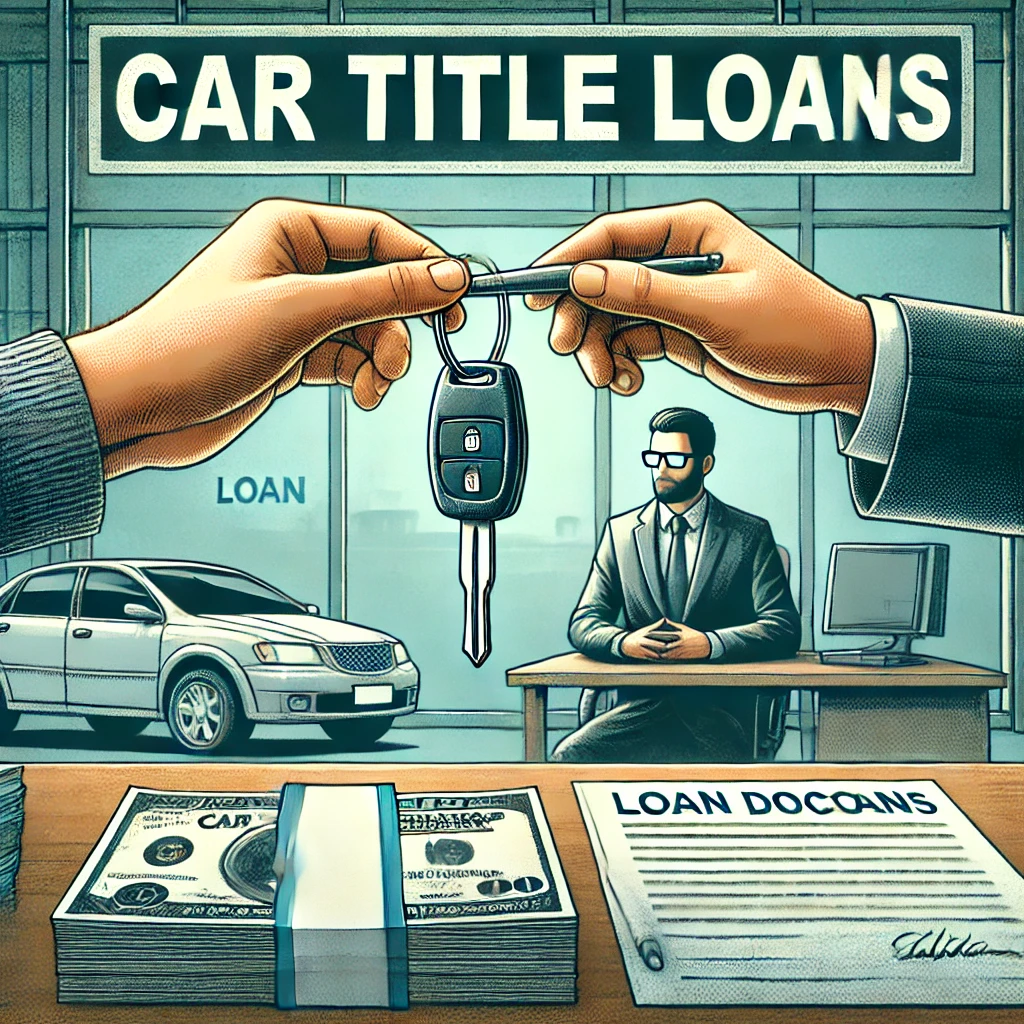
A car title loan lets you borrow against a vehicle you own outright, handing the lender your title as collateral while you keep driving. It’s fast, it doesn’t lean much on your credit score, and it’s one of the more expensive and riskiest ways to raise cash in Canada. Miss the payments and you can lose the car. This guide covers how these loans work, what’s changed under the new federal interest-rate rules, where to find them by province, and the cheaper alternatives worth trying first.
Our 2 Top Auto Loan Comparison Brokers
Before you hand over your vehicle title, find out what ordinary auto financing would cost you. These two will tell you in a few minutes.

Creditly
Best for bad credit

My Auto Approval
Best for vehicle shopping
Also worth a call, and we earn nothing from these: your own bank, a local credit union, and the manufacturer financing desk at a franchise dealership. If your credit is decent, one of those three will usually beat any broker rate. Brokers earn their keep when the banks say no.
Creditly and My Auto Approval are affiliate partners, so we may be paid a commission if you apply through them, at no extra cost to you. That is why the non-partner options above are listed too. Specifications are as published by each company.
3 Rules Before You Borrow
Get at least two or three quotes. The spread between lenders on the same borrower is routinely several percentage points, and the only person who finds out is the one who compares.
That is not a scare tactic, it is how risk pricing works. Expect it, keep the term as short as you can afford, and plan to refinance once you have 6 to 12 months of on-time payments behind you.
Bank, credit union and manufacturer dealership financing typically beat everything else on rate. Start there. Brokers and subprime lenders are the answer when those doors are closed, not before.

Reduce your credit card payments by 30% to 50%
CCC is a non-profit credit counselling agency. Talk to a trained counsellor for free to see if you qualify for a debt management program and explore other options for relief, so you can avoid bankruptcy. They’ll work with your creditors to lower your interest rates and stop late fees, then roll everything into one monthly payment, so you can be out of debt in as little as 36 months. They are not a loan company and do not lend money.
BBB Rating: A+Trustpilot 4.7/5 (6,900+ reviews)500,000+ Canadians helped$1B+ in debt eliminated
Talk to a Counsellor for Free →
Results vary by debt type, creditors, and budget. This page isn’t legal advice.
What Are Car Title Loans & How Do They Work?
When you apply, the lender appraises your vehicle and offers a loan worth a fraction of its value, typically 25% to 50%. You keep driving the car, but the lender holds the title and, to manage its risk, may take a copy of your keys or fit a GPS tracker. The loans are short-term, often due within a few months to a year, and they’re built for speed rather than affordability.
The critical thing to understand in 2026 is what the law now allows, because the rules changed materially and most older guides haven’t caught up.
The 2025 Rule Change That Reshaped This Market
On January 1, 2025, the federal government cut the criminal interest rate under Section 347 of the Criminal Code from an effective annual rate of roughly 60% down to 35% APR. The biggest change to Canada’s usury law in over four decades. Two details make it bite harder than the headline suggests: the cap is now stated as an all-in annual percentage rate, and the definition of “interest” was broadened to fold in essentially every fee, charge, and mandatory insurance premium attached to the loan. In plain terms, a consumer car title loan that charges more than 35% APR all-in is now illegal. The federal government explains the framework on its Criminal Interest Rate Regulations page, and the Financial Consumer Agency of Canada’s guidance on title loans is worth reading before you sign anything.
That reform is genuinely good news for borrowers, but it comes with a catch worth naming. Industry groups and some police associations have argued that squeezing the legal rate pushes the highest-risk borrowers toward unregulated, illegal lenders, so the practical effect is fewer approvals at the margin rather than universally cheaper credit. Either way, the number to hold every title-loan offer against is now 35% APR, fees included.
Car Title Loans vs. Other Options
| Loan Type | Collateral | Typical Cost (APR) | Term | Amount | Main Risk |
|---|---|---|---|---|---|
| Car title loan | Your vehicle | Up to 35% (new legal cap) | 1 mo. 1 yr | 25%. 50% of car value | Losing your car |
| Personal loan | Usually none | ~9%. 35% | 1 to 5 yrs | Based on credit | Credit-score damage |
| Payday loan | None | $14 per $100 (≈350%+ ann.) | 2 wks. 1 mo | $100. $1,500 | Debt cycle |
| Home equity loan | Your home | Near mortgage rates | Up to 30 yrs | Based on equity | Losing your home |
| Cash-advance app | None | 0% interest (fees/tips) | Until next payday | $250. $750 | Minimal |
A few things stand out from that table. Payday loans, which sit under a separate provincial regime, are still capped federally at $14 per $100 borrowed. Cheap-looking per dollar but a punishing annualized rate. Home equity borrowing is far cheaper but slow and puts your house on the line. And the newest category, interest-free cash-advance apps, is often the smartest first stop for a small shortfall. I’ve reviewed two of the main Canadian players: Bree, which advances up to $750 with no interest, and Nyble, which offers up to $250 interest-free. For a genuine short-term pinch, either beats putting your car on the line.
Find relief in 3 easy steps
1Talk to a counsellor for free
Review your debts, budget, and credit to see if you qualify, and explore other options so you can avoid bankruptcy.
2Start when you’re ready
Once you enrol, they call your creditors to lower your interest rates and stop late fees.
3Get out of debt faster
Make one monthly payment and they distribute it to your creditors. Debt-free in as little as 36 months.
Tip: have your balances, minimum payments, and monthly expenses handy.
Where to Find Car Title Loans by Province
Availability and regulation vary across the country. Here’s a general lay of the land, but always confirm a lender is licensed in your province and that any offer sits within the 35% APR cap:
- Ontario: Providers such as LoanMart and Fast Action Finance operate across Toronto, Mississauga, Brampton, Hamilton, Niagara Falls, London, Windsor, Barrie, Ottawa, and other cities, generally with quick online applications.
- British Columbia: Lenders including Snap Car Cash and Get Loan Approved operate in Vancouver, Victoria, Surrey, Kamloops, Kelowna, and beyond, lending against vehicle value.
- Alberta: Local specialists like Edmonton Auto Loans and Equity Loans Online serve Calgary, Edmonton, Medicine Hat, Red Deer, and Lethbridge.
- Quebec: Quebec’s consumer-protection regime is stricter, and it has effectively not enabled a payday-lending framework the way other provinces have. You’ll find vehicle-secured options from lenders such as Cash Depot and Prêt Instant in Montreal, Laval, Quebec City, and Longueuil, but the rules differ meaningfully from the rest of Canada.
To compare regulated alternatives from one place, CompareHub by Loans Canada matches you against multiple lenders. And if the reason you’re considering a title loan is a bruised credit file, it’s worth looking at proper auto loans for bad or no credit before pledging a car you already own.
How to Apply
You’ll typically need the vehicle itself, a clear title with no existing liens, proof of insurance, government ID, and proof of steady income. The lender inspects the car, in person or via photos, and applications can often be completed online or by phone. Approval and funding are usually fast, which is much of the appeal.
Before You Apply: Read This First
The blunt truth is that you can lose your vehicle if you fall behind, and for most people the car is how they get to the job that funds the repayment. A dangerous loop. Before committing, weigh the safer and cheaper routes:
- A personal loan or line of credit from your bank or credit union, now capped at 35% APR for consumers.
- An interest-free cash advance from an app like Bree or Nyble for a small, short-term gap.
- Credit counselling or debt relief if the underlying issue is existing debt rather than a one-off expense. A non-profit agency can review your situation for free.
- Borrowing from family, unglamorous but often the cheapest money available.
If you still decide a title loan is right, have a concrete repayment plan, read every line of the agreement, confirm the all-in APR and what triggers repossession, and check the lender’s standing with the Better Business Bureau. Understanding how these products affect your broader profile helps too. My guide to improving your Canadian credit score covers the levers that move you toward cheaper credit over time.
Final Thoughts
A car title loan is a fast-cash tool with real teeth. The 2025 drop in the criminal interest rate to 35% APR has taken some of the worst pricing off the table, but “less predatory” is not the same as “a good deal,” and the core risk, losing a vehicle you already own, hasn’t changed at all. Treat it as a last resort, exhaust the cheaper alternatives first, and if you do proceed, go in with the numbers and the repossession terms fully understood. If the deeper problem is a cycle of debt, addressing that directly will serve you far better than borrowing against your car to paper over it.
Bottom line: check your options now.
If you want one place to start, CCC is a strong option. You can get a clear recommendation based on your situation, and whether the best fit is a DMP or a principal-reduction route like a consumer proposal, they can help you move forward without bouncing between random companies.
FAQ
How do I qualify for a car title loan in Canada?
You need to own a vehicle with a clear, lien-free title, hold a valid driver’s licence, and usually show proof of insurance and steady income. The lender appraises the vehicle before approving.
Are car title loans legal in all provinces?
They’re available in most provinces, but rules vary and Quebec’s consumer-protection regime is notably stricter. Since January 1, 2025, any consumer title loan must stay within the 35% APR federal cap. The FCAC’s title-loan page is the authoritative starting point.
What interest rate can a title loan charge now?
For consumer loans, the all-in cost is capped at 35% APR under the Criminal Code as of January 1, 2025, and that figure now includes fees and mandatory insurance, not just the headline interest rate.
How much can I borrow?
Generally 25% to 50% of your vehicle’s appraised value.
Can I get one with bad credit?
Yes. Because the loan is secured by your car, credit history matters less. That accessibility is also what makes it risky, so treat it with caution and consider alternatives first.
What happens if I can’t repay?
The lender may offer to “roll over” the loan, adding fees and interest, and ultimately has the right to seize your vehicle if you keep defaulting. That’s the central danger of the product.
Are there better alternatives?
Often, yes: a personal loan or line of credit, an interest-free cash advance from Bree or Nyble, credit counselling, or borrowing from family. Explore these before pledging your car.
Explore a proper auto loan instead
See what you qualify for across multiple Canadian auto lenders before you risk your vehicle.
Affiliate link. We may be paid a commission at no cost to you.

Mohammed Saqib has a Masters Degree from Wilfrid Laurier University in Waterloo. He has a robust background in accounting and finance. Mohammed started his career three years ago working as an investment analyst at a sell-side firm. He has extensively covered publicly-listed companies using fundamental analysis as the cornerstone of his approach. Mohammed has been published on SeekingAlpha, InvesorPlace, Yahoo! Finance and others.