
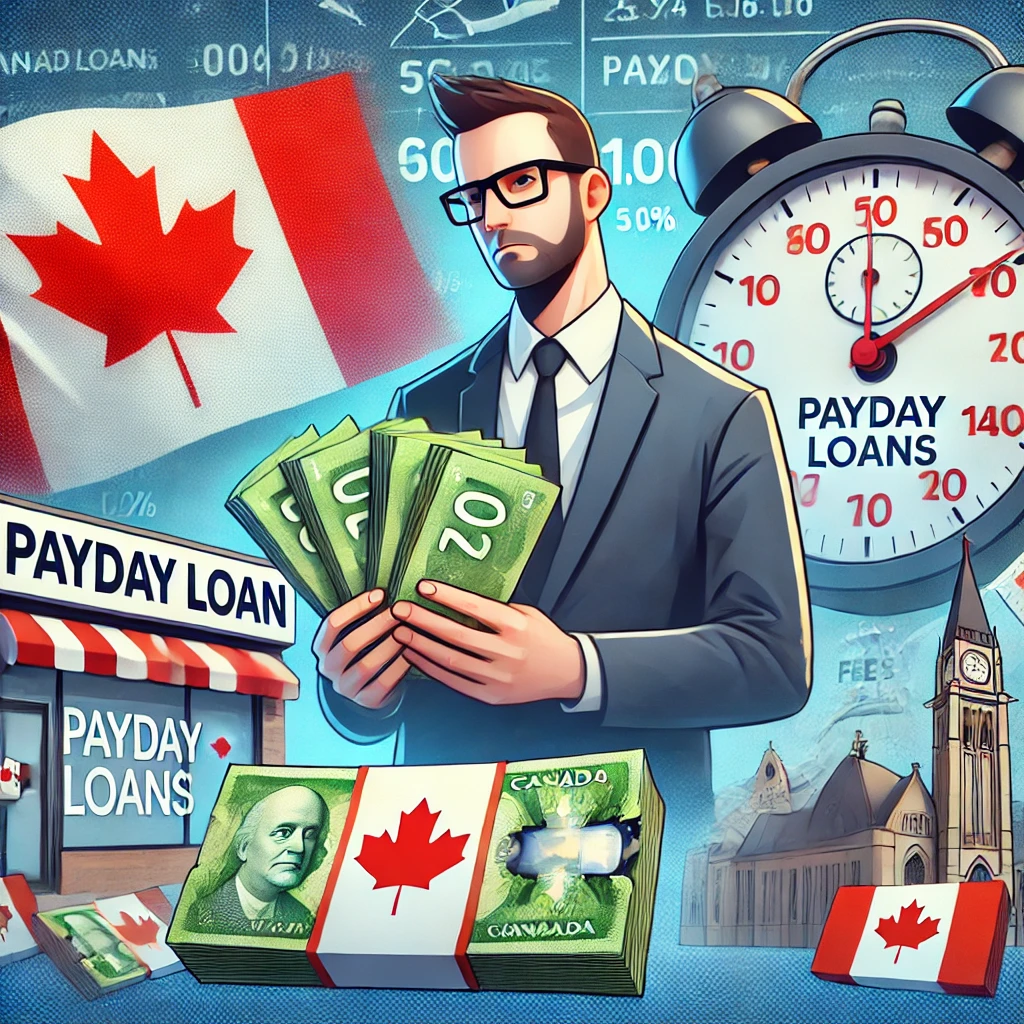
Payday loans can look like a lifeline when an emergency expense lands before your next paycheque. They’re fast, easy to apply for (often entirely online), and usually skip the credit check — which is exactly why people with bad or no credit reach for them. But the convenience hides a punishing cost, and in most cases there’s a cheaper way out. Here’s an honest breakdown of what payday loans actually cost in 2026, what changed in the rules recently, and the better alternatives worth trying first.
Reduce your credit card payments by up to 30–50%
CCC is a non-profit credit counselling agency. Talk to a trained counsellor for free to see if you qualify for a debt management program and explore other options for relief, so you can avoid bankruptcy. They’ll work with your creditors to lower your interest rates and stop late fees, then roll everything into one monthly payment — so you can be out of debt in as little as 36 months. They are not a loan company and do not lend money.
BBB Rating: A+Trustpilot 4.7/5 (6,900+ reviews)500,000+ Canadians helped$1B+ in debt eliminated
Talk to a Counsellor for Free →
Results vary by debt type, creditors, and budget. This page isn’t legal advice.
Are Payday Loans Worth It?
Honestly, in most cases, no. Three problems make them a last resort:
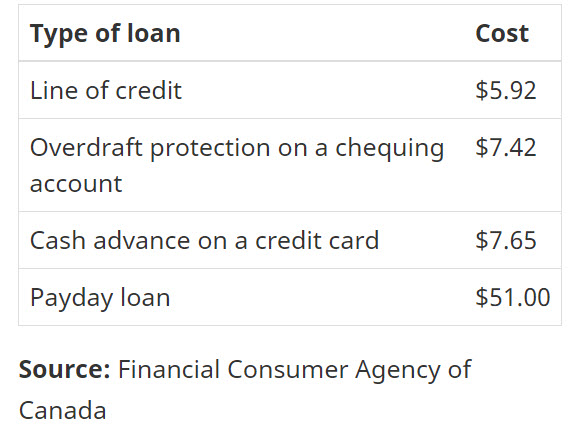
Extremely high cost. A flat fee that looks small per $100 works out to a staggering annualized rate. Even at the current federal cap, a two-week payday loan carries an APR in the range of roughly 360% to 400% — many times what a credit card or personal loan charges.
Very short repayment terms. Most payday loans are due on your next payday, often within two weeks. If money was tight enough to need the loan, two weeks is rarely enough to recover, which is how borrowers get pulled under.
The debt-trap risk. When you can’t repay on time, the temptation is to take a new loan to cover the old one. Fees stack on fees, and what started as a small shortfall becomes a months-long spiral. If you’re already in that cycle, debt consolidation or credit counselling is a far better path than another loan.
What Payday Loans Cost in 2026 — and What Changed
Two regulatory facts matter, and older guides get them wrong because the rules changed at the start of 2025.
First, the federal cap on payday-loan fees is now $14 per $100 borrowed, standardized across the regulated provinces as of January 1, 2025. If you’re reading an article that still quotes $15 to $19, it’s out of date.
Second, and more broadly, the criminal interest rate dropped from an effective 60% to 35% APR on January 1, 2025 — the biggest change to Canada’s usury law in decades. Payday loans operate under a specific provincial exemption from that cap (which is why their annualized cost can still run into the hundreds of percent), but the reform reshaped the wider high-cost lending market around them. The Financial Consumer Agency of Canada is the authoritative source for the current federal rules.
A Real-World Example
Borrow $300 for two weeks at $14 per $100:
- Fee: $14 × 3 = $42
- Total repayment: $300 + $42 = $342
- Annualized, that’s an APR of roughly 365%
The loan is short, but the cost of borrowing is anything but cheap.
Find relief in 3 easy steps
1Talk to a counsellor for free
Review your debts, budget, and credit to see if you qualify — and explore other options so you can avoid bankruptcy.
2Start when you’re ready
Once you enrol, they call your creditors to lower your interest rates and stop late fees.
3Get out of debt faster
Make one monthly payment and they distribute it to your creditors — debt-free in as little as 36 months.
Tip: have your balances, minimum payments, and monthly expenses handy.
Payday Loan Rules by Province
Payday lending is regulated province by province, layered on top of the federal cap. Here’s the current lay of the land — but because caps were revised around the 2025 federal change, always confirm the number with your provincial consumer-protection office before borrowing:
| Province | Max Cost / $100 | Max Loan Term | Rollovers |
|---|---|---|---|
| Ontario | $14 | up to 62 days | Not allowed |
| British Columbia | $14 | 14–62 days | Not allowed |
| Alberta | $14 | 14–62 days | Not allowed |
| Nova Scotia | $14 | up to 62 days | Not allowed |
| New Brunswick | $14 | up to 62 days | Not allowed |
| PEI | $14 | up to 62 days | Not allowed |
| Manitoba | $17 (highest) | up to 62 days | Not allowed |
| Saskatchewan | ~$14–17 | 14–62 days | Not allowed |
| Newfoundland & Labrador | provincially set | 14–62 days | Not allowed |
| Quebec | Effectively banned (35% APR) | N/A | N/A |
A few things stand out. Ontario, BC, and Alberta all sit at the $14 federal cap, with a maximum loan of 50% of your net pay and a two-day right to cancel without penalty. Manitoba remains the outlier with the highest cap and a stricter loan-to-income limit. And Quebec effectively bans payday lending altogether by capping all consumer credit at 35% APR — traditional payday lenders simply don’t operate there. In the territories, there’s no payday-specific cap, so the federal criminal rate is the backstop.
Better Alternatives to Payday Loans
The good news: even with bad credit or an urgent need, you almost always have cheaper options.
Interest-free cash-advance apps. Canadian services like Bree (up to $750) and Nyble (up to $250) advance small amounts at 0% interest, and some can help you build credit along the way — a genuinely better first stop for a small gap.
Credit unions. Many offer small-dollar loans at far more reasonable rates than payday lenders, and they’re often willing to work with members who don’t have perfect credit or high income.
Installment loans. You borrow a set amount and repay over a longer period in regular payments, usually at much lower rates and with more breathing room than a two-week payday loan.
Personal line of credit. If you can qualify, you pay interest only on what you draw, at rates far below payday territory.
Borrowing from family or friends. Awkward, but often the cheapest money available — just agree clear repayment terms up front to protect the relationship.
Government assistance. If the shortfall ties to employment or housing, you may qualify for emergency support or benefit programs worth checking before you borrow.
Non-profit credit counselling. If you’re repeatedly short or juggling debt, a non-profit credit counsellor can build a plan and even negotiate with creditors on your behalf — our reviews of Consolidated Credit and the Credit Counselling Society are good starting points.
Longer term, the real fix is often your credit itself: a stronger score opens the door to all the cheaper options above. Our guide to improving your Canadian credit score covers the fastest levers.
Final Thoughts: Tread Carefully
Payday loans can solve a problem for exactly one pay cycle, then create a bigger one. Between the sky-high annualized cost and the two-week clock, they’re built in a way that catches people who were already stretched. Before you sign, take a breath and work through the alternatives — an interest-free advance, a credit-union loan, or a conversation with a non-profit counsellor will almost always leave you better off. And if payday debt is already piling up, dealing with it head-on beats borrowing again to paper over it.
Bottom line: check your options now.
If you want one place to start, CCC is a strong option. You can get a clear recommendation based on your situation, and whether the best fit is a DMP or a principal-reduction route like a consumer proposal, they can help you move forward without bouncing between random companies.
FAQ
How much do payday loans cost in Canada now?
Since January 1, 2025, the federal cap is $14 per $100 borrowed in the regulated provinces (Manitoba is higher). On a two-week loan that still annualizes to roughly 365% APR, so they remain very expensive.
What’s the criminal interest rate in Canada?
As of January 1, 2025 it’s 35% APR, down from an effective 60%. Payday loans operate under a provincial exemption, which is why their annualized cost can exceed that figure.
Are payday loans legal everywhere in Canada?
They’re legal and provincially licensed in most provinces, but Quebec effectively bans them with a 35% APR cap on all consumer credit. The territories have no payday-specific cap.
Can I roll over a payday loan?
No. Most provinces prohibit rollovers — taking a new loan to cover an old one — specifically to prevent debt traps.
What’s the best alternative to a payday loan?
For a small, short-term gap, an interest-free cash-advance app like Bree or Nyble is often the best first stop. Credit unions, installment loans, and non-profit credit counselling are strong options too.
Do payday loans build credit?
Generally not reliably — many payday lenders don’t report to the credit bureaus. If building credit is a goal, a credit-builder product is a better route.

Mohammed Saqib has a Masters Degree from Wilfrid Laurier University in Waterloo. He has a robust background in accounting and finance. Mohammed started his career three years ago working as an investment analyst at a sell-side firm. He has extensively covered publicly-listed companies using fundamental analysis as the cornerstone of his approach. Mohammed has been published on SeekingAlpha, InvesorPlace, Yahoo! Finance and others.