
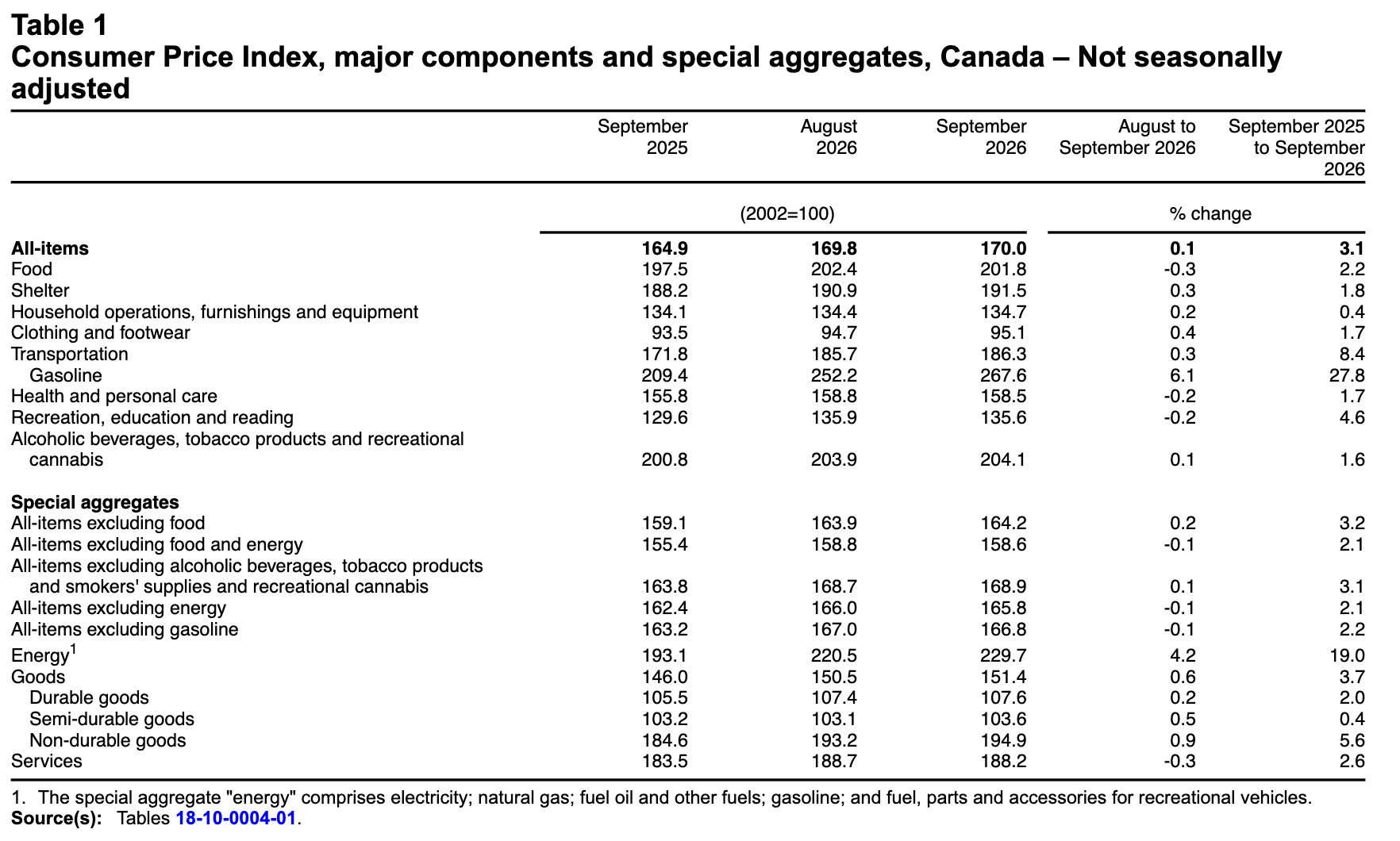
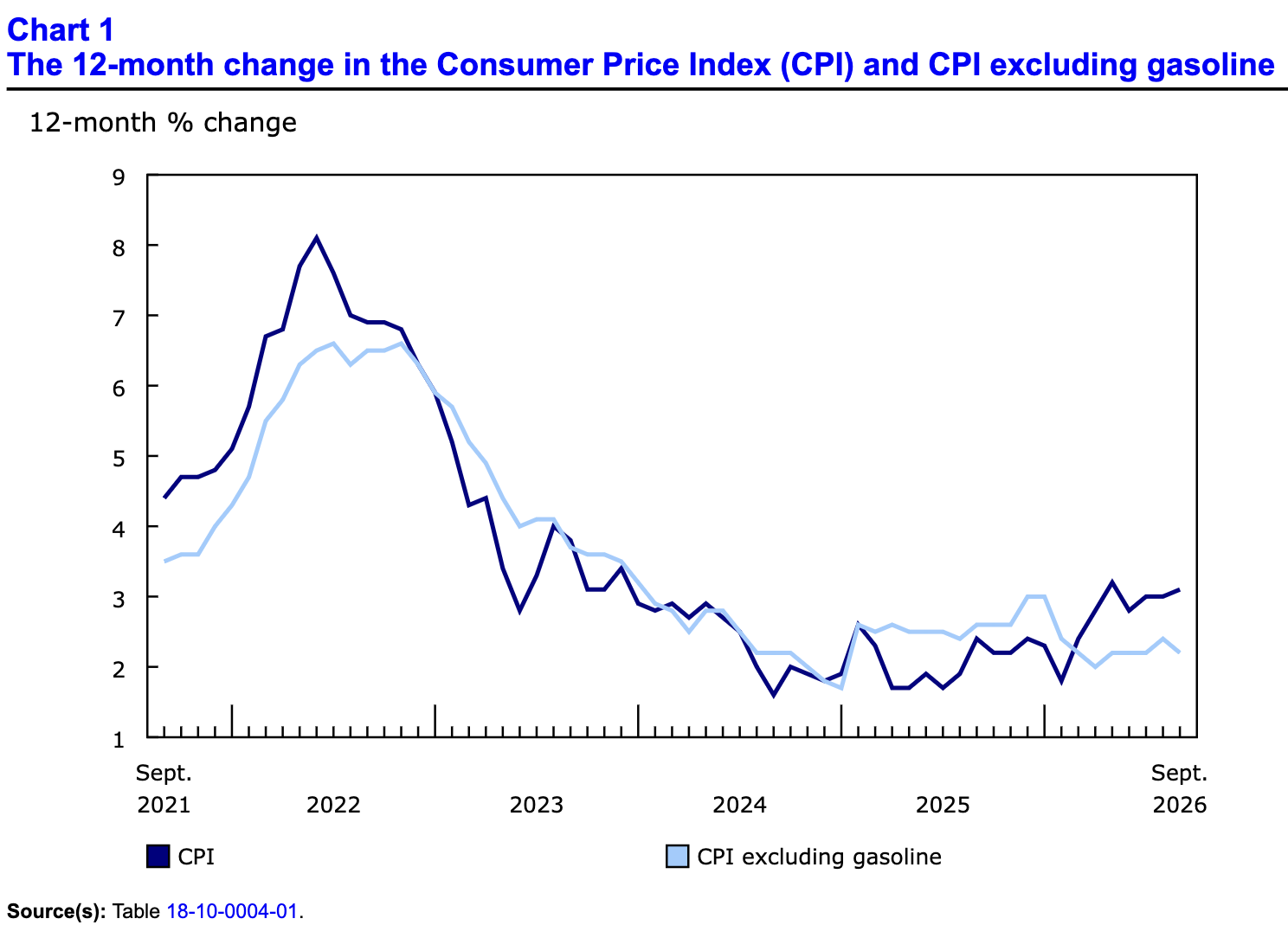
Canada’s consumer price index (CPI) increased by 3.1% year over year (Y-o-Y) in September, up from 3.0% in August. Statistics Canada (StatsCan) published the data at 8:30 a.m. ET on October 19, 2026, via The Daily report. On a monthly basis, the CPI rose by 0.1%, and the “acceleration was led by higher prices for gasoline in September (+27.8%) compared with August (+22.8%).”
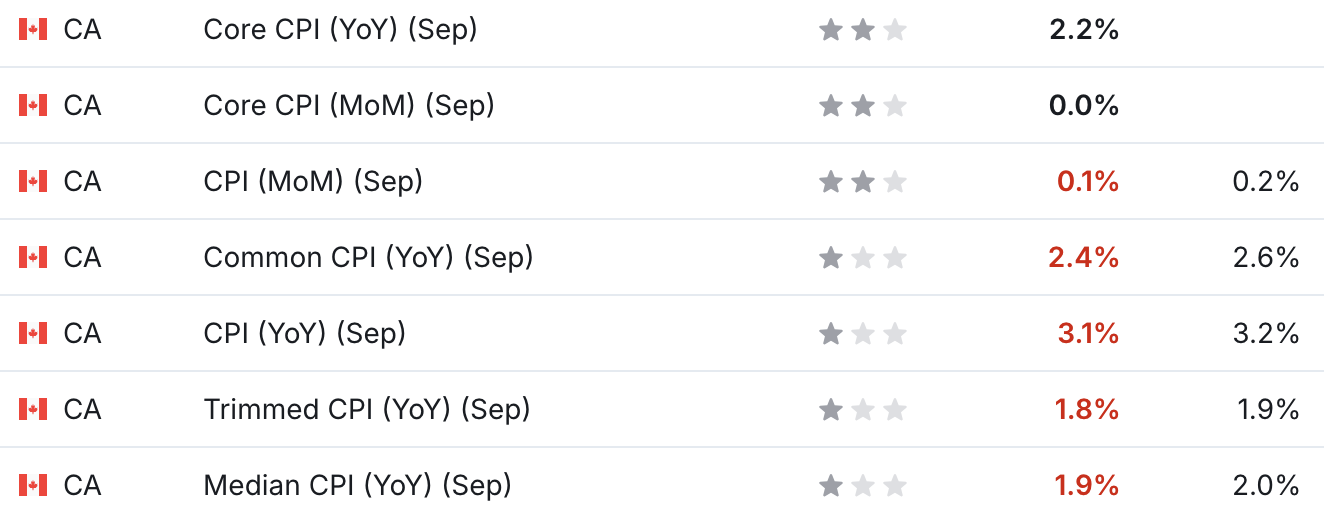
Yet, the results missed economists’ expectations. The table below is courtesy of Investing.com. The left column represents September’s figures, while the right column represents forecasters’ consensus estimates. As you can see, several metrics were weaker than anticipated.
Although, with the Bank of Canada (BoC) still unsure of how to proceed, Governor Tiff Macklem said on October 17 that the committee is prepared to act if inflation remains persistent.
“The question we’re going to be asking ourselves is, is inflation likely to come back down towards our target on its own, or are we going to have to raise interest rates to influence the path?….
“You can only release strategic energy, oil reserves so many times, but that has helped contain this energy price shock.”
Consequently, unless oil prices retreat or core inflation remains contained in the months ahead, Macklem may determine that more restrictive policy is required.
Core CPI
Core measures of the CPI decelerated in September, with the CPI-common index falling to +2.4% (from +2.6%), the CPI-median to +1.9% (from +2.0%), and the CPI-trim to +1.8% (from +1.9%). These measures exclude the impacts of food and energy, and the BoC places heavy emphasis on core measures because they provide a smoothed distribution of overall inflation.
Please note that food and energy prices are highly volatile and price spikes can occur for reasons outside of the BoC’s control. In contrast, core inflation is mainly driven by consumer demand and gives the BoC a better sense of how the Canadian economy is functioning.
Sector Results
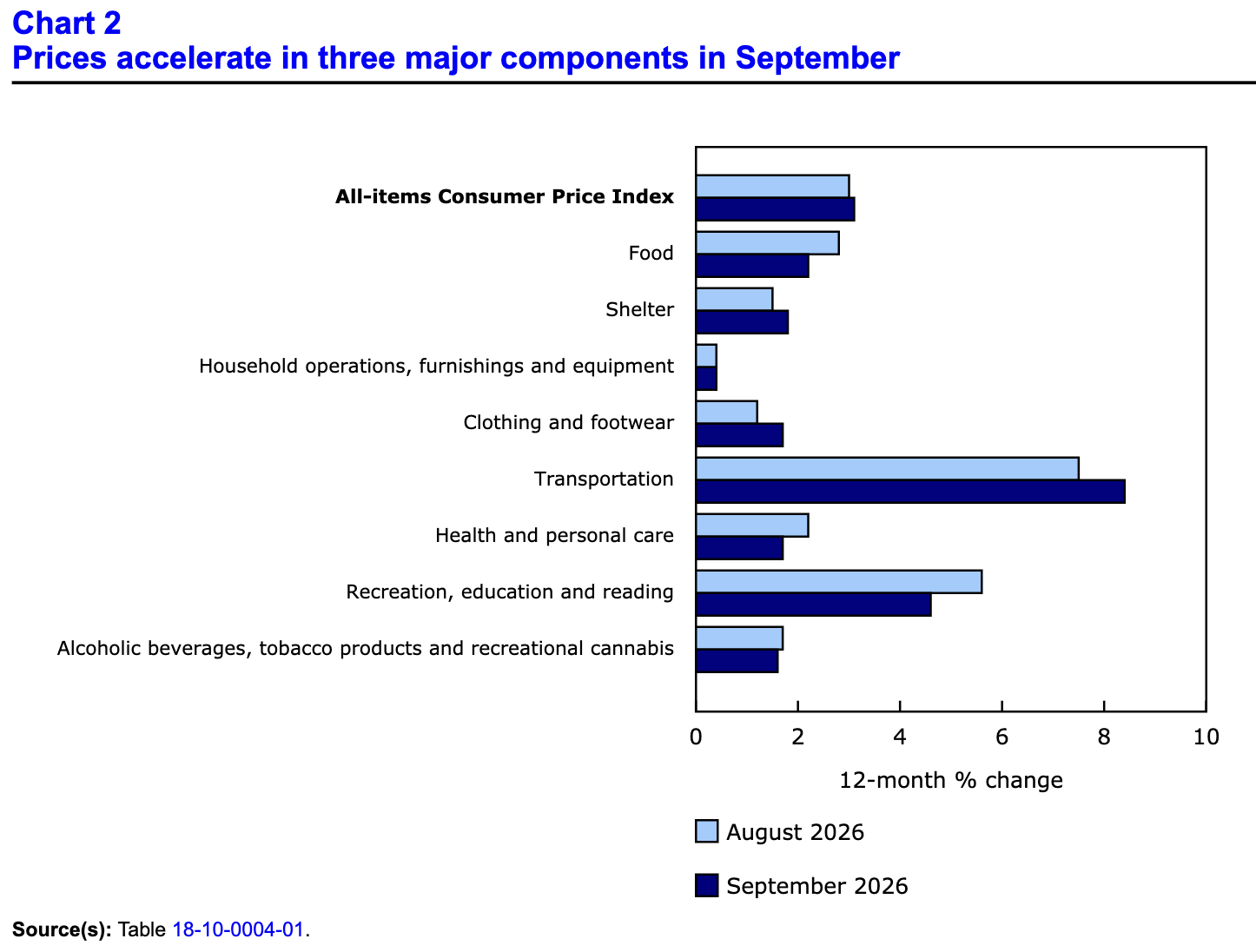
Sector performance was mixed in September, with transportation, shelter, clothing, and footwear outperforming Y-o-Y versus August, while food, health, and recreation-related items retreated.
For context, the eight sectors include food, shelter, household operations, furnishings and equipment, clothing and footwear, transportation, health and personal care items, recreation and education expenses, and alcohol and tobacco products.
Food Inflation
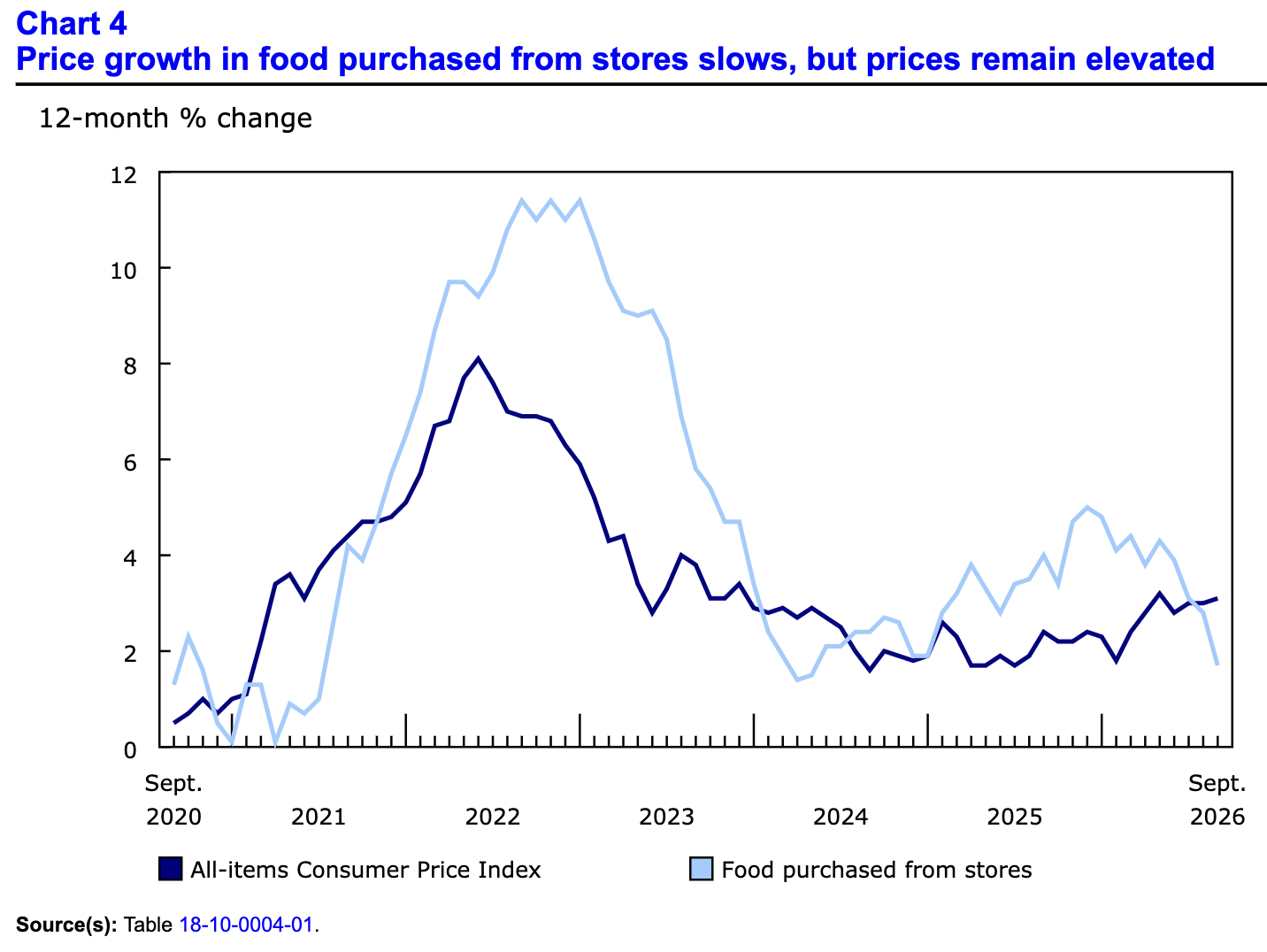
Grocery prices increased by 1.7% Y-o-Y in September, a noticeable slowdown from the 2.8% reading in August. The report noted how “this was the smallest yearly increase since May 2024 (+1.5%), and the second consecutive month where grocery price growth increased at a slower pace than the all-items CPI.”
In addition, the deceleration was driven by declines in fresh vegetables (-2.9%) and sugar and confectionery (-2.7%) prices, while other food preparations (+1.8%) and fresh or frozen beef (+8.7%) also rose at slower rates, which helped ease the burden.
Choose Carefully
While Macklem remains fixated on higher oil prices and their impact on inflation, the economic fallout from higher energy prices, interest rates, and tariffs also requires consideration.
For example, Statistics Canada reported on October 9:
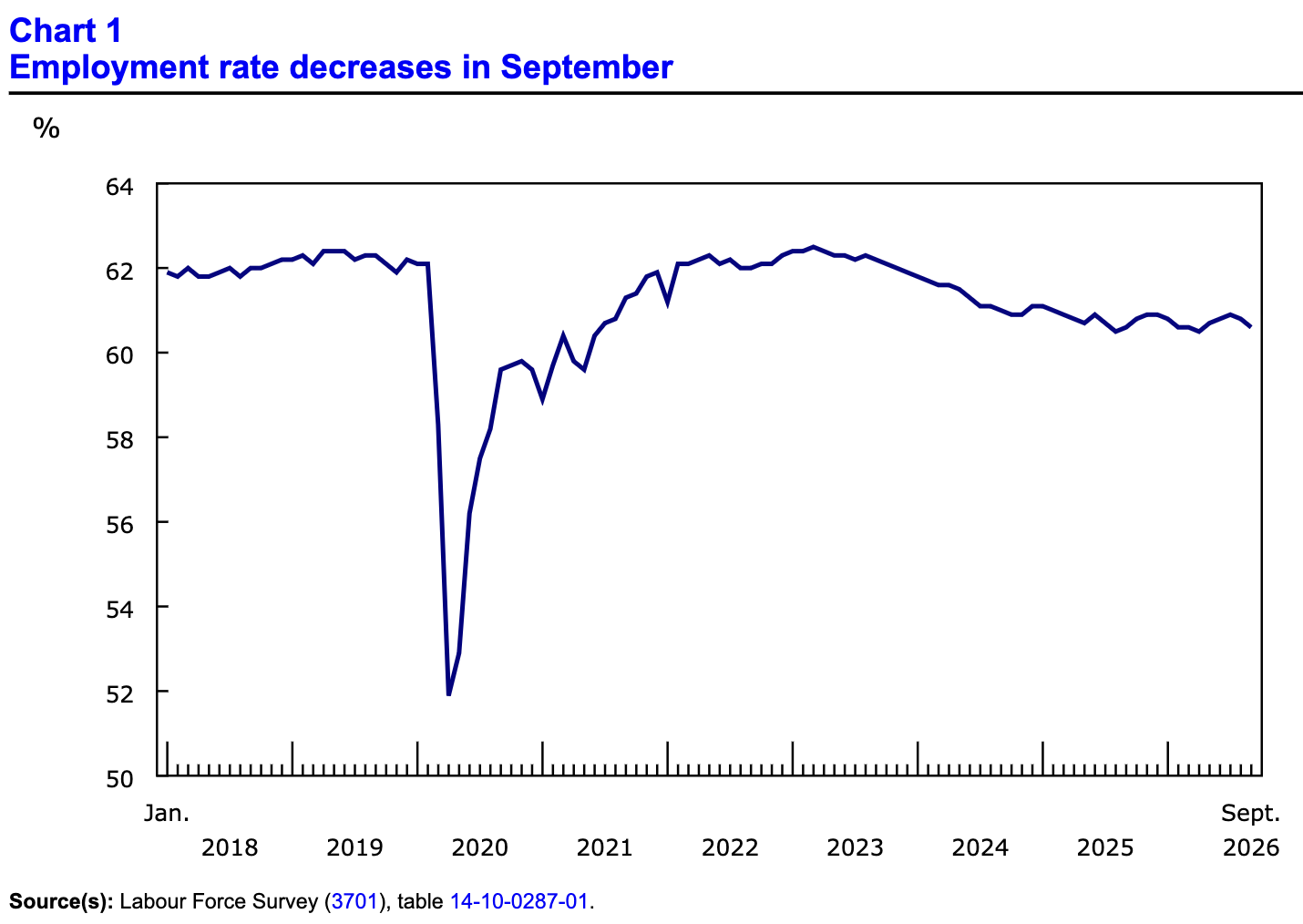
“Employment declined by 68,000 (-0.3%) in September and the employment rate fell 0.2 percentage points to 60.6%…. There were fewer people working in educational services (-35,000; -2.2%), health care and social assistance (-23,000; -0.8%) as well as manufacturing (-13,000; -0.7%).”
This was the second straight month of net negative job growth, and the chart below highlights how the labour market is trending in a neutral to downward direction. As such, higher interest rates are unlikely to shift the metric in a positive direction.
To that point, the CFIB’s latest Monthly Business Barometer stated that “Small business optimism dropped severely both over the long and short term” in September, while “Full-time staffing plans remained weak, with a higher share of employers planning to lay off staff (16%) than to hire (13%).”
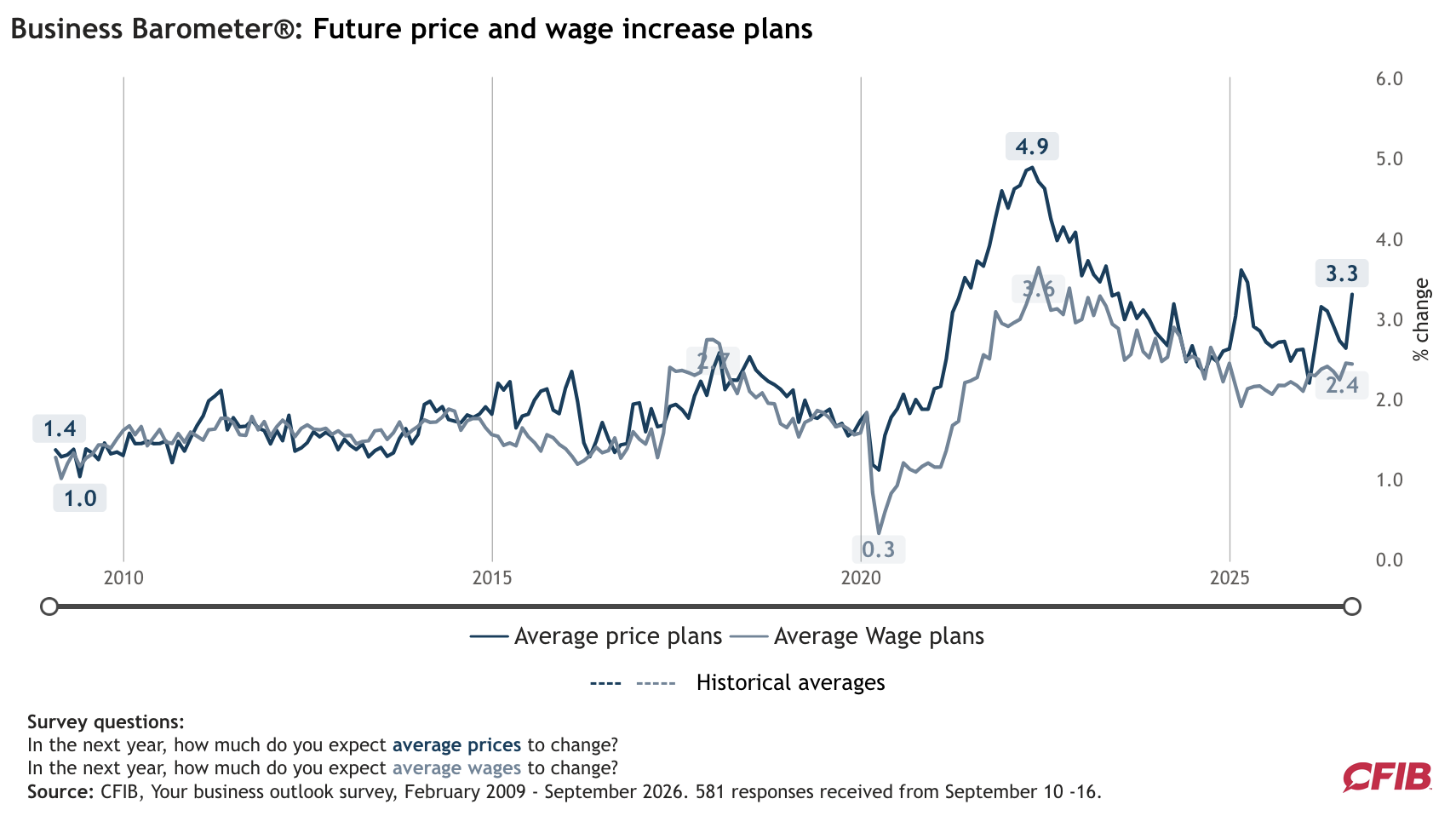
Moreover, while inflation expectations rose, as “the average price increase plans jumped to 3.3% in September, a significant increase from earlier this year,” wage growth remains weak.
If you analyze the chart below, you can see that both spiked in 2021-2022. And with that not happening now, Canadian consumers are not in a great place to handle price increases or higher interest rates.
Finally, another major source of inflation could be about to turn. Rentals.ca’s latest Rent Report noted:
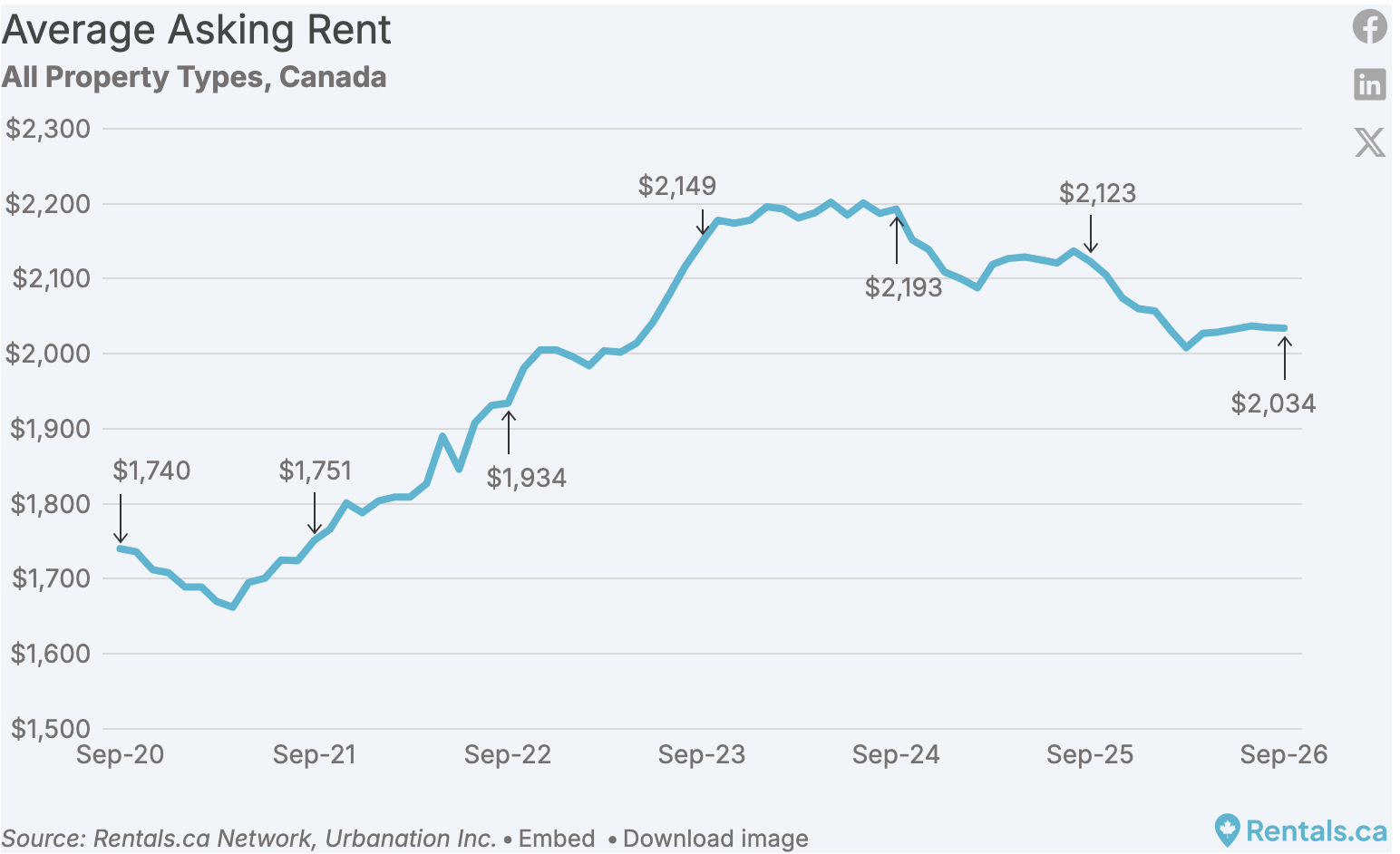
“Average asking rent for all property types in Canada was $2,034 in September, down 4.2% year-over-year, the 24th consecutive month of annual decline. The annual decline was smaller than in August (-4.8%), but larger than in July (-4.0%).”
Furthermore, September 2024 and 2025 marked inflection points where seasonal trends faded, and rents declined in the fall and winter. Thus, a similar outcome could help suppress inflation in the months ahead.
Turning to gold, it continues to suffer from higher interest rates, a stronger US dollar, and the volatility confronting risk assets due to the oil price surge.
As a result, it’s waiting, like several assets, for a US-Iran deal. Eventually, the two sides will reach a long-term agreement, and when that occurs, lower oil prices, yields, and a weaker US dollar should help the yellow metal prosper once again.
Dedicating a small portion of one’s TFSA or RRSP portfolio to precious metals may help mitigate some of the geopolitical risks and negative effects of inflation. If you want to get started with investing in metals such as gold and silver, read our free guide to gold buying in Canada in 2026 today.
In addition, with rising interest rates making auto loans less affordable, partnering with the right lender can save you hundreds or thousands of dollars. For bad credit borrowers in BC, Alberta, and Ontario, our extensive guides help empower you with the knowledge and resources to find the right solution. They cover all the angles — the best lenders, hidden costs, optimal tax strategies, and much more.
You may also want to consider EdenPark. It’s best for auto loan applicants with imperfect (but not damaged) credit and steady employment, with income above $2,000 a month.
Last, while you may be familiar with Blue Cross’ medical coverage, it also offers life insurance. The application process is done completely online, and its term life insurance is best if you value the brand and want to pair it with critical illness coverage. For more information, please see our full guide on Blue Cross Life Insurance in Canada.
For additional resources, please consult our list of reliable lenders to see a wide range of products and services available in your area.

Alex Demolitor is a financial writer hailing from Halifax. Alex has a Bachelors Degree from King's College and passed the CFA Exam Level III. He specializes in fundamental analysis of the stock, bond, commodity, and FX markets. He also covers US & Canadian economic indicators. He has been published on many financial publications, including Investing.com, FXEmpire and others.