
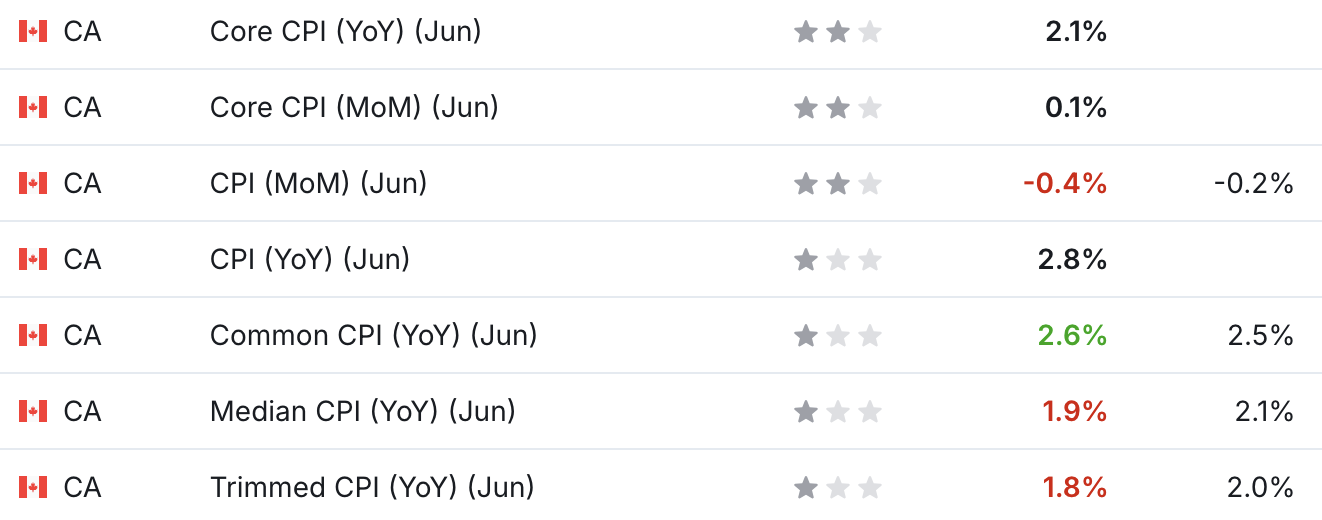
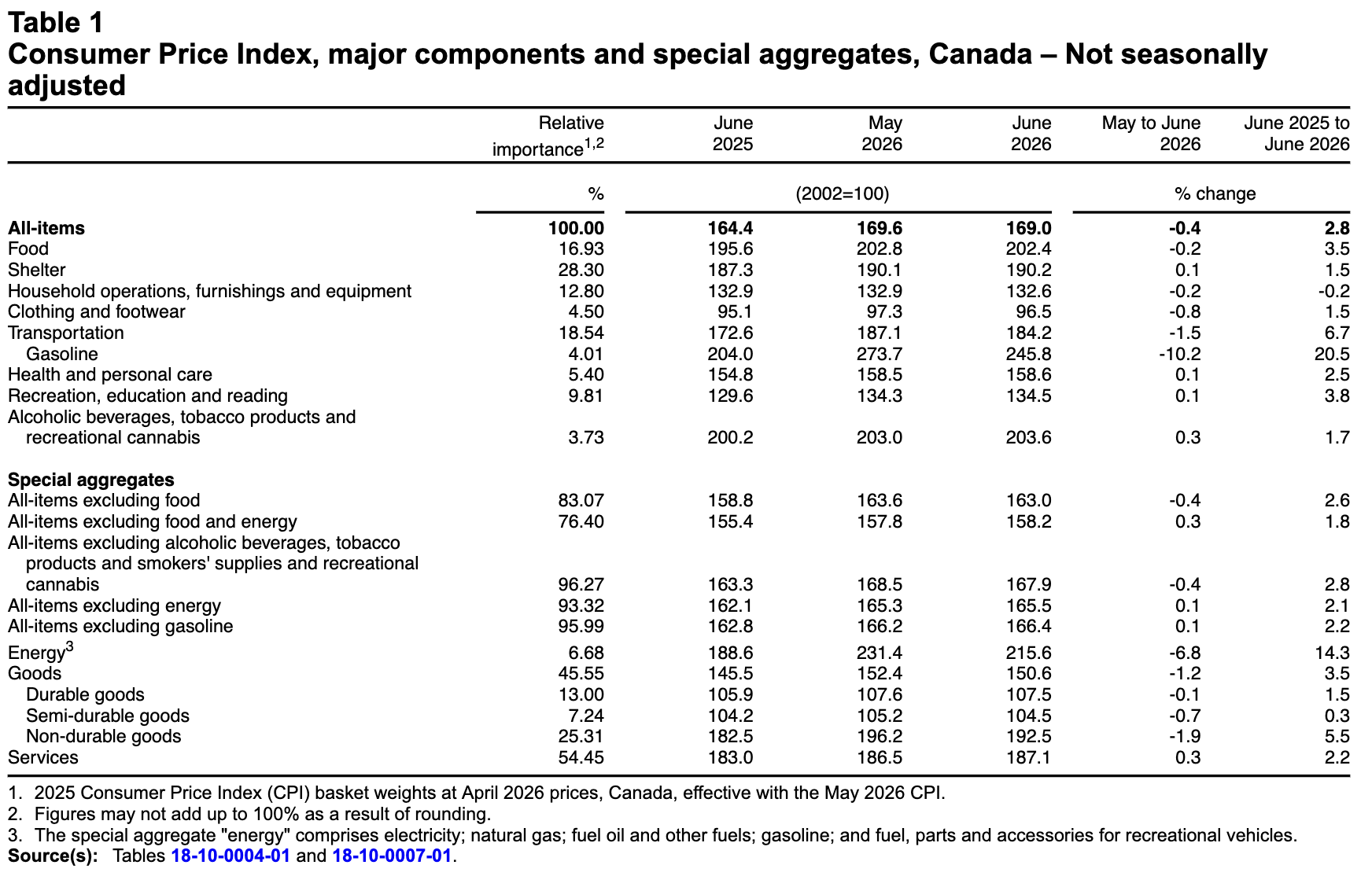
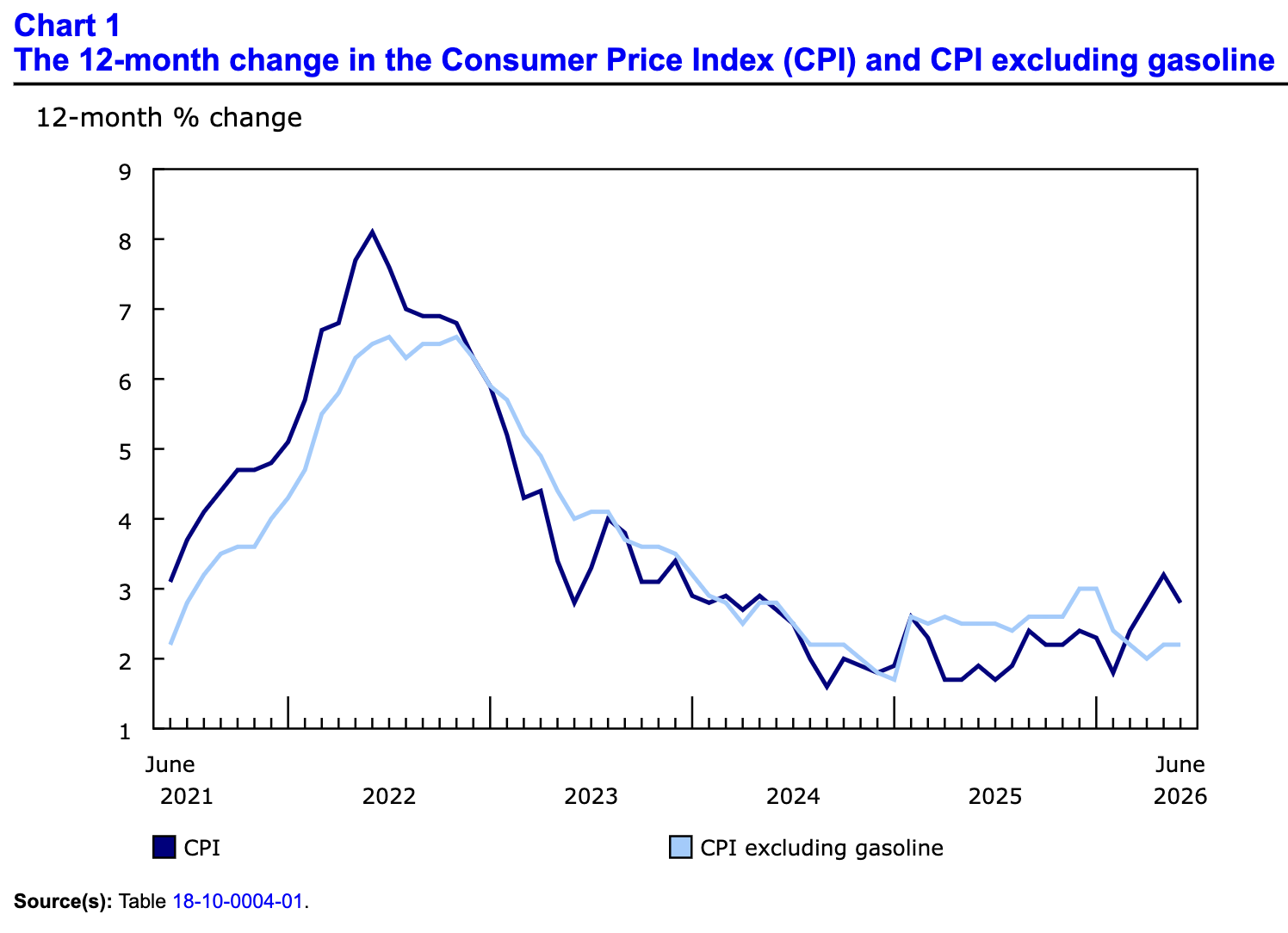
Canada’s consumer price index (CPI) increased by 2.8% year over year (Y-o-Y) in June, down from 3.2% Y-o-Y in May. Statistics Canada (StatsCan) published the data at 8:30 a.m. ET on July 20, 2026, via The Daily report. On a monthly basis, the CPI declined by 0.4%, as lower gasoline prices drove the deceleration.
Moreover, the results mostly missed economists’ expectations. The table below is courtesy of Investing.com. The left column represents June’s figures, while the right column represents forecasters’ consensus estimates. As you can see, the common CPI was the only core measure in green.
Yet, with the U.S.-Iran conflict reigniting inflation concerns, Bank of Canada (BoC) Governor Tiff Macklem said on Jul. 15 that uncertainty remains high, and that clouds the Committee’s outlook.
“Inflation is expected to stay elevated in June then ease gradually in the coming months, returning to the 2% target in early 2027,” he said. “This forecast is highly dependent on the path for oil and gasoline prices—it assumes oil prices come down and stabilize between US$70-US$75 per barrel….
“The two biggest risks to the projection are still the conflict in the Middle East and our trade relationship with the United States.”
Thus, since the BoC can’t control the geopolitical conflict, its impact on oil prices, or how the trade negotiations unfold, a wait-and-see approach is likely warranted in the months ahead.
Core CPI
Core measures of the CPI were mild again in June, with the CPI-common index falling to +2.6% (from +2.7%), the CPI-median falling to +1.9% (from +2.1%), and the CPI-trim falling to +1.8% (from +2.0%). These measures exclude the impacts of food and energy, and the BoC places heavy emphasis on core measures because they provide a smoothed distribution of overall inflation.
Please note that food and energy prices are highly volatile and price spikes can occur for reasons outside of the BoC’s control. In contrast, core inflation is mainly driven by consumer demand and gives the BoC a better sense of how the Canadian economy is functioning.
Sector Results
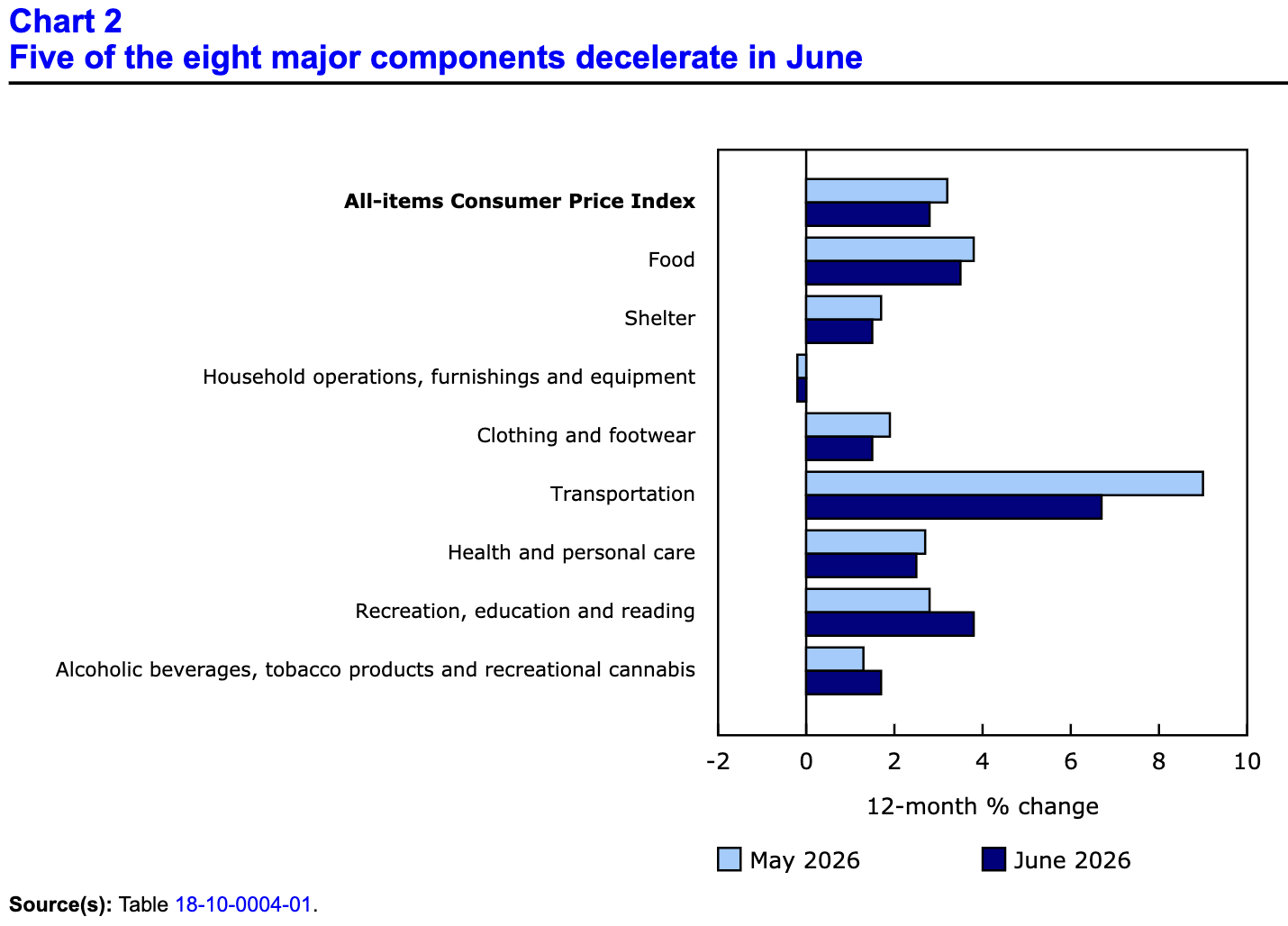
Sector performance was mostly weak in June, with five of the eight sectors underperforming their May results.
For context, the eight sectors include food, shelter, household operations, furnishings and equipment, clothing and footwear, transportation, health and personal care items, recreation and education expenses, and alcohol and tobacco products.
Food Inflation
Despite the Y-o-Y slowdown in food purchased from stores (+3.9% in June vs. +4.3% in May), it was the 17th straight month that grocery inflation outpaced the headline CPI.
Leading the slowdown was fresh fruits (+1.7%), which was mainly driven by lower prices for grapes (-0.6%). Conversely, accelerations were present for fresh or frozen chicken (+5.7%), bread, rolls and buns (+6.0%), and frozen food preparations (+2.7%).
All You Can Do Is Wait
While Macklem continues to repeat the same message, a wide range of potential outcomes makes his patience quite prudent. As a result, keeping an eye on the U.S.-Iran conflict and CUSMA trade negotiations should help determine the right monetary policy path.
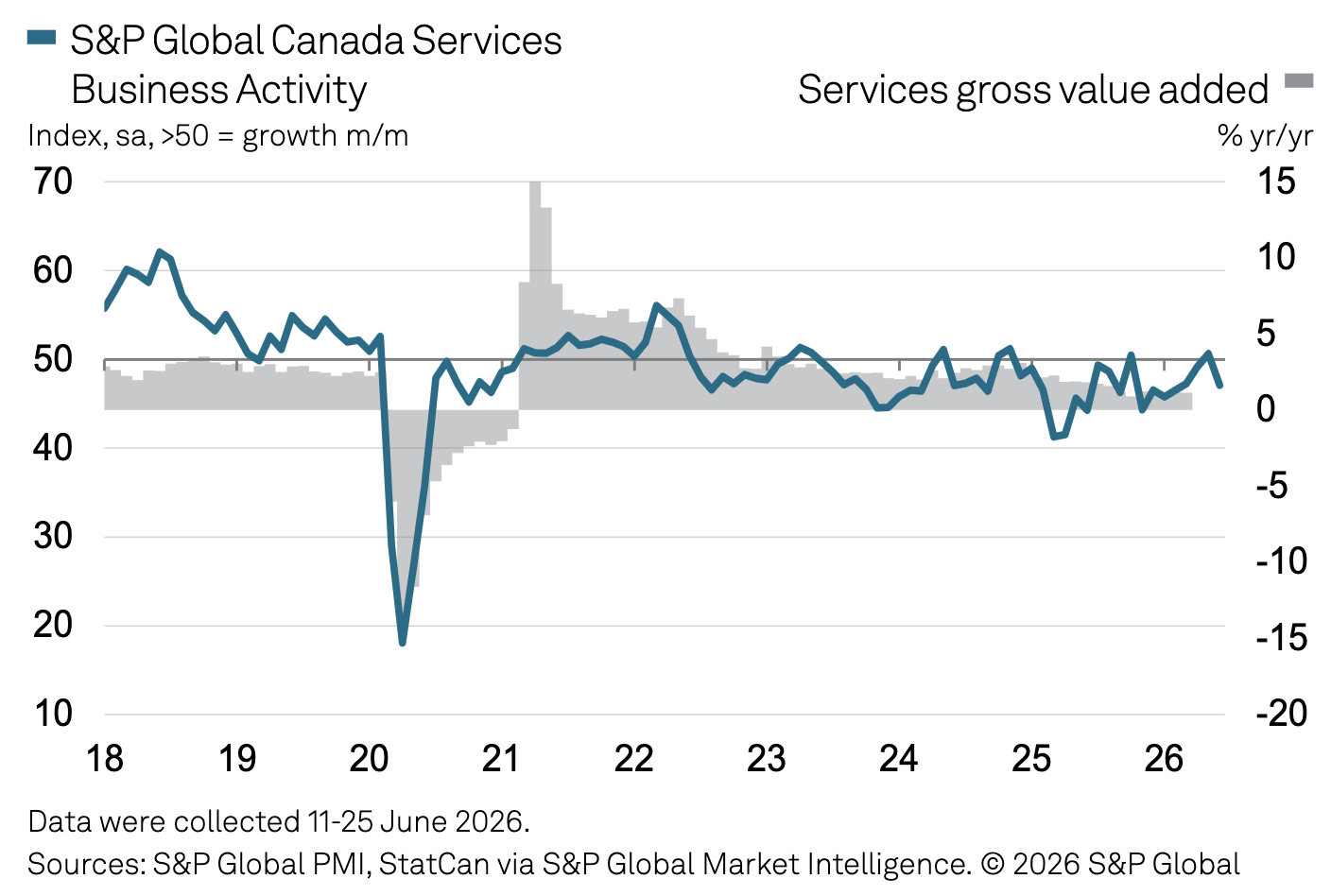
In the meantime, Canada’s economic outlook remains tepid. Services account for roughly 70% of the Canadian economy, and S&P Global revealed on Jul. 6 that the service sector contracted again in June. An excerpt read:
“The headline S&P Global Canada Services PMI® Business Activity Index fell below the critical 50.0 no-change mark in June. Recording 47.1, the index was down from 50.6 in May and represented a solid fall in activity that was the steepest since February. It was the fifth time in 2026 so far that a contraction has been registered.
“Underpinning the latest drop of service sector output was a reduction in new business volumes. The marked decline in new work was the second in successive months following marginal growth in April and reflected ongoing weakness in market demand.”
Consequently, higher interest rates may not be the right remedy given the current business climate.
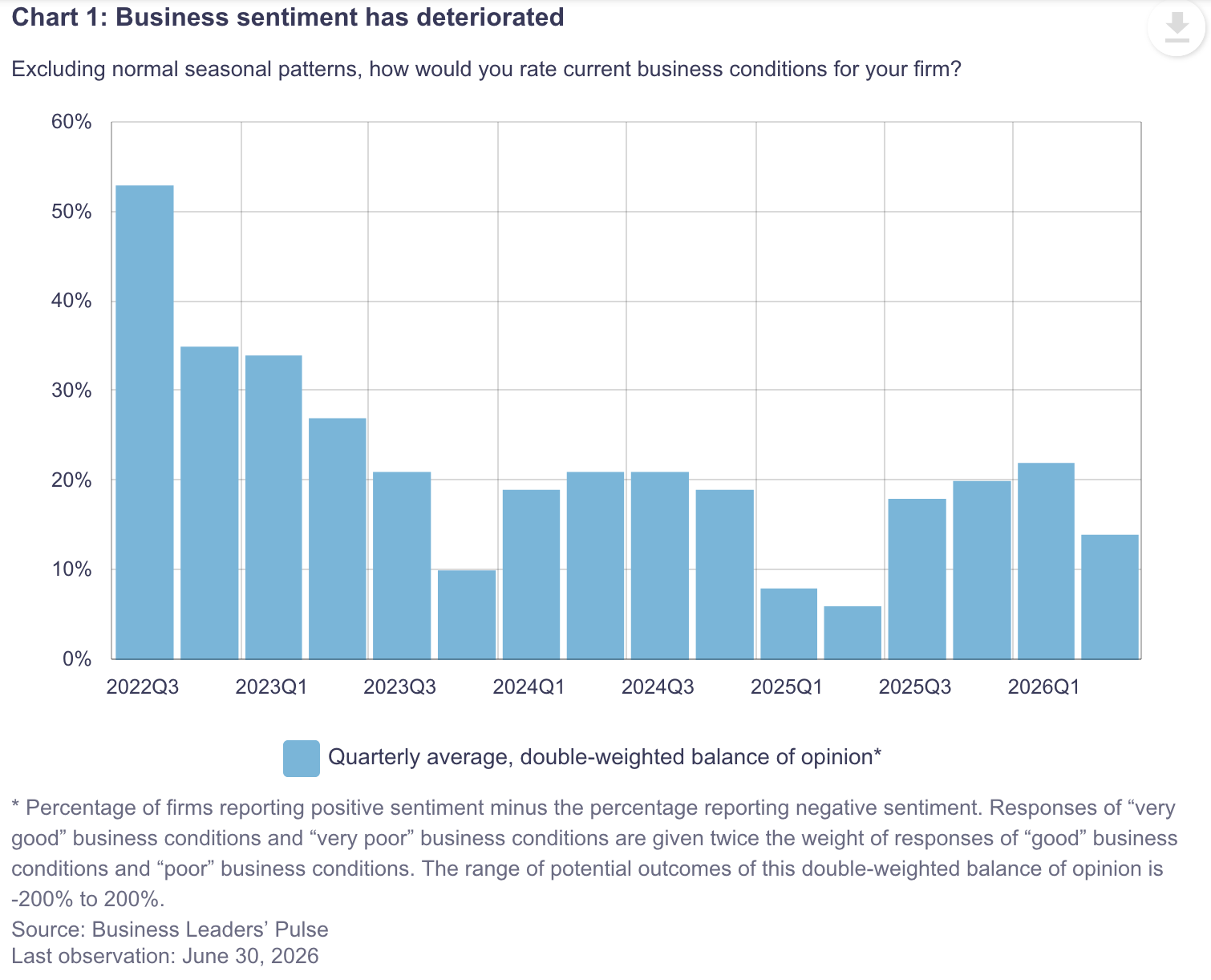
Similarly, the BoC released its latest Business Outlook Survey on Jul. 6. The report stated:
“After improving over the previous three quarters, business sentiment deteriorated this quarter. Compared with the first quarter of 2026, more firms reported that rising input costs and geopolitical uncertainty caused by the war in the Middle East are weighing on business conditions….
“More firms than last quarter expect their sales growth to slow. In addition, the balance of opinion on indicators of future sales has edged down after improving over the past three quarters and now sits just below its historical average.”
So, it’s another indicator that Canada’s economic outlook remains somewhat challenged.
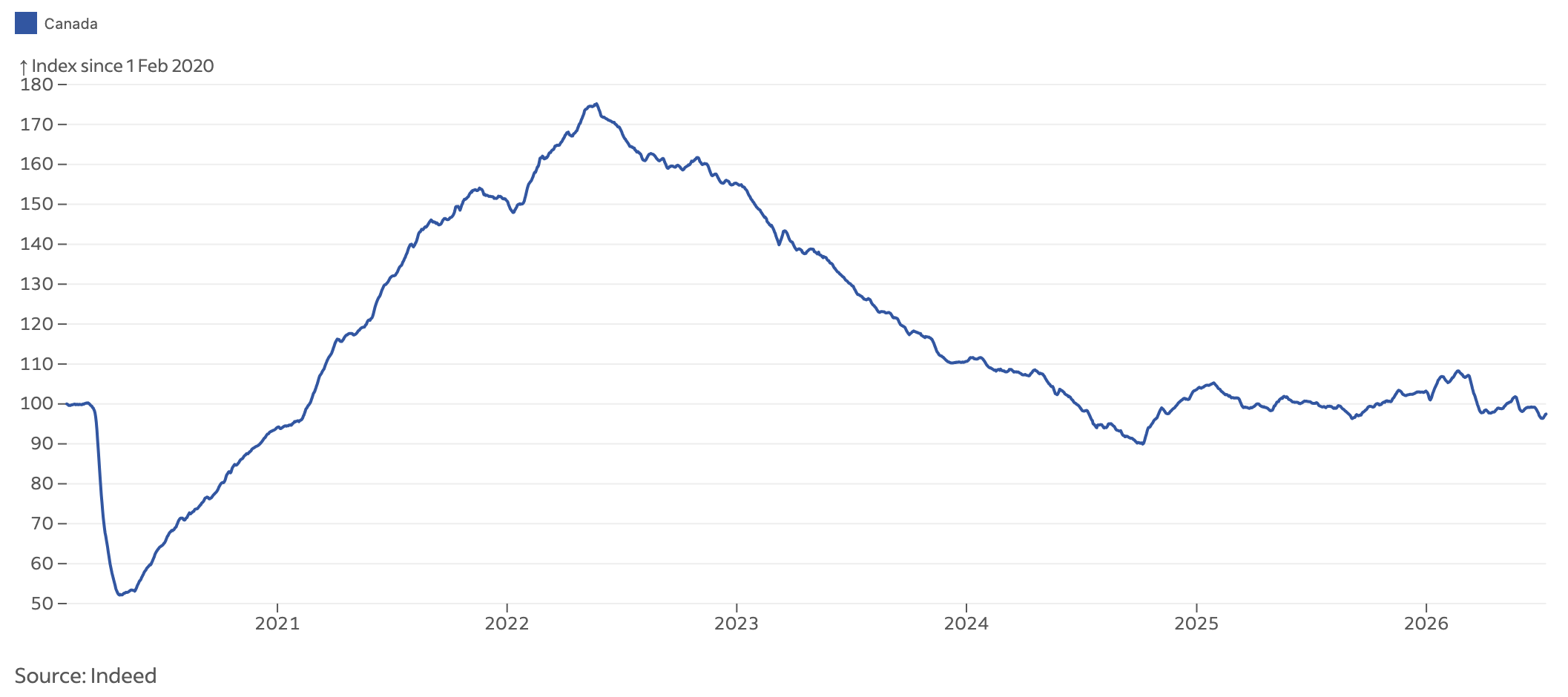
Finally, Canadian job postings on Indeed have fallen below their pre-pandemic baseline of 100. The index sat at 107 on February 28, but has dipped to 97.5 as of July 10. Consequently, more weaknesses than strengths are present in the recent data.
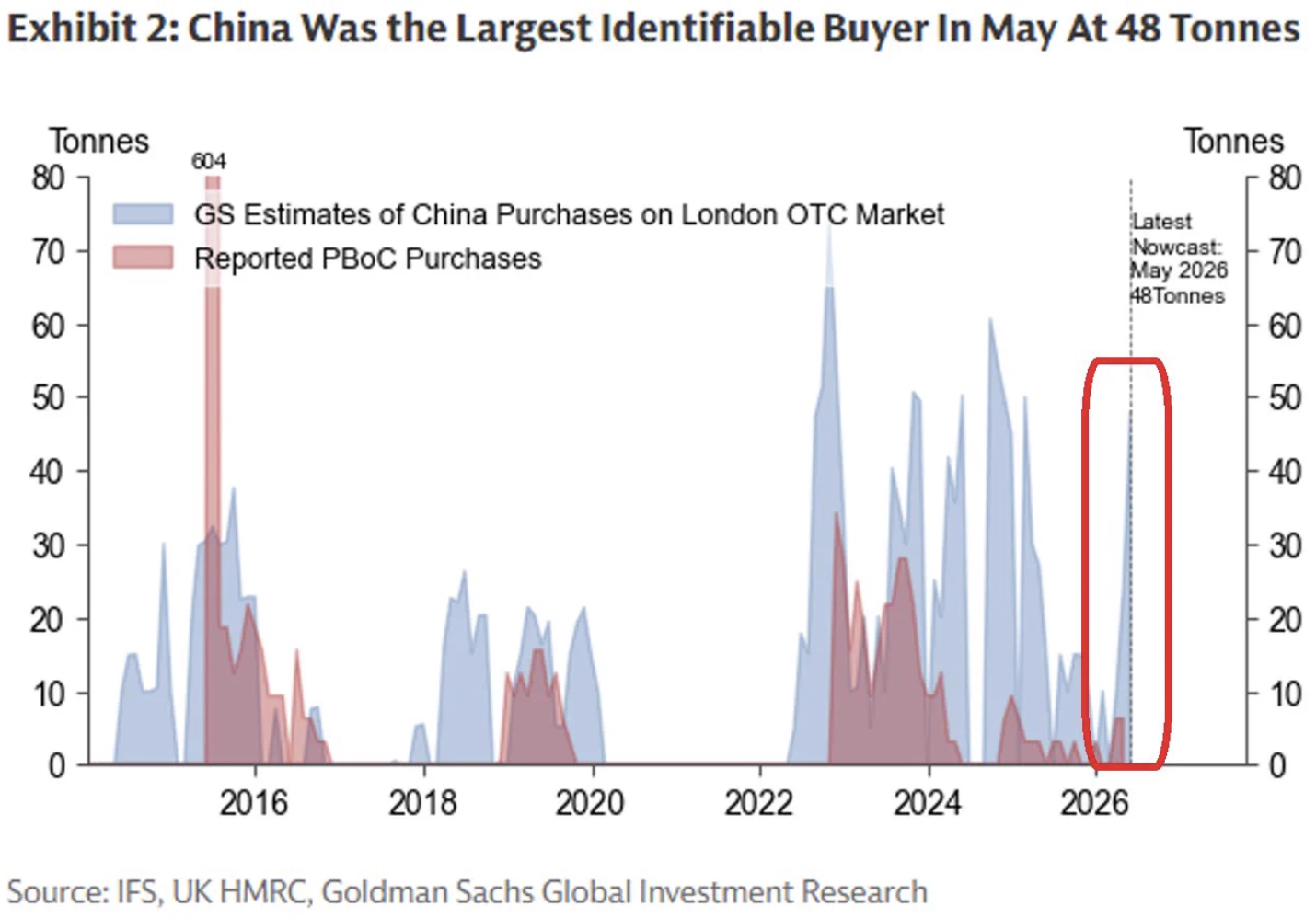
Turning to the financial markets, gold has corrected sharply over the last few months. But despite that, Goldman Sachs said that China continues to stockpile bullion, purchasing ~48 tonnes in May. As such, the central bank of the world’s second-largest economy continues to aggressively add the yellow metal to its reserves.
Dedicating a small portion of one’s TFSA or RRSP portfolio to precious metals may help mitigate some of the geopolitical risks and negative effects of inflation. If you want to get started with investing in metals such as gold and silver, read our free guide to gold buying in Canada in 2026 today.
In addition, if you want to take the smart step of protecting your loved ones from financial hardship, life insurance is an excellent tool to mitigate unfortunate outcomes. However, finding the right provider is a difficult journey. To help simplify the process, we created extensive guides outlining the best providers in Nova Scotia, Saskatchewan, and Newfoundland and Labrador.
Furthermore, higher interest rates have made it more difficult to find affordable business financing. And as inflation increases the costs of capital-intensive equipment, it compounds the problem. Our guide on the best Heavy Equipment & Construction Financing providers offers resources to help you obtain the best rates and maximize your cash flow.
Last, rebuilding your credit score is often the best path to obtaining better loan terms. And while Credit Verify has some good qualities, poor reviews are abundant. Therefore, you should read the guide to learn about the free options that we consider safer alternatives.
For additional resources, please consult our list of reliable lenders to see a wide range of products and services available in your area.

Alex Demolitor is a financial writer hailing from Halifax. Alex has a Bachelors Degree from King's College and passed the CFA Exam Level III. He specializes in fundamental analysis of the stock, bond, commodity, and FX markets. He also covers US & Canadian economic indicators. He has been published on many financial publications, including Investing.com, FXEmpire and others.