
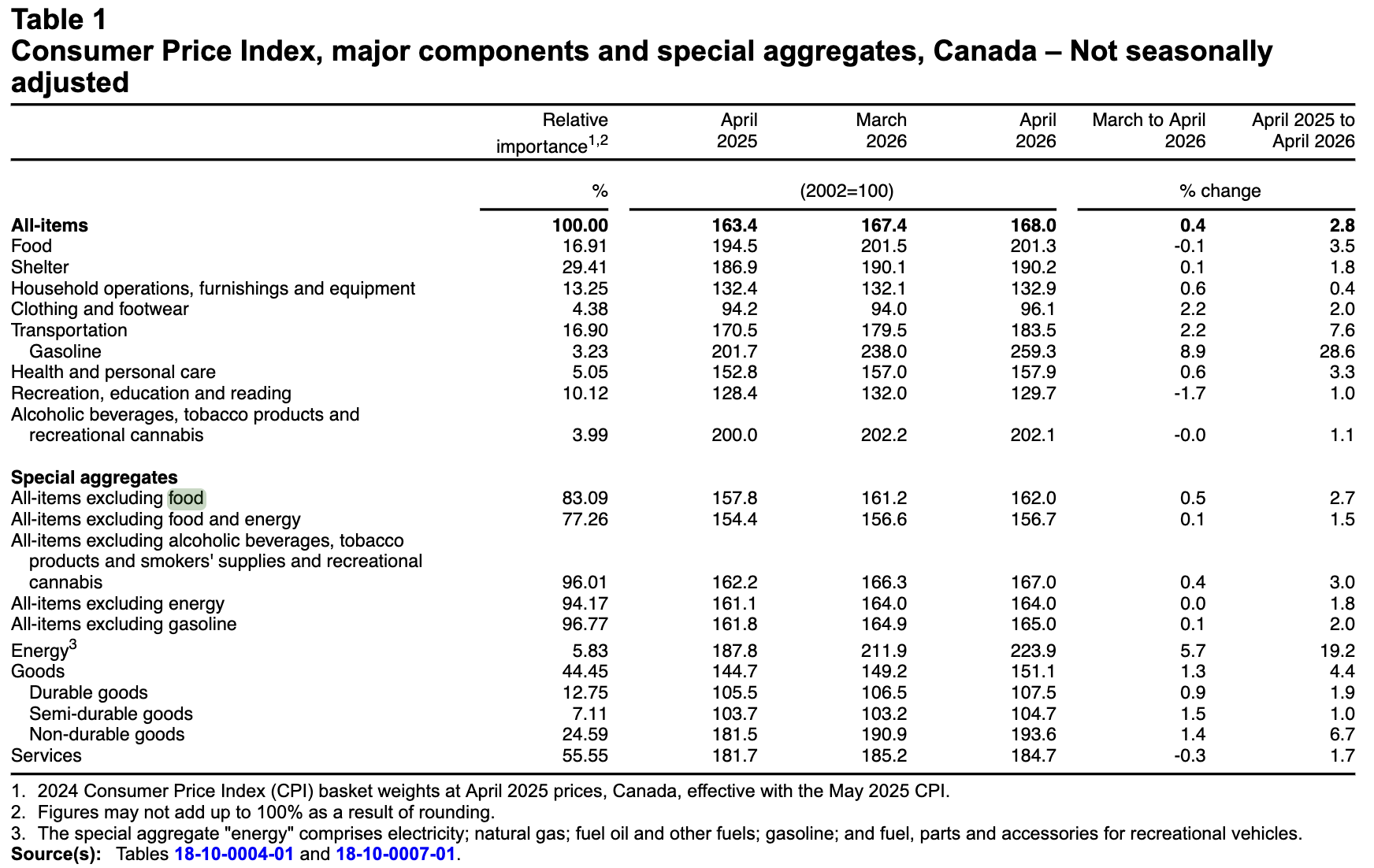
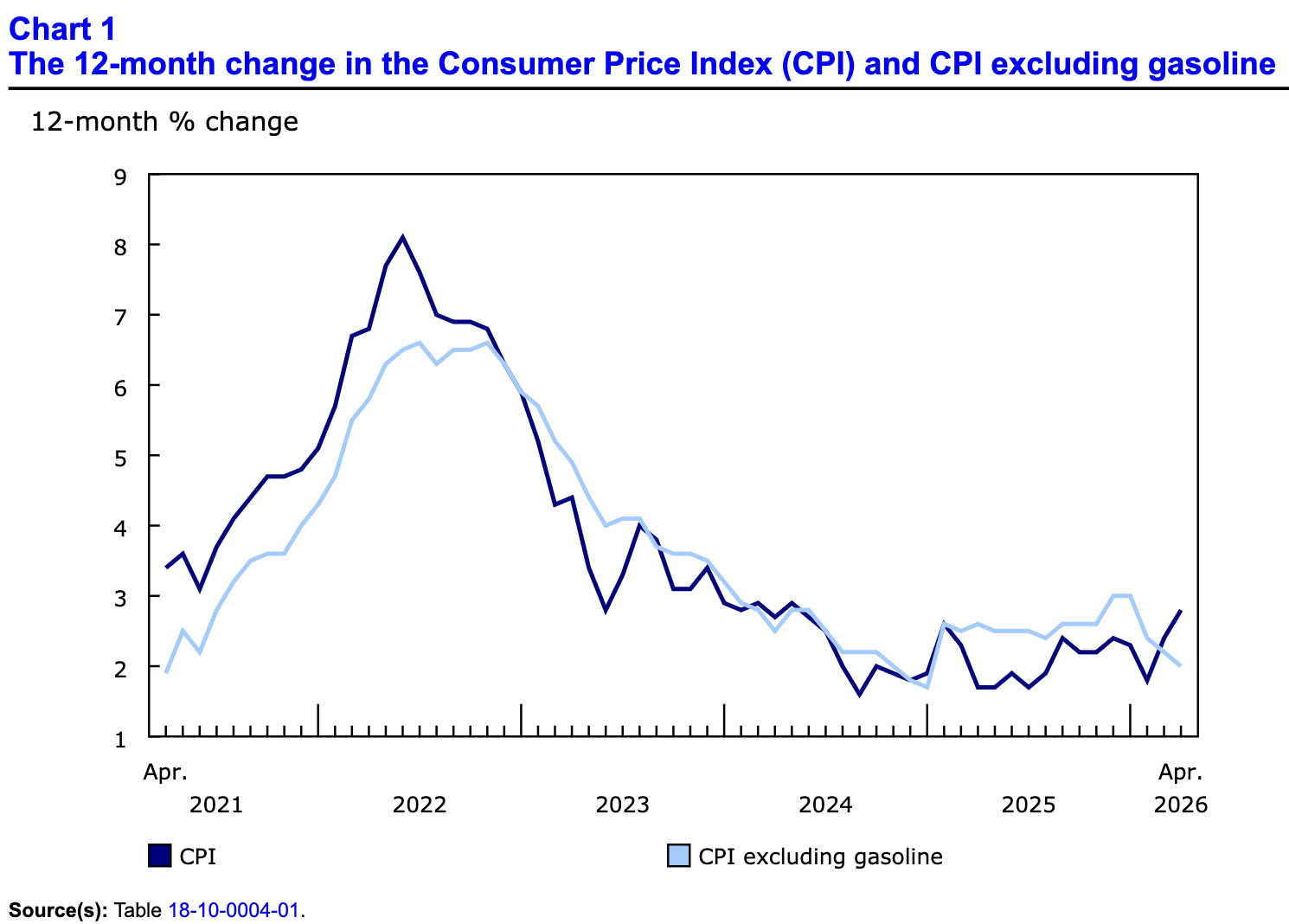
Canada’s consumer price index (CPI) increased by 2.8%year over year (Y-o-Y) in April, up from 2.4% Y-o-Y in March. Statistics Canada (StatsCan) published the data at 8:30 a.m. ET on May 19, 2026, via The Daily report. On a monthly basis, the CPI rose by 0.4%, as “higher energy prices, most notably gasoline prices, drove the acceleration in the headline CPI.”
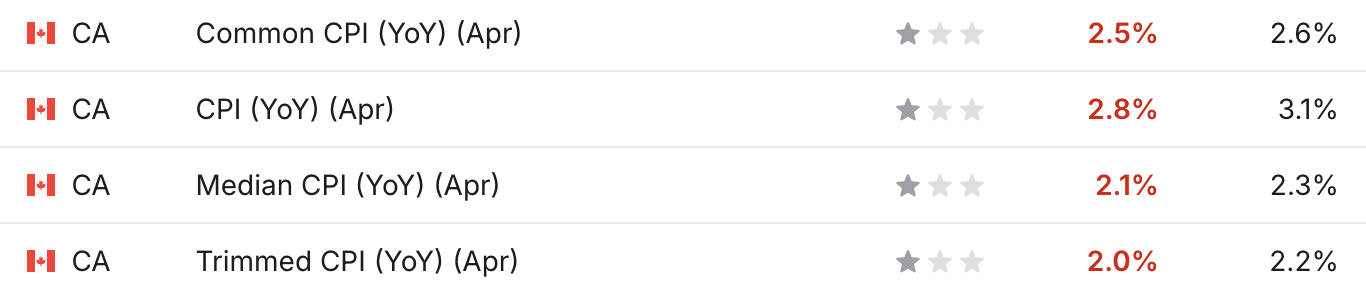
Despite that, the results were weaker than expected. The table below is courtesy of Investing.com. The left column represents April’s figures, while the right column represents forecasters’ consensus estimates. As you can see, there was plenty of red.
Yet, the ongoing saga in the Middle East continues to cloud the Bank of Canada’s (BoC) policy response. The latest Summary of Governing Council deliberations (released on May 13) noted how, “On trade, members agreed they could not lose sight of risks to growth from uncertainty around US trade policy and the ongoing restructuring in the economy.”
Conversely, “The war in the Middle East had already pushed up gasoline prices, creating a new upside risk to inflation. Members agreed that the appropriate monetary policy response depended importantly on two factors: the economic conditions when the shock occurred and the persistence of the shock.”
Thus, the BoC will likely continue to assess the incoming data to determine its next move.
Core CPI
Core measures of the CPI were mild in April, with the CPI-common index falling to +2.5% (from +2.6%), the CPI-median falling to +2.1% (from +2.3%), and the CPI-trim falling to +2.0% (from +2.2%). These measures exclude the impacts of food and energy, and the BoC places heavy emphasis on core measures because they provide a smoothed distribution of overall inflation.
Please note that food and energy prices are highly volatile and price spikes can occur for reasons outside of the BoC’s control. In contrast, core inflation is mainly driven by consumer demand and gives the BoC a better sense of how the Canadian economy is functioning.
Sector Results
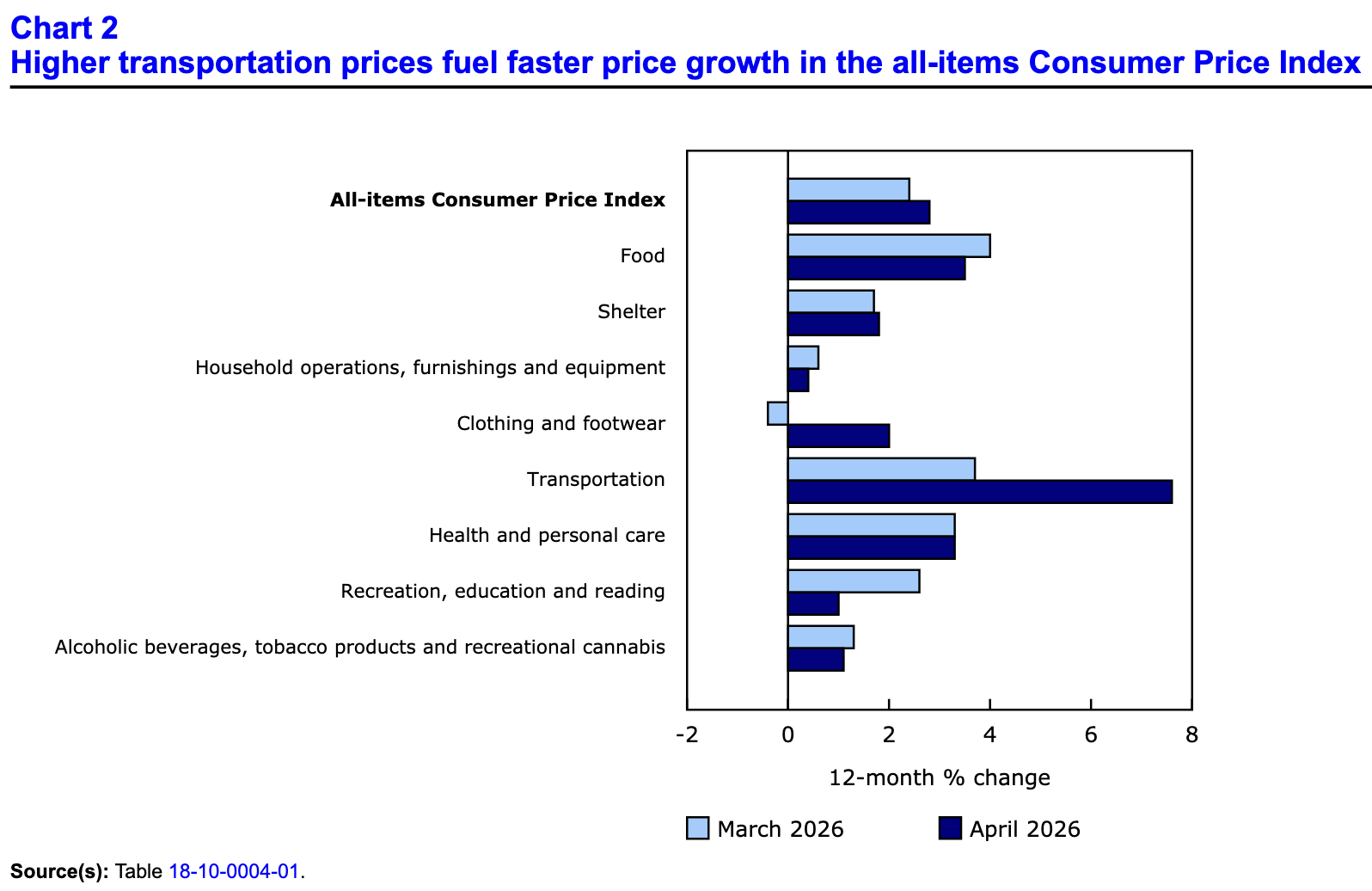
Sector performance was mixed in April, as food inflation slowed Y-o-Y, while shelter rose slightly, and transportation was a noticeable outlier.
For context, the eight sectors include food, shelter, household operations, furnishings and equipment, clothing and footwear, transportation, health and personal care items, recreation and education expenses, and alcohol and tobacco products.
Food Inflation
Consolidated food prices declined by 0.1% on a monthly basis in April, though prices remain elevated on a longer-term basis
Tough Choices
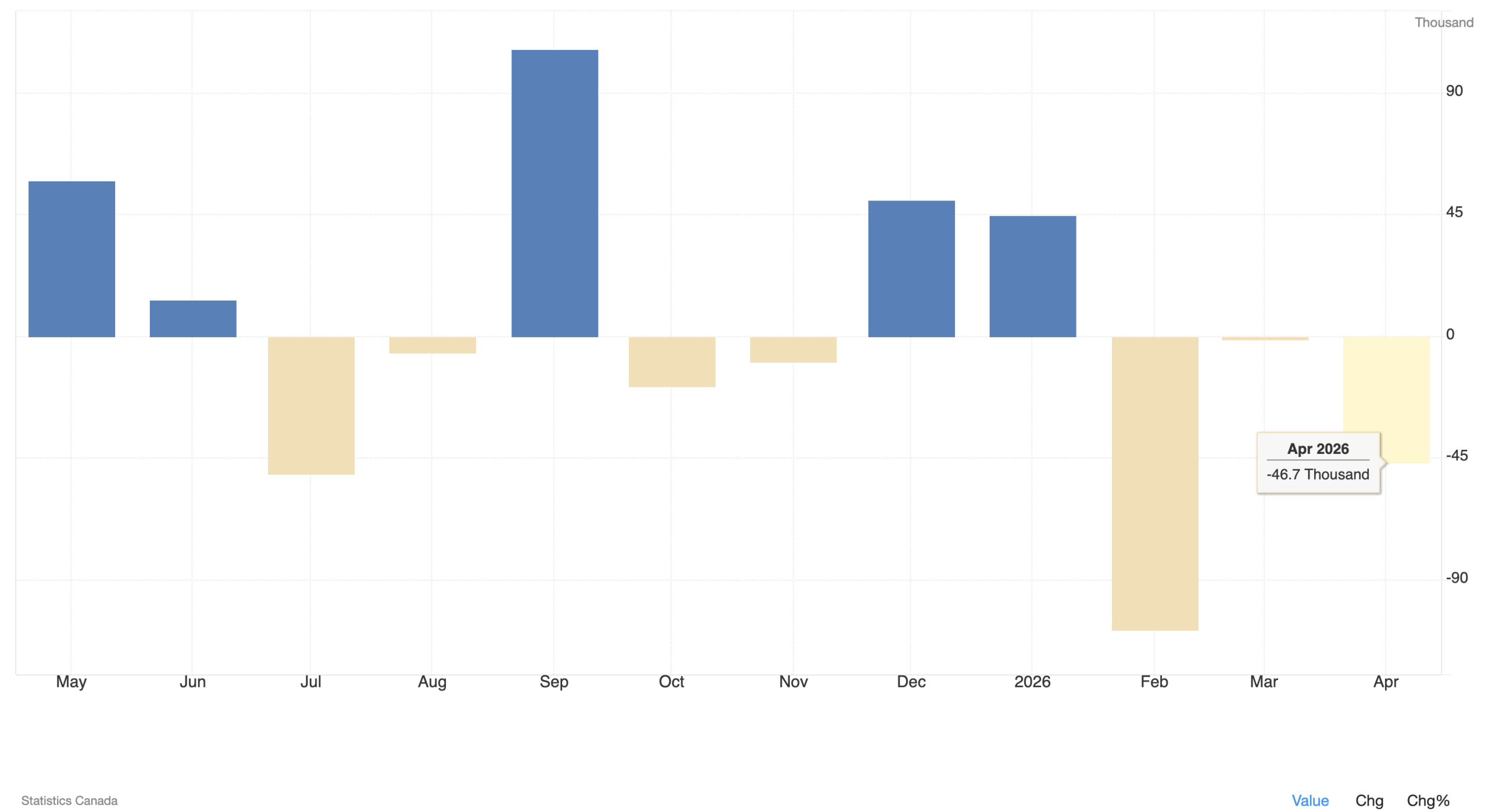
While inflation remains troublesome due to the oil shock, the BoC also has to worry about the second half of its dual mandate — maximum employment. And after three straight months of full-time job losses, the labour market weakness may limit consumers’ purchasing power, and therefore, the upside risks to inflation.
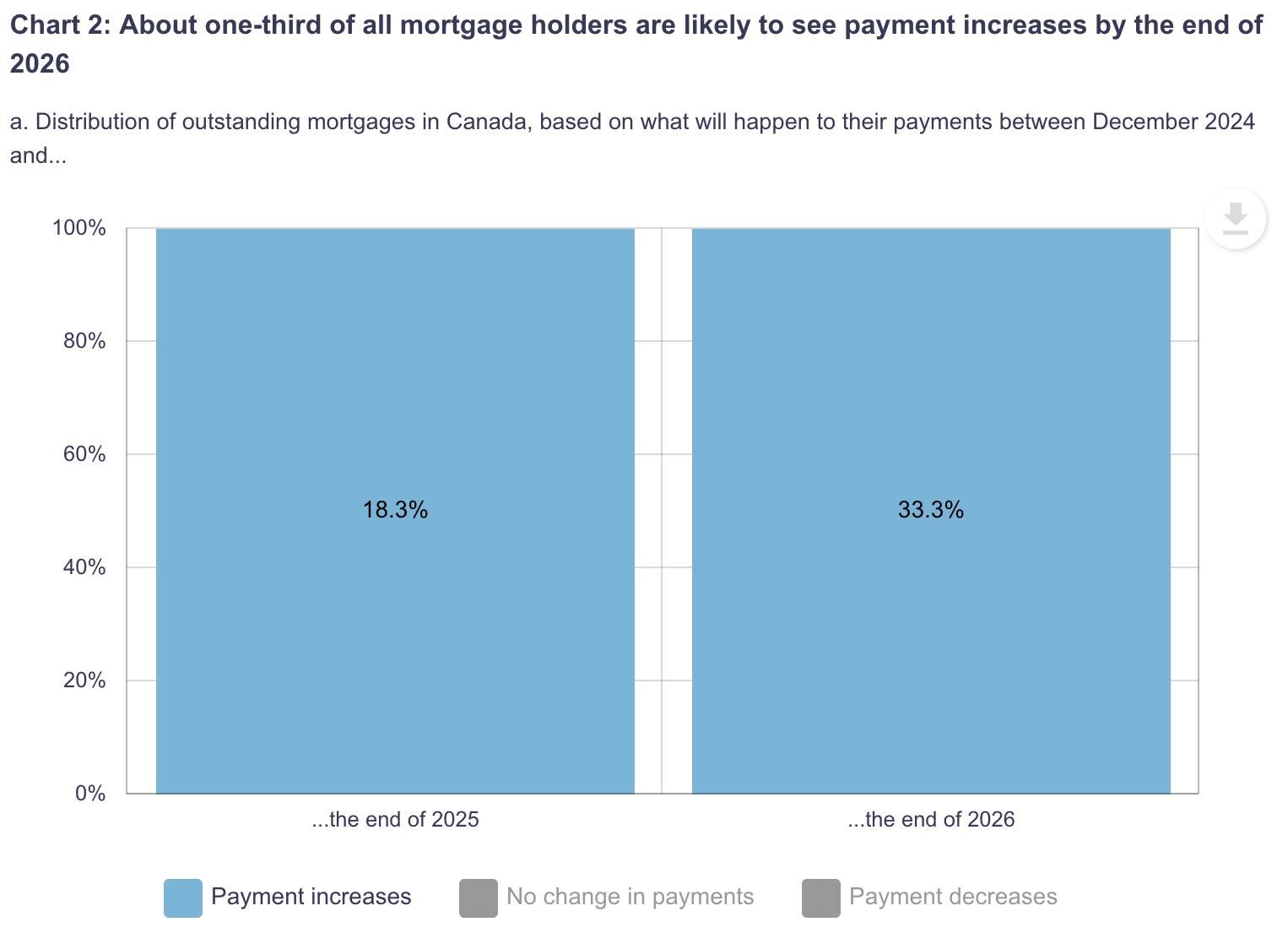
Furthermore, the BoC noted in July 2025 that roughly 33% of Canadian homeowners will see their mortgage payments increase by the end of 2026. The report stated how “Five-year, fixed-rate mortgages make up around 40% of all mortgages in Canada,” and with the 5-year Canada bond yield hitting an 18-month high last week, mortgage refinancing costs will continue to rise the longer interest rates remain elevated. As a result, consumers will have even less money to spend on discretionary items.
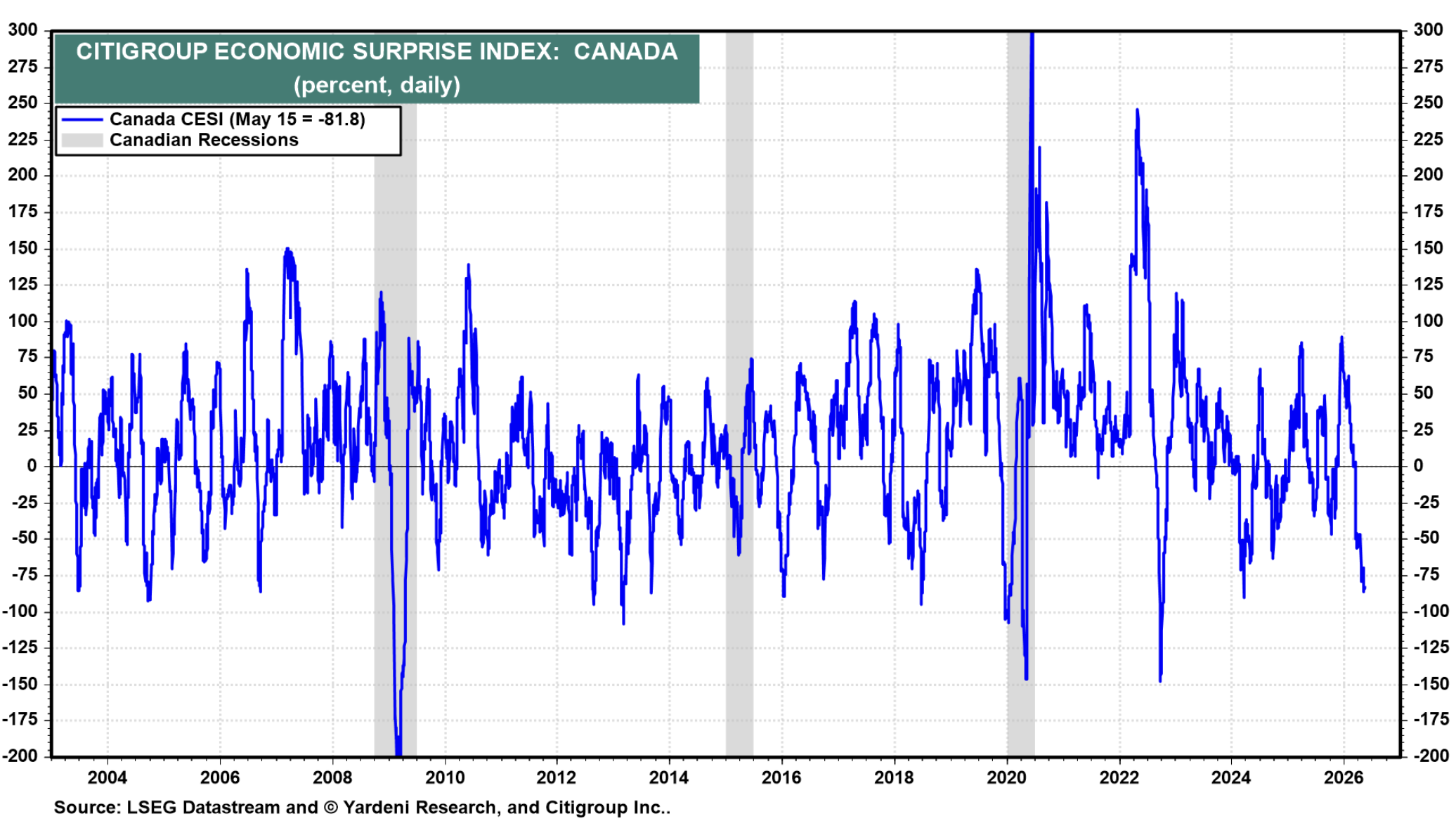
Finally, Canada’s Economic Surprise Index remains severely depressed. For context, a negative ‘surprise’ occurs when a data point underperforms economists’ consensus estimate. And with the index at -81.8 as of May 15, the rate of disappointment has been swift. Consequently, the tug-of-war between energy inflation and tepid growth will likely plague the BoC over the next few months.
Turning to the financial markets, the recent oil shock has been a headwind for several assets. Still, most strategists expect gold to make a comeback in the months ahead.
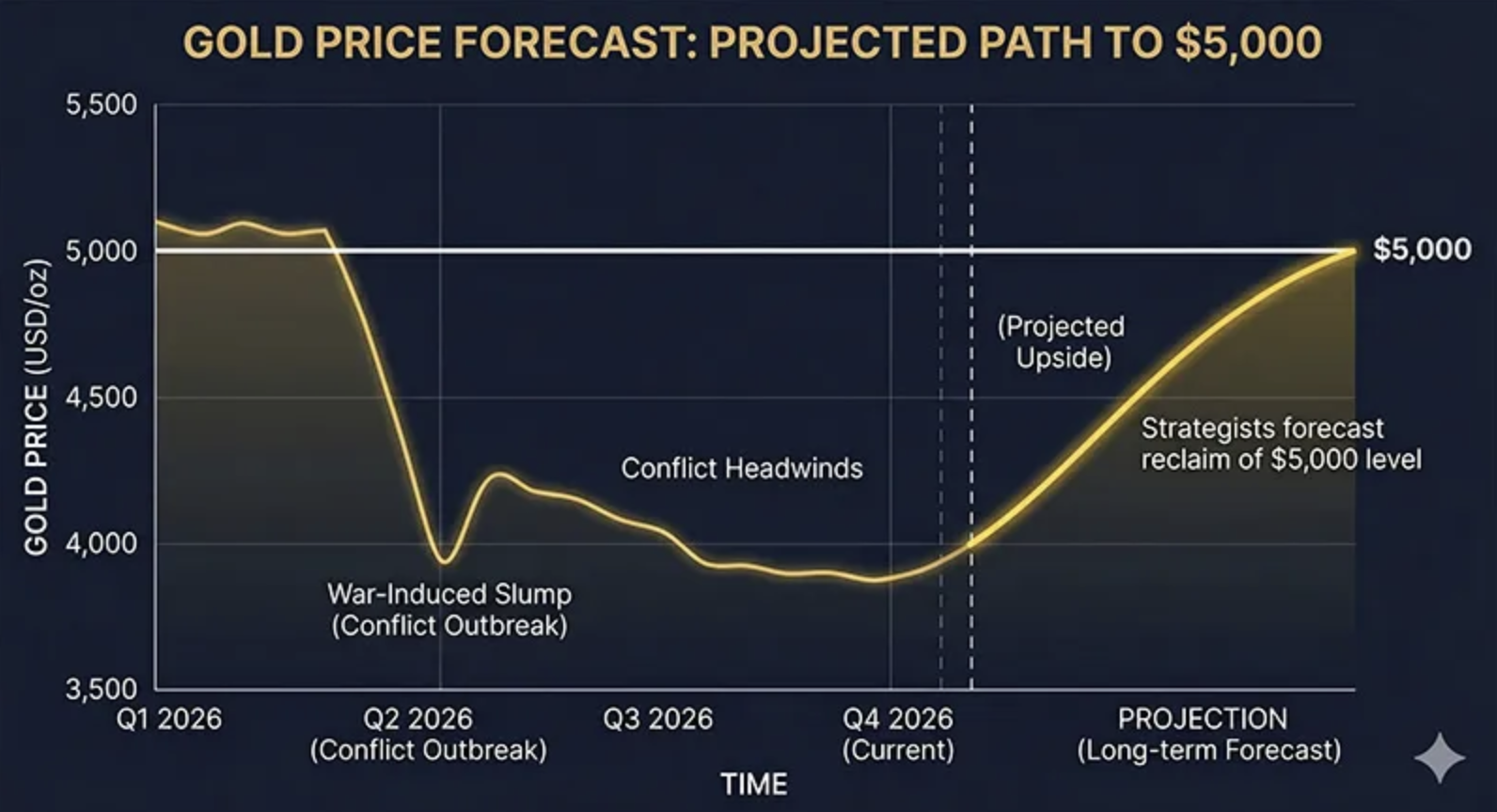
To explain, while plenty of speed bumps have slowed progress, “a recent Reuters poll of 31 metals analysts found a consensus view that the gold rally would resume once the Iran war was brought to an end, with a median forecast of $4,916 in 2026.” Thus, with potentially lower interest rates, a weaker U.S. dollar, and continued central bank purchases, gold’s medium-term outlook remains constructive.
Dedicating a small portion of one’s TFSA or RRSP portfolio to precious metals may help mitigate some of the geopolitical risks and negative effects of inflation. If you want to get started with investing in metals such as gold and silver, read our free guide to gold buying in Canada in 2026 today.
In addition, if higher interest rates and mounting credit card debt have become a financial burden, several solutions can be tailored to your income, credit score, debt level, and interactions with creditors. For more information, our extensive guide has management solutions for credit card borrowers at all debt levels.
Similarly, while bankruptcy can help under the right circumstances, there are seven alternatives to consider before filing. Not every option fits every person, and by weighing the pros and cons of each, you can find the right fit for you.
For severe cases, a Licensed Insolvency Trustee is a valuable resource. LITs are the only professionals in Canada legally authorized to administer bankruptcies and consumer proposals, and since the first consultation is typically free, you have nothing to lose by reaching out.
Last, if you’re new to Canada and need help with financial or employment services, Windmill Microlending is a nonprofit organization that offers affordable loans and career support to immigrants and refugees. The group can help you find training programs, upgrade your credentials, or pivot to industries that better match your education and experience.
For additional resources, please consult our list of reliable lenders to see a wide range of products and services available in your area.

Alex Demolitor is a financial writer hailing from Halifax. Alex has a Bachelors Degree from King's College and passed the CFA Exam Level III. He specializes in fundamental analysis of the stock, bond, commodity, and FX markets. He also covers US & Canadian economic indicators. He has been published on many financial publications, including Investing.com, FXEmpire and others.